
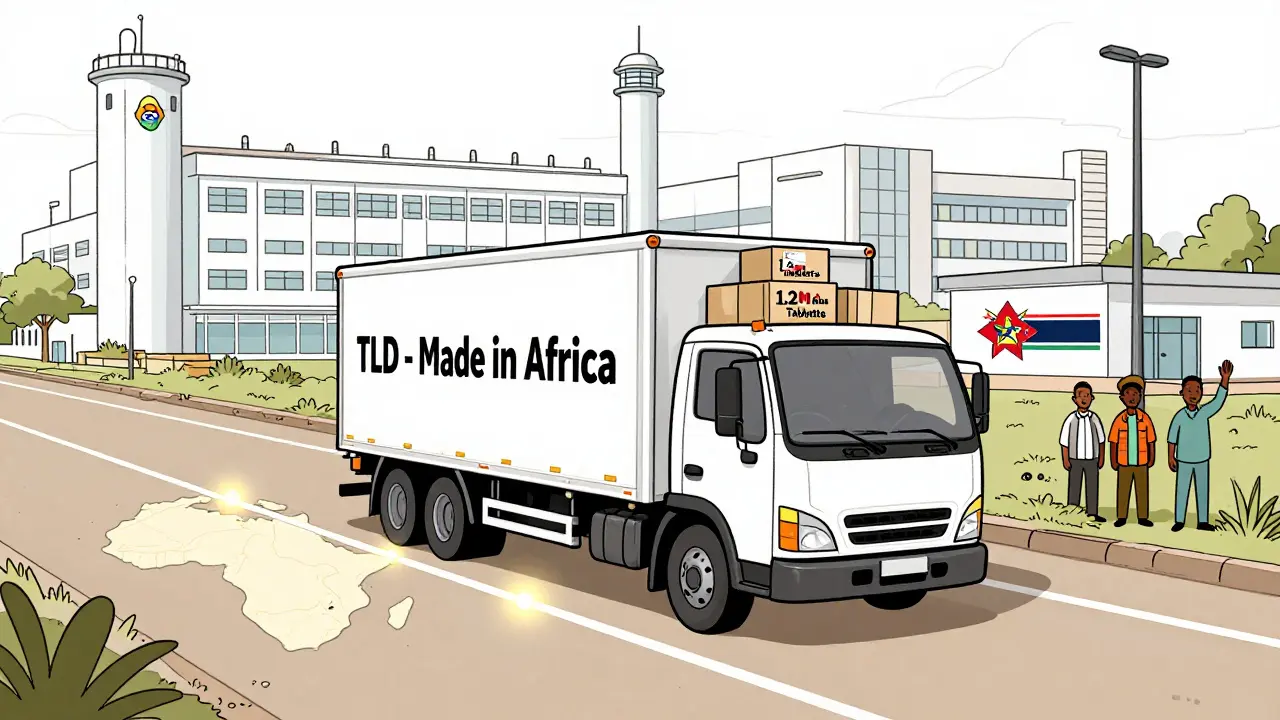
For the first time in history, a first-line HIV treatment made in Africa is being shipped to patients on the continent.
On May 6, 2025, a shipment left a factory in Nairobi, Kenya, bound for a clinic in Maputo, Mozambique. Inside were 1.2 million tablets of TLD - a fixed-dose combination of tenofovir, lamivudine, and dolutegravir. This wasn’t just another box of pills. It was the first time the Global Fund had ever bought an HIV medicine manufactured in Africa. For decades, African countries relied on imports - mostly from India - to keep people alive. Now, something is changing. African-made antiretroviral generics are no longer a dream. They’re a reality.
Sub-Saharan Africa carries 65% of the world’s HIV cases. Yet, until recently, it produced less than 3% of its own medicines. That imbalance created dangerous gaps. During the pandemic, when global supply chains broke down, some countries ran out of HIV drugs for months. People missed doses. Viral loads rose. Resistance grew. The old system wasn’t just inefficient - it was life-threatening.
The shift began with one company: Universal Corporation Ltd in Kenya. In 2023, it became the first African manufacturer to get WHO prequalification for TLD. That’s not easy. WHO prequalification means the medicine meets the same strict standards as those made in the U.S., EU, or Japan. It’s the only way the Global Fund, UNICEF, or PEPFAR can buy it. Universal didn’t just copy a formula. They built a factory, trained workers, passed inspections, and proved their product works - and works consistently.
That first shipment to Mozambique was enough to treat 72,000 people a year. It sounds like a lot. But Africa needs 15 million person-years of first-line treatment annually. One factory can’t cover that. So more are coming. By the end of 2025, at least three new manufacturing plants in Nigeria, Ethiopia, and South Africa are expected to start production. Each one is being supported by funding from Unitaid, the Gates Foundation, and CIFF - not as charity, but as market-shaping investment. They’re betting that African-made drugs can be just as good, and cheaper, than imports.
Why TLD? The Science Behind the Standard
Not all HIV drugs are the same. The old regimens - like those with efavirenz - had side effects: dizziness, nightmares, liver stress. They also broke down easily if someone missed a dose. That’s why resistance grew. Dolutegravir changed everything. It’s more forgiving. Even if someone skips a pill, the drug still holds strong. It suppresses the virus better. It has fewer long-term risks. And it’s now the global standard for first-line treatment.
TLD - the combo of tenofovir, lamivudine, and dolutegravir - is simple. One pill, once a day. No refrigeration. No complex dosing. Perfect for clinics with unreliable power or limited staff. And because it’s now being made locally, the price is falling fast. Indian generics brought the cost down from $10,000 per patient per year in 2000 to under $100 by 2015. African-made TLD is now hitting $60-$70 per patient per year. That’s not just savings. That’s scale.
When a country buys 500,000 doses instead of 200,000 because the price dropped, it doesn’t just treat more people. It stabilizes the whole system. Clinics can stock up. Pharmacies don’t run dry. Patients don’t have to travel 100 kilometers just to get their next month’s supply.
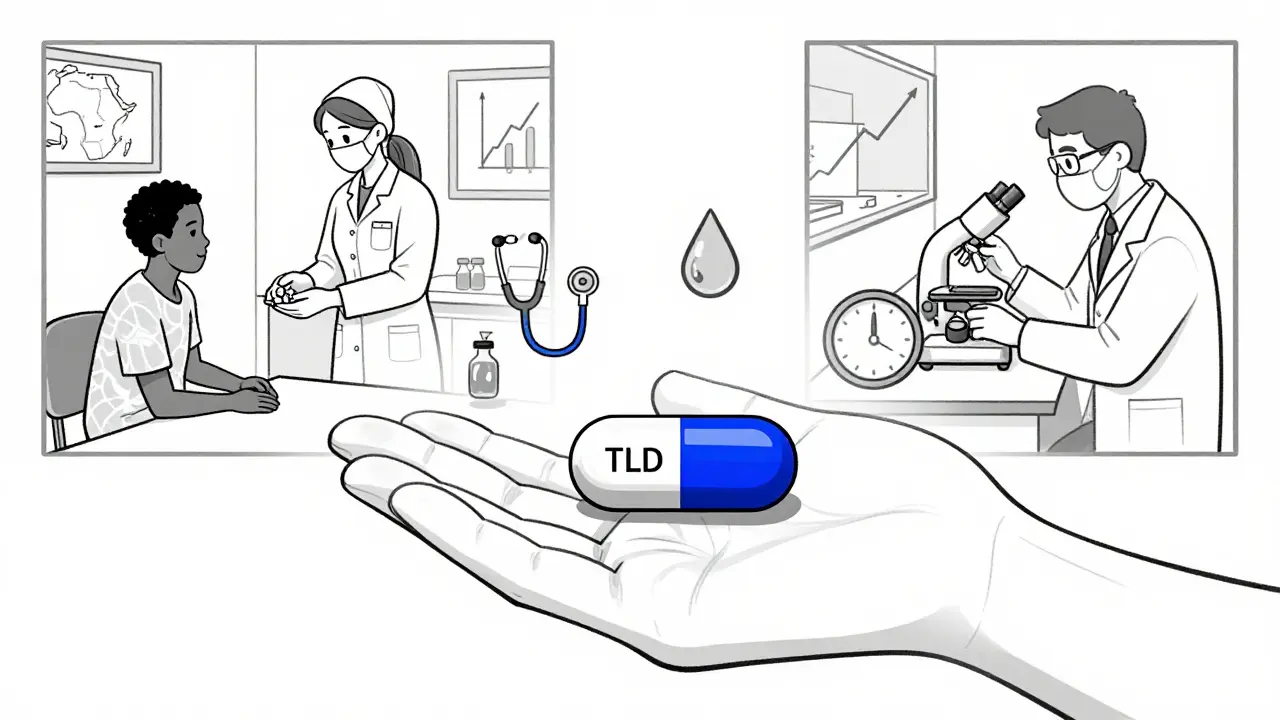
More Than Pills: Building the Whole HIV Care System
Getting the pills is only half the battle. You also need to know who has HIV. You need to test them. You need to track their viral load. You need to make sure they stay on treatment.
In Nigeria, Codix Bio is now making HIV rapid diagnostic tests - the same kind used in rural clinics - under a technology transfer deal with SD Biosensor and WHO. Before, these tests were imported. Now, they’re made in Lagos. That means faster delivery, lower cost, and better control over quality. No more waiting six months for a shipment to arrive from Europe.
And it’s not just diagnostics. South Africa became the first African country to register a twice-yearly HIV injection - cabotegravir long-acting - in October 2025. That’s a game-changer. Instead of taking a pill every day, people can get a shot every six months. For busy workers, students, or people living far from clinics, it’s life-changing. Gilead has already licensed six African manufacturers to make generic versions. Experts say prices could drop 80-90% below the brand-name cost.
Even more promising: Gilead is giving away lenacapavir - a new, ultra-long-acting PrEP drug - at no profit until generics are ready. They’ve signed deals with PEPFAR and the Global Fund to supply it to up to two million people over three years in low-income countries. Regulatory submissions are being filed in 18 high-burden African nations. The first supplies will reach clinics before the end of 2025.
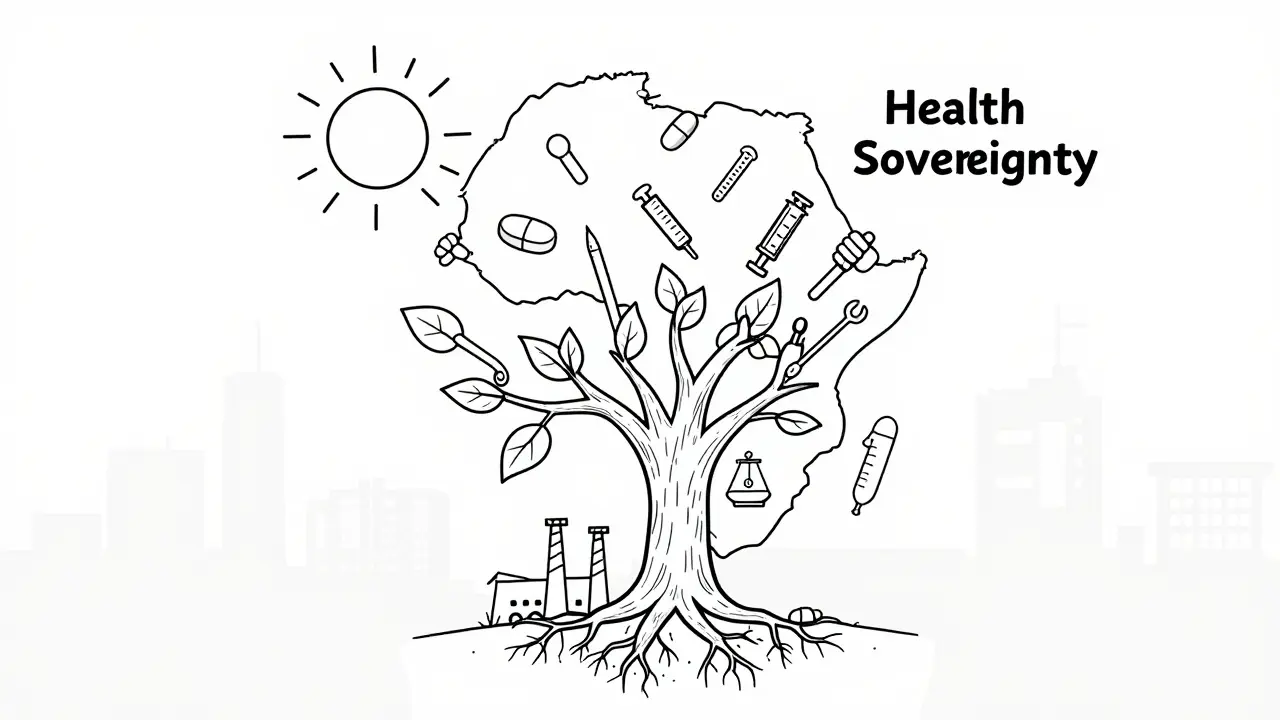
This isn’t just about HIV anymore. It’s about building a health system that can respond to anything - malaria, TB, future pandemics. When you can make drugs locally, you can make vaccines, antibiotics, or diagnostics too. The same factories, the same labs, the same trained workers. That’s health sovereignty.
Who’s Paying? The New Model Behind the Scenes
Before, the model was simple: rich countries fund, India makes, Africa buys. That worked for a while. But it was fragile. Now, the model is different. It’s called NextGen market shaping.
It works like this: international donors commit to buying a certain number of doses from African manufacturers - even if production is still ramping up. That gives manufacturers confidence to invest in equipment, hire staff, and train quality control teams. The Global Fund doesn’t just write checks. They sign multi-year contracts. That’s the key. Predictable demand = private investment.
Dr. Meg Doherty from WHO put it plainly: “The procurement of African-made ARVs isn’t just about drugs. It’s about building supply chains that can stand on their own.”
And it’s working. The African Union’s Pharmaceutical Manufacturing Plan for Africa (PMPA) aims to get local production from 2-3% to 40% of the continent’s needs by 2040. That’s ambitious. But with the right policies - harmonized regulations, tax breaks for manufacturers, public procurement rules that favor local products - it’s possible.
Right now, African countries still spend billions importing medicines. Imagine if even half of that stayed inside the continent. Jobs. Taxes. Innovation. Training. That’s not aid. That’s economic development.
The Gaps Still Left to Cross
Progress is real. But the road is long.
There are still only a handful of African manufacturers with WHO prequalification. Most are small. They can’t yet match the scale of Indian giants like Cipla or Mylan. Regulatory systems in some countries are still weak. Some ministries of health still default to ordering from familiar suppliers overseas - even when African options exist.
And then there’s the human side. In Western and Central Africa, only 70% of people on treatment have suppressed viral loads. That’s far below the 95% target. Why? Because treatment access is only one part. Stigma, transportation, gender inequality, and lack of youth-friendly services still block people from staying on treatment.
Also, most of the new factories are focused on first-line drugs. What about second-line? What about pediatric formulations? What about drugs for people with drug-resistant HIV? Those are harder to make. And they’re needed.
Without more investment in African-led research, the continent will keep playing catch-up. Right now, most drug development happens in the U.S. or Europe. The drugs are designed for their populations - not ours. African scientists need funding to lead trials, design formulations for local needs, and test how drugs work with high rates of TB co-infection or malnutrition.
What Comes Next?
By 2030, African-made antiretrovirals could supply 20-30% of the continent’s needs. That’s not the finish line. It’s the starting point.
The next steps are clear: expand manufacturing capacity, strengthen regional regulatory bodies, train more pharmacists and lab technicians, and push for policies that prioritize local procurement. Countries like Rwanda, Ghana, and Senegal are already testing public procurement rules that require hospitals to consider African-made drugs first.
And the world is watching. If this works for HIV - a disease that once meant a death sentence - it can work for diabetes, hypertension, cancer. If African factories can make high-quality ARVs, they can make insulin. They can make antihypertensives. They can make the medicines millions of Africans need every day.
This isn’t charity. It’s justice. It’s not about giving Africans medicine. It’s about letting Africans make it themselves - on their terms, in their countries, for their people.
Are African-made HIV drugs as effective as those made in India or the U.S.?
Yes. Every African-made antiretroviral that’s approved for global procurement - like the TLD from Universal Corporation Ltd - must pass the same strict tests as drugs from the U.S. or EU. WHO prequalification means the medicine meets international standards for purity, potency, and safety. Independent studies have shown no difference in viral suppression rates between African-made and imported ARVs.
Why is local production better than importing from India?
Importing creates delays. A shipment from India can take 6-12 weeks to arrive. If a port is blocked or a plane is grounded, clinics run out. Local production cuts delivery time to days or weeks. It also creates jobs, builds technical skills, and keeps money inside Africa. Most importantly, it makes supply chains resilient - something the pandemic proved we desperately need.
Can African countries afford to build their own drug factories?
They can’t do it alone - but they don’t have to. International partners like the Global Fund, Unitaid, and the Gates Foundation are providing funding and technical support. The goal isn’t to make Africa self-sufficient overnight. It’s to create a sustainable industry that eventually runs on its own. Once production scales, the cost per dose drops. That means more money stays in-country for health systems, not spent on imports.
What about long-acting HIV treatments like cabotegravir? Are they available in Africa?
Yes. South Africa approved the twice-yearly injectable cabotegravir in October 2025. Gilead has licensed six African manufacturers to produce generic versions. Prices are expected to drop 80-90% below brand-name costs. The first generic versions are expected to reach clinics in 2026. This will be a major step forward for people who struggle with daily pills.
Is this just about HIV, or does it help with other diseases too?
It’s about much more. The factories, labs, supply chains, and skilled workers built for HIV can be used for TB, malaria, diabetes, and future pandemics. This isn’t a one-disease project. It’s a health system upgrade. When you can make one life-saving drug locally, you open the door to making dozens more. That’s how health sovereignty begins.

Comments
Josh McEvoy
OMG THIS IS ACTUALLY HAPPENING 😭😭😭 I cried when I read this. African-made HIV meds?? Like… actually made HERE?? No more waiting for India to ship stuff while people die?? This is the most beautiful thing I’ve seen all year. 🇰🇪💪
Sharon Biggins
this is huge. really. i know it sounds like a small thing but when you’ve seen clinics run out of meds because of shipping delays… it’s life or death. so proud of the teams in kenya and nairobi. you’re doing the work.
Viola Li
sure. and next they’ll tell us the moon landing was faked. who’s really paying for this? big pharma’s doing a PR stunt to look woke. they don’t care about africa. they care about the headlines. mark my words.
Jenna Allison
the WHO prequalification is the key here. it’s not just about making pills - it’s about meeting global quality standards. every batch is tested for potency, stability, purity. independent labs verify it. the data is public. this isn’t guesswork. it’s science. and it’s working.
Vatsal Patel
ah yes, the great african renaissance… brought to you by western donors with checkbooks and colonial nostalgia. we’ve been here before. ‘empowerment’ with strings attached. who owns the patents? who controls the supply? the same people who always do. the pills may be made in africa, but the power? still in geneva and new york.
Helen Leite
wait… so if they’re making it in africa now… does that mean the U.S. government is secretly hiding the real cure? and this is just a distraction? i’ve read about this. the real treatment is in a lab in Switzerland. they don’t want you to know. 🤫💊
Himanshu Singh
this is not charity. this is reciprocity. for decades, africa gave us its minerals, its labor, its silence. now it’s giving itself dignity. the factory in nairobi? it’s not just making pills. it’s making hope. and hope, my friend, is the only medicine that never runs out.
Jamie Hooper
sooo… like… they finally figured out how to make a pill that doesn’t need a PhD to take? 🤦♂️ i mean… dolutegravir? one pill a day? wow. took em long enough. glad africa’s finally catching up. still weird tho… why did it take a global crisis for this to happen?
Tiffany Wagner
this is the future. not just for hiv. for everything. if we can make this work here, we can make it work for diabetes, for hypertension, for mental health meds. imagine if every country could make what they need. no more waiting. no more shortages. just people getting better. thank you to everyone who made this real.