
Medication Side Effect Assessment Tool
How to Use This Tool
Enter your medication details and symptoms. This tool will assess if your side effects meet the criteria for seeking a second opinion based on evidence-based guidelines.
Your Assessment
Which Triggers Apply to You?
Next Steps
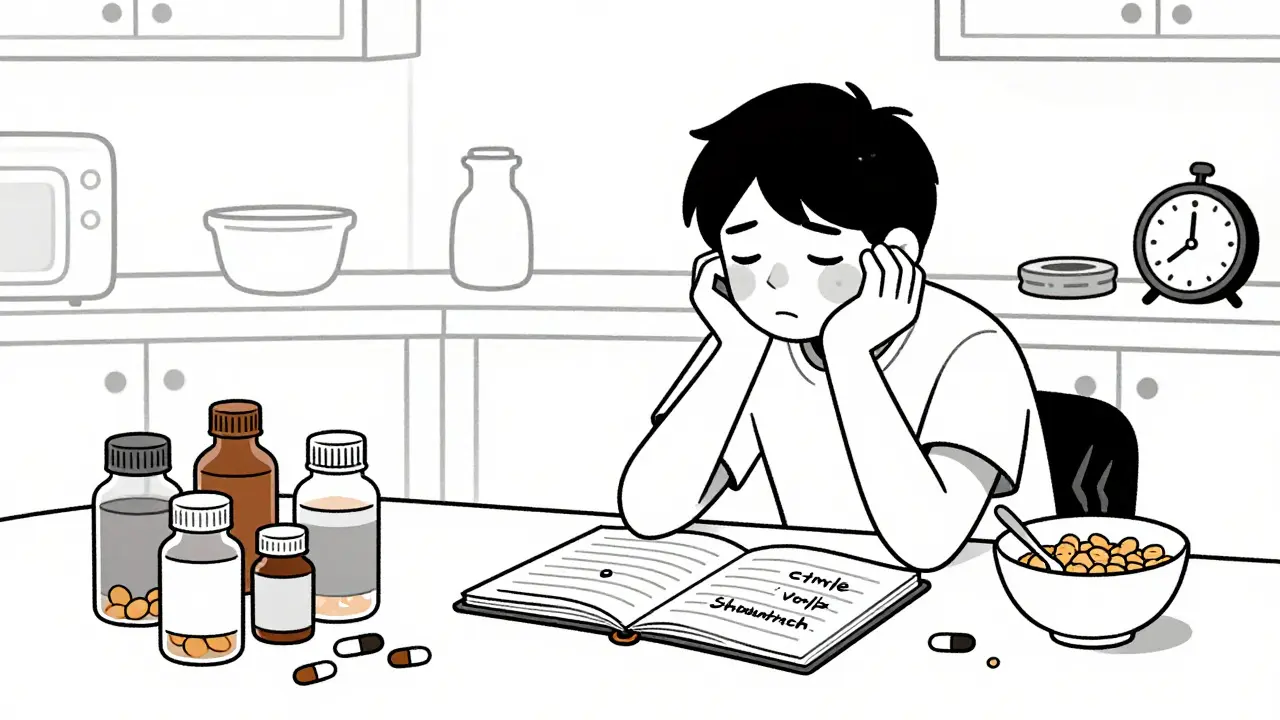
Starting a new medication can feel like stepping into the dark. You take it because your doctor said it would help, but then the side effects start - nausea that won’t quit, brain fog that makes work impossible, or muscle pain that keeps you from walking the dog. You wonder: Is this normal? Or should you speak up? The truth is, not every side effect is just "part of the process." Sometimes, it’s a sign that something’s wrong - and getting a second opinion could change your life.
When Side Effects Are More Than Just Uncomfortable
Many people wait too long before questioning their meds. They think, "I’ll give it a few more weeks." But some side effects aren’t temporary. If you’re experiencing symptoms that interfere with daily life - like losing more than 5% of your body weight in two weeks, vomiting constantly for over 72 hours, or feeling dizzy to the point you can’t drive - that’s not just annoying. It’s a red flag.
Take antidepressants, for example. Most doctors say to wait 4 to 6 weeks before deciding if they’re working. But if you’re having severe insomnia, panic attacks, or suicidal thoughts within the first week? That’s not a slow start - that’s a dangerous reaction. A 2023 JAMA Internal Medicine study found that nearly 38% of psychiatric medication reviews led to major changes, like switching drugs or adjusting doses. Waiting too long can turn a manageable issue into a crisis.
Same goes for blood thinners like warfarin or diabetes drugs like metformin. If you notice unusual bruising, black stools, or persistent diarrhea that’s draining your energy, don’t brush it off. These aren’t "mild" side effects. They’re warning signs that your body isn’t handling the drug the way it should.
The 5 Clear Triggers to Get a Second Opinion
You don’t need to wait until you’re miserable. Here are five specific triggers that mean it’s time to seek another doctor’s input:
- You’ve hit the timeline with no improvement. For antidepressants, that’s 6 weeks. For cholesterol meds like statins, it’s 3 months. If you’re still feeling awful and your numbers haven’t budged, your current plan isn’t working - and you deserve better.
- Your symptoms started within 72 hours of starting the drug. Research from Harvard Medical School shows that side effects appearing this quickly have a 78% chance of being caused by the medication. That’s not coincidence - it’s causation.
- You’ve been told "it’s all in your head." If your doctor dismisses your symptoms without checking lab work, reviewing your full med list, or asking about sleep, diet, or stress - walk away. You deserve someone who listens.
- You’re taking supplements or OTC drugs. Over 30% of side effect reports are linked to interactions between prescription meds and supplements. A simple multivitamin, St. John’s Wort, or even grapefruit juice can turn a safe drug into a dangerous one.
- Your life has shrunk. Can you still work? Hang out with friends? Sleep through the night? If your medication is stealing your ability to live - it’s time to reevaluate.
What You Need Before Your Second Opinion
A second opinion isn’t just another appointment. It’s a chance to fix something that’s broken. But you have to come prepared. Most doctors will ask for the same basic info - but if you hand them a messy list, you’ll waste time. Here’s what actually works:
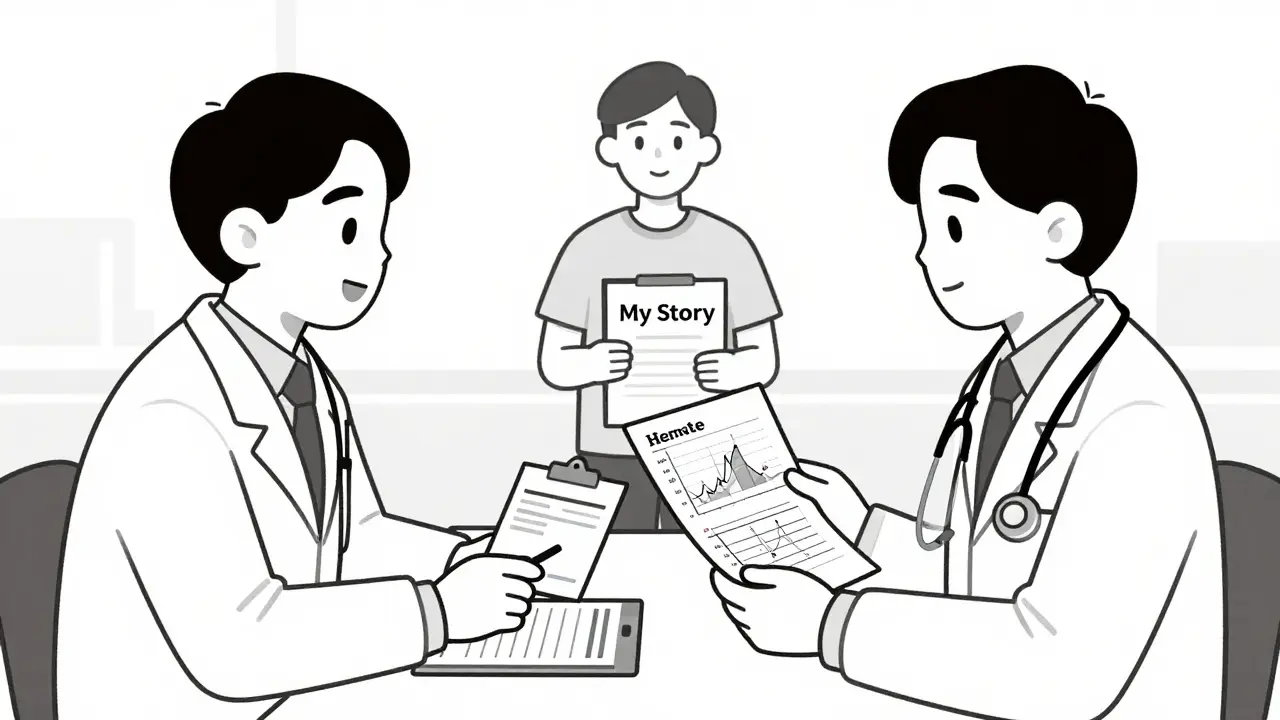
- A complete medication timeline. Write down every drug, supplement, and OTC product you’ve taken in the last 6 months - including exact dosages, start dates, and when you changed them. Use a notebook or phone notes. Precision matters.
- A symptom diary. Track your side effects daily. Note the time, severity (1 to 10), what you were doing, and how it affected you. Did you skip work? Cancel plans? Feel too weak to shower? This tells the doctor more than any lab test.
- Recent lab results. Get your blood work done within 30 days. For chronic conditions like diabetes or thyroid issues, this is non-negotiable. If you don’t have it, ask your current doctor for a copy - you’re entitled to it.
- The SOMA framework. When you talk to the new doctor, use this structure: Situation (when symptoms happen), Objective (weight, BP, lab numbers), Modifications (did you take it with food? Change the time?), Activities affected (can you still walk, work, sleep?). This cuts through the noise.
A 2024 Annals of Internal Medicine study found that patients who brought this level of detail were 63% more likely to get a meaningful change in their treatment. That’s not luck - it’s preparation.
What Happens During a Second Opinion?
Don’t expect a magic fix. A second opinion isn’t about blaming your first doctor. It’s about looking at your case from a fresh angle. The new provider will:
- Check for drug interactions you didn’t know about
- Review your genetic profile (if you’ve had pharmacogenetic testing)
- Compare your symptoms to established patterns (like the Naranjo Scale, which rates how likely a side effect is drug-related)
- Consider alternatives - maybe a different drug in the same class, or a non-drug approach
For example, a patient on metformin with chronic stomach pain might be told to "just tough it out." But a second opinion could reveal undiagnosed gastroparesis - a condition where the stomach doesn’t empty properly. Switching to a GLP-1 agonist or insulin could eliminate the nausea and improve blood sugar control.
Or take statins. If you’re having muscle pain and your doctor says, "It’s just aging," a second opinion might lead to a blood test for CK levels - and then a switch to ezetimibe. Reddit’s r/AskDocs community saw 73% of statin patients get better alternatives after seeking a second opinion.
Who Should You See?
Not every specialist is equal. Here’s who to target based on your issue:
- Psychiatric meds (SSRIs, antipsychotics): See a psychiatrist with experience in medication management. They’re trained to spot subtle neurological or emotional side effects.
- Heart meds (blood thinners, beta-blockers): A cardiologist or clinical pharmacist can check for drug interactions and therapeutic levels.
- Diabetes or thyroid meds: An endocrinologist or certified diabetes care specialist knows how to adjust based on labs and symptoms.
- Multiple meds or complex conditions: A medication therapy management (MTM) pharmacist can review everything at once. Many hospitals now employ these specialists - ask your pharmacy.
Telehealth services like Solace Health have cut wait times by 28% compared to traditional referrals. If you’re in a rural area or can’t get an appointment quickly, telehealth is a valid and effective option.
Why This Matters - And Why You Shouldn’t Feel Guilty
Some people hesitate because they think they’re being "difficult" or "doubting their doctor." But here’s the truth: the American Medical Association says physicians should encourage second opinions when side effects affect more than two areas of daily life - work, relationships, self-care, sleep.
And the data backs it up. In a 2023 HealthPartners survey, 89% of patients felt more heard during their second opinion. Seventy-six percent reported better communication - including doctors using the "teach-back" method, where you explain your understanding of side effects in your own words. That’s not fluff. That’s safety.
Medication errors cause over 1.3 million emergency room visits every year in the U.S. alone. A 2023 Solace Health report found that 42% of second opinions uncovered errors in the original plan. That’s not rare. That’s common.
You’re not being paranoid. You’re being smart.
What’s Changing Right Now
The system is catching up. In 2024, the FDA approved its first AI tool, MedCheck AI, that lets you upload your meds and symptoms for a preliminary analysis. It’s not a replacement for a doctor - but it can flag risks you didn’t know about.
Medicare now covers second opinions for 28 specific medication types. Hospitals are hiring clinical pharmacists just to review side effects. And the Clinical Pharmacogenetics Implementation Consortium just expanded its guidelines to cover 42 gene-drug pairs - meaning your DNA could soon help predict which drugs are safe for you.
This isn’t about distrust. It’s about safety.
Final Thought: Your Body Knows
You know your body better than anyone. If something feels off - even if your doctor says it’s "normal" - trust that feeling. The goal of medication isn’t just to treat a condition. It’s to help you live. If your treatment is stealing your energy, your sleep, your ability to be present with your family - then it’s not working.
Getting a second opinion isn’t a last resort. It’s a smart step. And the sooner you take it, the sooner you might feel like yourself again.

Comments
Jane Ryan Ryder
So let me get this right - if my doctor says 'it's normal' but I can't lift my coffee cup without crying, I'm supposed to just google 'second opinion' like it's a Yelp review? My last doc told me my panic attacks were 'just stress' until I showed up with a blood pressure chart and a signed affidavit from my cat. Now I'm on a new med that doesn't make me feel like a ghost. Trust your body. Or don't. Either way, I'm not going back to that guy.
Chris Beckman
i read this and thought wow this guy gets it but then i saw the jama study citation and realized he just copy pasted from a pharma blog. also 38% of psych med reviews lead to changes? yeah because most docs just prescribe ssris like theyre cereal. my cousin was on 4 different antidepressants in 18 months. one was for anxiety, one for depression, one for insomnia, and one because his wife said he looked 'sad'. he's fine now. took him 2 years and 3 ER visits.
Richard Elric5111
The ontological imperative underlying the phenomenology of pharmacological intervention necessitates a hermeneutic engagement with the patient’s lived experience. To reduce the clinical encounter to a checklist of symptoms is to engage in epistemic violence against the embodied subject. The physician’s authority, historically derived from a positivist framework, must be deconstructed in favor of a dialogical model wherein the patient’s narrative is not merely corroborated, but constitutive of therapeutic truth.
Diane Croft
You're not alone. I was told my fatigue was 'just aging' until I tracked my symptoms for 3 weeks and walked into my next appointment with a spreadsheet. Changed my med. Got my energy back. You deserve to feel like yourself again. Keep going.
Donna Zurick
I did the symptom diary thing for 2 weeks. Wrote down every time I felt dizzy, every time I couldn't sleep, every time I cried for no reason. Took it to my new doctor. She said 'thank you' and changed my med within 10 minutes. Best 2 weeks of my life. Do it.
Tobias Mösl
THIS IS ALL A PHARMA SCAM. They want you to keep switching meds so they can sell you more. The real side effect? The system. Your doctor is paid by the pill, not by your health. They don't care if you can't walk. They care if you refill. I stopped all meds. Now I take turmeric, lemon water, and stare at the sun. My blood pressure is better. My anxiety is gone. No one will tell you this. But you're smart. You know.
Ethan Zeeb
I'm not saying you're wrong. But you need to understand that doctors aren't robots. They're overworked, underpaid, and drowning in paperwork. If you show up with a timeline, a diary, and lab results? You're not being difficult. You're being a partner. That's what changes things. Not yelling. Not complaining. Just being prepared.
Darren Torpey
My body went from 'meh' to 'I think I'm dying' in 72 hours after starting that new statin. I thought I was being dramatic. Turns out my CK levels were higher than a mountain goat’s cholesterol. Switched meds. Back to hiking, dancing, and yelling at my dog. Life’s too short to feel like a zombie. Don’t wait for permission to fight for your energy.
Lebogang kekana
In South Africa, we don’t have access to second opinions like this. We fight just to get the first one. But I still track my symptoms. I still write them down. I still tell my nurse everything. Because if no one else will listen, I will. Your voice matters. Even if the system forgets you.