
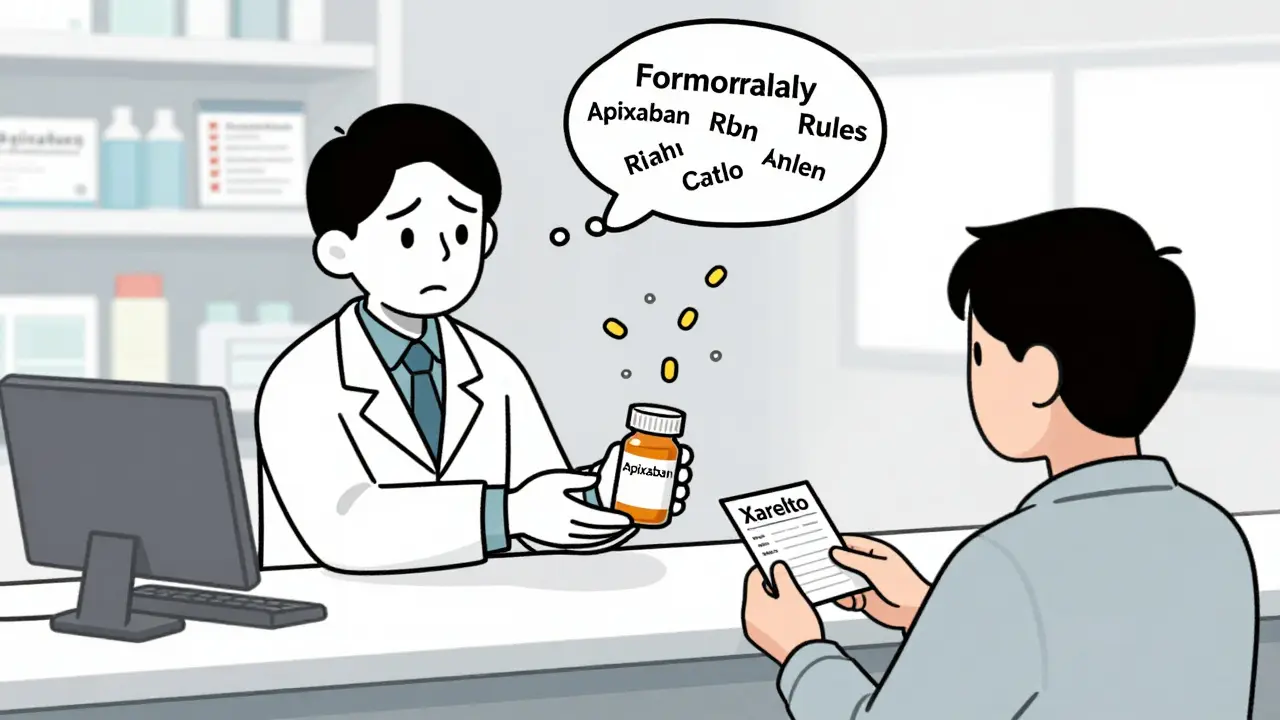
When a patient walks into a hospital or nursing home with a prescription for Brand-X, they might leave with a different drug-Brand-Y-and never know why. This isn’t a mistake. It’s policy. Institutional formularies are the hidden rulebooks that determine which drugs hospitals and clinics actually use, and when they can swap one drug for another. These aren’t just cost-cutting tools. They’re clinical systems designed to improve safety, reduce errors, and standardize care. But they also create confusion, delays, and sometimes, real risks for patients caught in the middle.
What Exactly Is an Institutional Formulary?
An institutional formulary is a living list of approved medications that a hospital, clinic, or nursing home uses to treat patients. It’s not a static catalog. It’s a dynamic decision-making system built by a team of pharmacists, doctors, and nurses who review clinical data, cost, and safety every single month. The goal? Pick the drugs that work best for the most people at the lowest risk.
Unlike insurance formularies-which tell you what your plan will pay for-an institutional formulary tells your doctor what drugs are actually available on the shelves of that facility. If a drug isn’t on the list, it’s not stocked. If it’s on the list, it’s the default choice unless there’s a strong reason to use something else.
Florida Statute 400.143 (2025) gives one of the clearest legal definitions: it’s a system that allows pharmacists to substitute a prescribed drug with another drug that’s chemically different but expected to have the same clinical effect. This is called therapeutic substitution. It’s not generic switching. It’s swapping one brand for another brand, or one class of drug for another-like replacing Xarelto with apixaban, even if the doctor didn’t ask for it.
Who Decides What Goes on the List?
It’s not the CEO. It’s not the marketing team. It’s a formal committee. Florida law requires every facility using a formulary to have a committee made up of three key people: the medical director, the director of nursing services, and a certified consultant pharmacist. These aren’t rubber-stamp roles. They’re decision-makers with legal responsibility.
This committee doesn’t just pick drugs. They set rules. They create written policies for how drugs are added or removed. They define how substitutions are documented. They track what happens after a swap-did the patient’s blood pressure improve? Did they have more side effects? Did they get readmitted?
And they have to report this every quarter. That’s not optional. If a facility doesn’t have a written policy, or doesn’t monitor outcomes, it’s in violation of state law. In Florida, that can trigger an audit, fines, or even loss of licensure.
Other states are catching up. As of 2024, 32 states have similar rules for nursing homes. But Florida’s law is the most detailed. It’s become the model others follow.
How Do Substitutions Actually Work?
Think of the formulary like a tiered pricing system. Drugs are grouped into tiers based on clinical value and cost.
- Tier 1: Generic drugs or older, proven brands. Lowest cost. Preferred by the formulary.
- Tier 2: Brand-name drugs with no generic, or newer agents with modest cost increases.
- Tier 3: High-cost specialty drugs. Often require prior authorization.
- Tier 4: Drugs not on the formulary. Rarely used unless there’s no other option.
When a doctor writes a prescription for a Tier 3 drug, the pharmacist doesn’t just fill it. They check the formulary. If there’s a Tier 1 alternative that’s clinically equivalent, they can substitute it-unless the doctor specifically says “do not substitute.”
This isn’t random. It’s based on evidence. The American Journal of Health-System Pharmacy found that hospitals using structured formularies saw a 15-30% drop in adverse drug events. Why? Because they avoid drugs with known safety issues. They eliminate duplicates. They stop using outdated medications.
But here’s the catch: what’s “clinically equivalent” isn’t always obvious. Two drugs might treat the same condition, but one might be better for elderly patients with kidney problems. One might interact with common supplements. One might need blood tests every two weeks. Formulary committees try to account for this-but they can’t predict every patient’s unique biology.

The Hidden Costs: Confusion and Care Gaps
For patients, the biggest problem isn’t cost. It’s confusion.
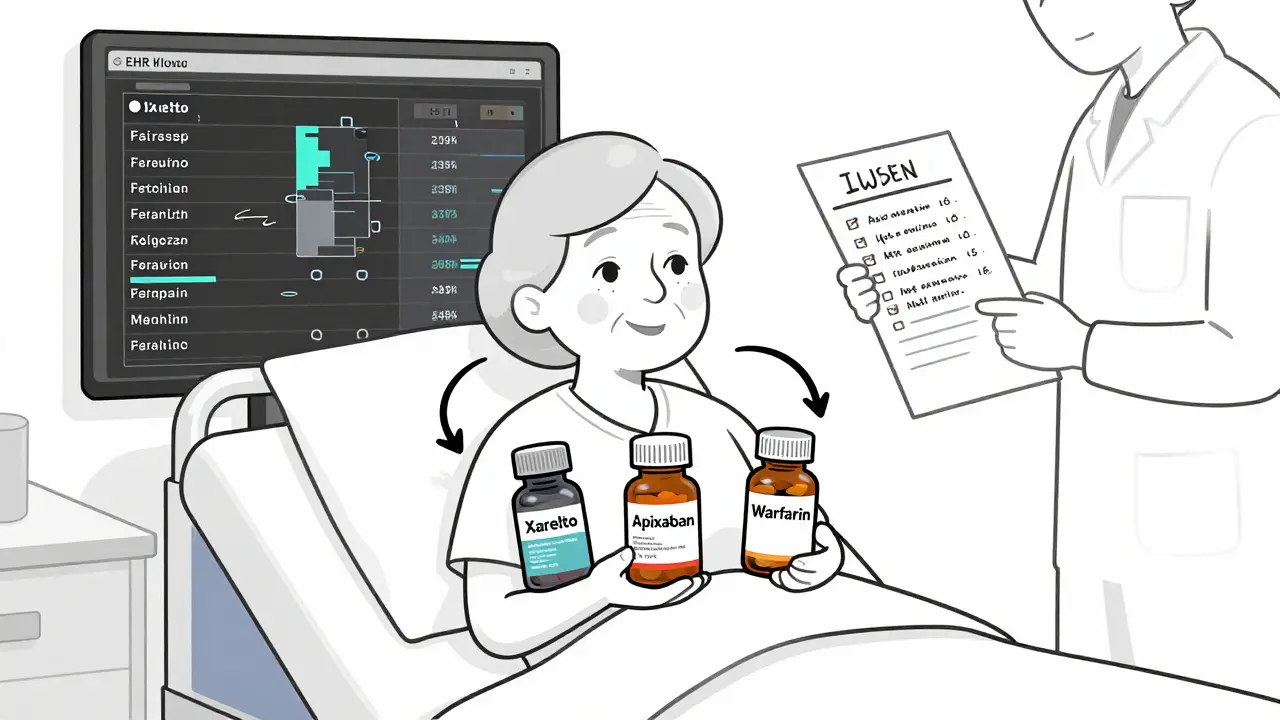
Imagine this: A 78-year-old woman is admitted to a nursing home. Her regular doctor prescribed Xarelto for atrial fibrillation. The nursing home’s formulary doesn’t include Xarelto. They substitute it with apixaban. She’s stable. She’s discharged to the hospital. The hospital’s formulary doesn’t include apixaban. They switch her back to Xarelto. She goes home. Her primary care doctor sees Xarelto on the list and assumes it was always the plan.
No one told her. No one coordinated. And now she’s on two different drugs in three places in six weeks.
This isn’t rare. Hospital pharmacists on Reddit report this exact scenario happening weekly. A 2023 survey by the American Medical Association found that 78% of doctors say bureaucratic hurdles make it hard to get non-formulary drugs approved-even when a patient clearly needs them.
Patient advocacy groups like AARP point out that many elderly patients don’t even know they’ve been switched. They don’t get counseling. They don’t get updated medication lists. They just take what’s handed to them.
And when something goes wrong-a fall, a bleed, an ER visit-it’s often unclear whether it was the illness, the drug, or the switch that caused it.
Implementation: The Real Challenge
Setting up a formulary sounds simple. Hire a pharmacist. Make a list. Done.
It’s not.
Most facilities spend 4 to 8 weeks just training staff. Nurses have to learn when to flag a substitution. Pharmacists have to learn how to document it properly. Doctors have to learn how to request exceptions.
And the electronic health records (EHR) systems? They’re often not built for it. A 2024 survey by Florida’s Agency for Health Care Administration found that 68% of facilities had technical problems integrating formulary rules into their EHRs. Alerts don’t pop up. Substitution logs don’t sync. Prescriptions get filled without the right documentation.
Solutions? Work with your EHR vendor to build custom alerts. Create standardized substitution forms. Train every person who touches a prescription-not just the pharmacy team.
Florida requires facilities to update their formulary policies at least once a year. But the best ones update them every 60 days. Why? Because new drugs come out. New studies come out. New side effects get reported.
What’s Next? AI, Outcomes, and the Future
The next wave of institutional formularies won’t be static lists. They’ll be smart systems.
By 2026, Gartner predicts 80% of healthcare systems will use AI-driven formulary tools that adjust in real time. If a patient on a substituted drug ends up in the ER, the system learns. If a drug shows higher readmission rates, it gets demoted. If a new generic proves just as safe as a brand, it moves to Tier 1.
The Centers for Medicare & Medicaid Services (CMS) is already moving in this direction. Starting in Q3 2025, nursing home formulary compliance will be part of their public quality ratings. Facilities with poor substitution tracking will be flagged. Families will see it.
And soon, pharmacogenomics-the study of how genes affect drug response-will be built into formulary decisions. If a patient has a gene variant that makes them metabolize a drug too slowly, the system should automatically avoid that drug. Some hospitals are already testing this. Deloitte found 72% of healthcare executives plan to use genetic data in formularies within five years.
The goal isn’t just to cut costs. It’s to make care smarter, safer, and more personalized. But only if patients are included in the conversation.
What Patients and Families Should Know
If you or a loved one is in a hospital or nursing home:
- Ask: “Is this the drug my doctor prescribed, or was it switched?”
- Ask: “Why was it changed? Is there a better option?”
- Ask: “Can I get a printed list of all my current medications?”
- Ask: “Who do I talk to if I think this drug isn’t right for me?”
Don’t assume the pharmacy knows what’s best. Don’t assume the doctor knows what’s on the formulary. You are your own best advocate.
And if you’re a caregiver: keep your own medication list. Update it every time there’s a change. Share it with every provider. Even if they say they have your records.
Because in the world of institutional formularies, the system works best when it’s transparent. And right now, too often, it’s not.

Comments
Shane McGriff
I’ve seen this play out with my mom in a nursing home. She was on warfarin for years, then switched to apixaban without anyone explaining why. No one told her the blood tests were gone. She didn’t know to ask. I had to dig through her discharge papers to find out. This isn’t efficiency-it’s negligence wrapped in policy.
Jacob Cathro
so like… the hospital’s just playing drug monopoly? lol. they got their little tier list and now they’re the pharma lords. ‘oh you wanted xarelto? too bad, we got apixaban in stock and your doc didn’t say ‘no subs’ so bye bye.’ 😂
Emily Leigh
It’s not about safety… it’s about control. They’re not ‘standardizing care’-they’re standardizing convenience. Who gets to decide what ‘clinically equivalent’ means? Not the patient. Not the doctor. Some committee that’s never met the person on the other side of the pill bottle. 🤷♀️
Carolyn Rose Meszaros
Yessss this is so real!! 🙌 My aunt got switched mid-hospital stay and ended up with a GI bleed because the new drug messed with her stomach meds. No one told her. No one apologized. Just ‘oh, it’s on the formulary.’ Like that fixes it. 😔
Greg Robertson
I work in a small clinic and we use a formulary. It’s not perfect, but it’s saved us from so many bad interactions. I’ve seen patients get confused, sure-but we train staff to explain the switch. It’s not about hiding things. It’s about making sure the right drug is used for the right person. It’s just poorly communicated.
Nadia Watson
It is a matter of systemic governance, wherein pharmaceutical autonomy is subordinated to institutional protocol, often at the expense of individualized therapeutic outcomes. The absence of patient agency in these decisions constitutes a latent violation of informed consent, even if legally permissible. One must ask: who truly holds the moral authority to determine therapeutic equivalence?
Courtney Carra
So… if AI is gonna start deciding what drugs I get based on my DNA… what’s next? 🤔 Like… will it also decide if I’m ‘worth’ the treatment? 😅 I mean, if I’m old and have 3 comorbidities… will the algorithm just say ‘nah, try a generic’ and move on?
thomas wall
This is precisely the kind of bureaucratic overreach that turns healthcare into a corporate assembly line. These ‘formularies’ are not clinical tools-they are cost-control mechanisms disguised as quality assurance. The fact that Florida mandates reporting proves they know it’s dangerous. They just don’t care enough to fix it.
Paul Barnes
There is no evidence that therapeutic substitution improves outcomes. Only that it reduces costs. The cited 15–30% drop in adverse events? Correlation, not causation. Confounding variables include better pharmacist staffing and EHR alerts-not the formulary itself.
kumar kc
India does this better. No formulary. Doctor prescribes, pharmacy gives. Simple. No bureaucracy. No switches. No confusion. Patients know what they get.
Thomas Varner
Wait-so if I’m on a Tier 3 drug and my doctor writes ‘do not substitute’… but the EHR doesn’t flag it… and the pharmacist doesn’t read it… and I get switched anyway… who’s liable? 🤯
clifford hoang
They’re using this to track us. Formularies aren’t about safety-they’re about data collection. Every time they swap your drug, they log it. Who you are. What you take. What side effects you get. Then they sell it to pharma. This is how they build your ‘health profile’ so they can price you out later. 🕵️♂️💊
Arlene Mathison
You’re not powerless. Ask for the formulary list. Demand a printed med list. Say ‘I want to speak to the pharmacist who made this change.’ You’d be shocked how often they’ll backtrack when you push back. You’re not a patient-you’re a partner in your care. Own it. 💪