
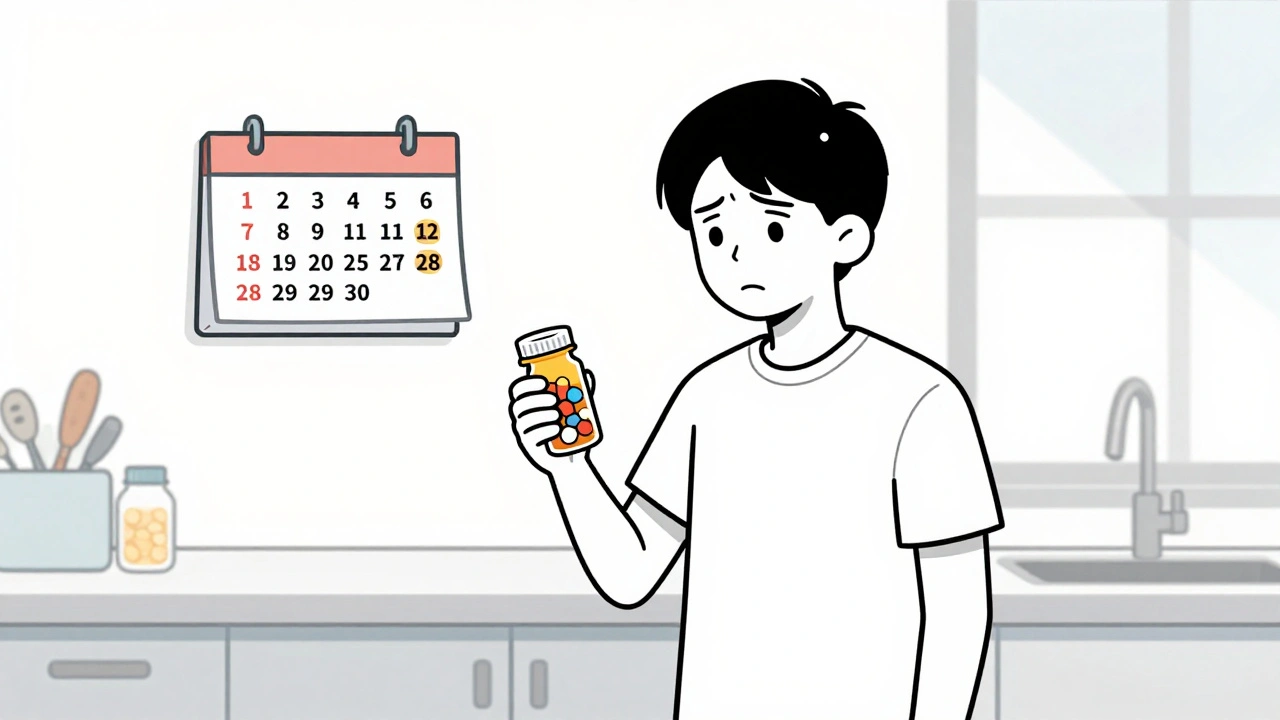
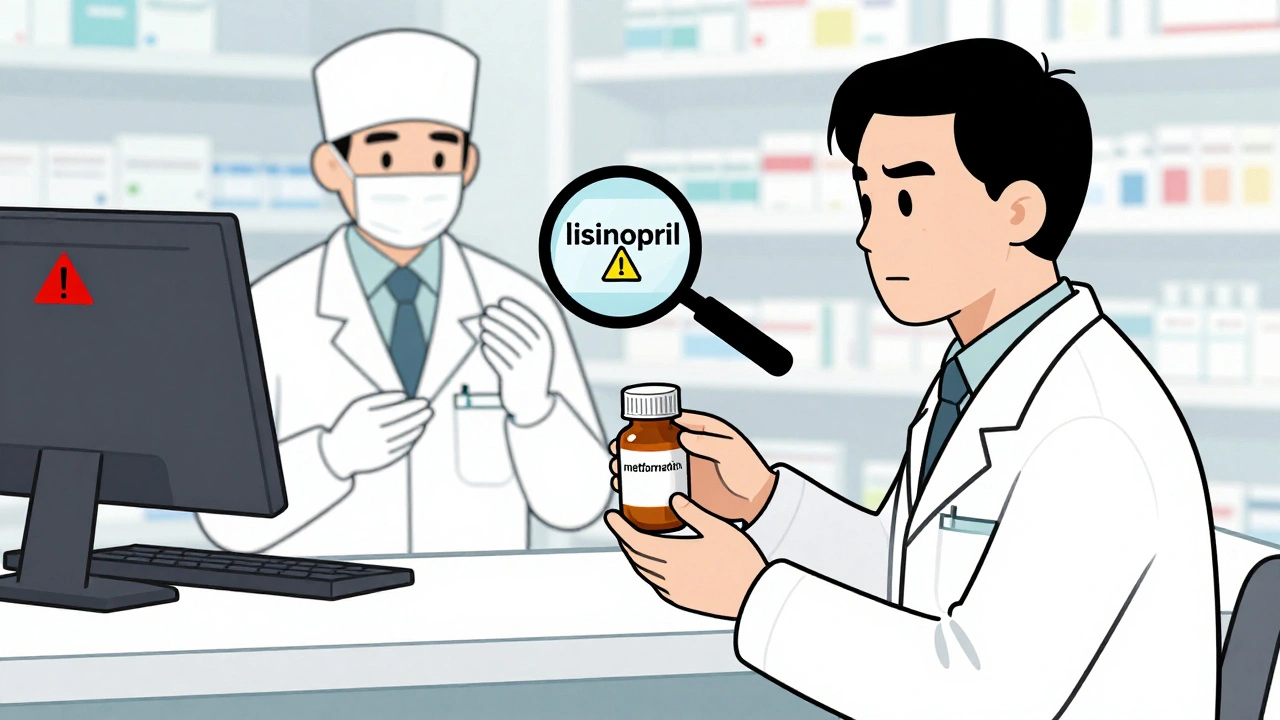
Imagine this: you pick up your prescription, walk home, and open the bottle. The pills don’t look right. They’re a different color, shape, or size than what you’ve been taking for months. Or maybe the label says metformin, but your doctor prescribed lisinopril. Your stomach drops. You didn’t notice until now - but you might have already taken one or two. What do you do next?
Receiving the wrong medication isn’t rare. In the U.S. alone, about 1.5 million people are affected by pharmacy errors each year. Many of these mistakes happen at the counter - not because the pharmacist is careless, but because of high workloads, similar-looking drug names, or outdated systems. The good news? You can protect yourself if you act fast.
Stop Taking the Medication Immediately
The first and most important step is to stop taking the pills. Right now. Don’t wait to see if you feel sick. Don’t assume it’s just a different brand. Even if the medication seems harmless - like a vitamin or a mild pain reliever - it could interact dangerously with what you’re already taking.
For example, someone on blood thinners who accidentally takes aspirin could develop internal bleeding. A diabetic who gets thyroid medication instead of insulin could go into a life-threatening coma. These aren’t hypotheticals. They’re documented cases from the FDA’s MedWatch database and hospital emergency logs.
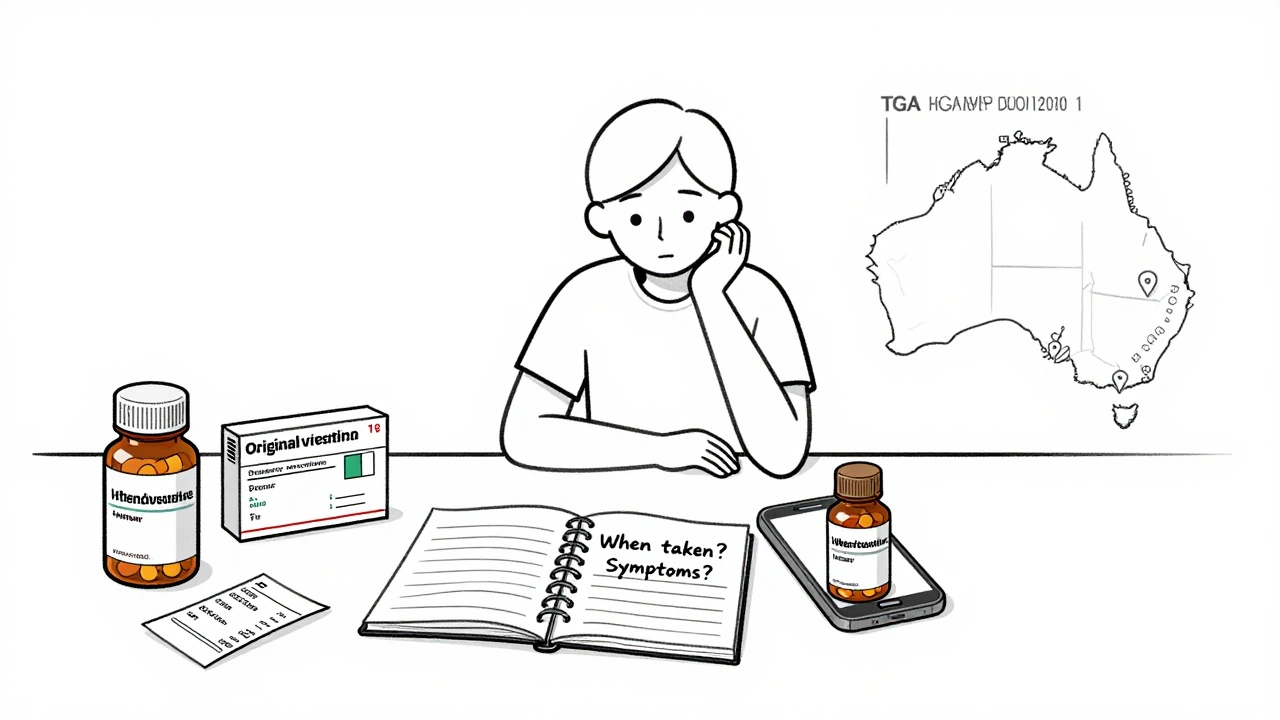
Put the bottle down. Don’t swallow another pill. If you’ve already taken one or two, write down exactly when and how many. That detail will matter later.
Call Your Doctor Right Away
Don’t wait until your next appointment. Call your prescribing doctor immediately. If it’s after hours, most clinics have an on-call service. Tell them:
- What medication you were supposed to get
- What you actually received
- How many pills you’ve taken
- Any symptoms you’re feeling
Your doctor might tell you to come in for blood tests, adjust your treatment plan, or even send you to the emergency room. If you’re dizzy, having trouble breathing, your heart is racing, or you’re confused - don’t call. Go. Call 000 if you’re in Australia. Don’t drive yourself if you feel unsafe.
Doctors see these mistakes more often than you think. They’ve handled cases where patients got antidepressants instead of cholesterol meds, or antibiotics meant for a child. They know what to do. Your job is to give them the facts quickly.
Contact the Pharmacy - Speak to the Manager
Next, call the pharmacy where you picked up the medication. Don’t just talk to the tech who handed you the bottle. Ask for the head pharmacist or manager. This isn’t about blaming anyone - it’s about fixing the system.
When you speak to them, say clearly: “I received the wrong medication. I need to speak with the person who filled this prescription.”
Ask for a written record of the conversation. If they offer to email or mail a report, say yes. If they refuse, write down the date, time, name of the person you spoke to, and what they said. This becomes part of your evidence.
Pharmacies are required to investigate every dispensing error. In Australia, the Therapeutic Goods Administration (TGA) expects pharmacies to report serious incidents. But they won’t fix the problem unless you bring it to their attention.
Keep Everything - Don’t Throw Anything Away
Here’s what you need to save:
- The wrong medication (even if it’s half-empty)
- The original prescription label
- The pharmacy bag
- The receipt
- The correct prescription slip from your doctor
Don’t return the medication to the pharmacy. Don’t flush it. Don’t give it to someone else. If you do, you lose your ability to prove what happened.
Take clear photos of the pills - both the bottle and the actual medication. Use your phone’s camera. Include the label in the shot. If you can, record a short video where you read the name on the label and show the pills next to your original prescription. This isn’t dramatic - it’s practical. In legal cases, visual evidence increases the chance of a fair outcome by over 35%.
Report the Error to the Right Authorities
Pharmacies don’t always fix their systems unless they’re forced to. That’s why reporting matters.
In Australia, you can report a dispensing error to:
- The Therapeutic Goods Administration (TGA) - through their online reporting portal
- Your state’s Pharmacy Board - for example, the Pharmacy Board of Victoria
- Your local health department
You don’t need to name names. You can report anonymously. But the more details you give - date, pharmacy name, medication names, what happened - the more likely they are to investigate.
According to the TGA, over 1,200 medication error reports were filed by the public in 2024. Only 18% of those came from patients who had actually taken the wrong medicine. That means most errors go unreported. Your report could help prevent someone else from being hurt.
Understand Your Legal Rights
If you suffered harm - even minor side effects like nausea, dizziness, or a hospital visit - you may have grounds for a claim. Pharmacy errors are considered a form of medical negligence.
You don’t need to sue to get justice. Many cases settle out of court. The average compensation for documented harm ranges from $10,000 to $150,000 in Australia, depending on:
- How long you took the wrong medication
- What medical treatment you needed
- Whether you missed work or needed ongoing care
But here’s the catch: you have to act fast. In Victoria, you typically have three years from the date you discovered the error to file a claim. But the sooner you consult a lawyer, the better your chances.
Don’t give a recorded statement to the pharmacy’s insurance company without legal advice. They might ask you to sign a waiver or say it was “your fault.” That’s not true. The pharmacy is responsible for checking the prescription before handing it out.
How to Prevent This From Happening Again
Pharmacies are supposed to double-check prescriptions. But human error happens. Here’s how to make sure you’re protected every time:
- Ask to see the prescription label before you leave the counter. Read it out loud with the pharmacist.
- Compare the pills to your last fill. If they look different, ask why.
- Use one pharmacy for all your prescriptions. That way, they can track interactions and spot mistakes.
- Ask if it’s a high-alert medication - like insulin, blood thinners, or seizure drugs. These require extra checks.
- Use digital tools like the My Health Record system to view your active prescriptions online.
Barcodes and automated systems reduce errors by up to 85%, but not every pharmacy uses them. If yours doesn’t, you’re the last line of defense.
What Happens to the Pharmacy After a Mistake?
When a pharmacy is reported for a dispensing error, they’re required to:
- Investigate internally
- Retrain staff
- Update procedures
- Report serious cases to the TGA
In 2024, the TGA issued 42 formal warnings to Australian pharmacies for repeated dispensing errors. Some lost their license. Others were forced to install barcode scanners and hire dedicated safety officers.
But change only happens when people speak up. If you stay quiet, nothing improves.
Long-Term Risks of Ignoring a Wrong Medication
Some people think, “I only took one pill. It’s fine.” But the damage isn’t always immediate.
Studies show patients who experience a medication error have a 28% higher risk of death within five years - even if they didn’t get seriously ill at first. Why? Because the wrong drug can mask symptoms, trigger hidden conditions, or cause organ damage that shows up later.
One case in Melbourne involved a woman who took a diabetes drug instead of her blood pressure pill. She didn’t feel sick. But three months later, she had a stroke. Her doctor later found the medication had caused her blood pressure to spike unnoticed.
That’s why documenting everything matters. Not just for legal reasons - for your health.
Final Thought: You’re Not Overreacting
If you’re reading this because you’re worried you got the wrong pills - you’re not being paranoid. You’re being smart.
Pharmacy errors are preventable. But they won’t stop unless patients demand better. You have the right to the right medicine. And you have the power to make sure that happens - not just for you, but for everyone who walks through that pharmacy door next.

Comments
Harriet Wollaston
OMG I had this happen last year with my blood pressure med. I took one pill and thought, 'Wait, this doesn't taste right.' Turned out they gave me a diabetes pill instead. I called my doc immediately, saved the bottle, and freaked out for three days. But I'm alive and now I check every single pill. You're not paranoid-you're smart.
Tyrone Marshall
It's wild how much we trust institutions until they fail us. Pharmacies are supposed to be sanctuaries of safety, but they're running on fumes and outdated systems. The fact that you have to be your own last line of defense says everything about how broken the system is. But hey-you showed up. That’s the first step toward fixing it.
Tom Zerkoff
While the advice provided is generally sound, I must emphasize the importance of formal documentation in accordance with regulatory frameworks. The Therapeutic Goods Administration requires precise incident reporting with traceable identifiers. Additionally, the retention of physical evidence must comply with chain-of-custody protocols to preserve legal standing. Failure to adhere to these standards may compromise both clinical and jurisprudential outcomes.
Yatendra S
Bro... this is why I use telehealth now 🤡💊
Why trust some dude in a lab coat with a 10-hour shift and zero sleep? I just upload my scrip, get a video consult, and the med gets delivered with a QR code that scans the pill. No human error. Just vibes and algorithms. 🙌
Scott Butler
People like you are why America’s healthcare is a mess. You don’t take responsibility-you wait for someone else to fix it. If you can’t read a label, maybe you shouldn’t be on meds at all. Stop whining and pay attention.
Shelby Ume
It’s not just about the pills-it’s about the culture of silence. Pharmacies don’t report errors unless forced. Patients don’t report because they’re scared, tired, or told it’s ‘not a big deal.’ But silence isn’t peace. It’s complicity. And we’re all paying the price.
Jade Hovet
YESSSS this happened to me too 😭 I took my ‘vitamin’ and felt like I’d been hit by a bus 🤯 Turned out it was a thyroid med. I screamed at the pharmacy, cried in the parking lot, and now I take a pic of every bottle before I leave. Don’t be shy-your life matters more than their convenience 💪❤️
nithin Kuntumadugu
Big Pharma and the pharmacy cartel are running a global scam. They want you dependent. They want you confused. That ‘wrong pill’? Probably intentional. They know you won’t fight back. But I’m not buying it. I’ve got my own lab now. I test every pill with a spectrometer. You think this is a mistake? Nah. It’s a controlled release of chaos. 🕵️♂️💊
John Fred
Pro tip: Always ask if it’s a high-alert med. If they hesitate? Walk out. And if they say ‘it’s the same thing’-they’re lying. Insulin, warfarin, chemo-those aren’t interchangeable. If you’re on one of these, treat the pharmacy like a bomb squad. Double-check. Triple-check. Then check again. Your life isn’t a gamble.
Lauren Scrima
Wow. So we’re supposed to be pharmacy detectives now? 🤦♀️ I pay $50 for a prescription and also need to be a forensic scientist, legal advisor, and trauma therapist? Thanks, capitalism. Next up: paying extra to have someone hold my hand while I swallow a pill.
Emily Haworth
Did you know the government tracks your meds through your phone now? 📱 That ‘wrong pill’? They knew you’d take it. They’re testing how fast people die before they report it. I saw the memo. It’s in the back of the TGA website. Don’t trust the bottle. Don’t trust the label. Don’t trust the system. 🔍
Jamie Clark
Stop romanticizing this. You didn’t ‘save yourself’-you got lucky. The system doesn’t care. It’s designed to fail quietly. You think your report changes anything? It doesn’t. It just gives them data to make the next mistake harder to trace. The only thing that matters is getting off the grid. Stop taking prescriptions. Stop trusting doctors. Start fasting.
Keasha Trawick
This isn’t just a mistake-it’s a symphony of systemic collapse. The pharmacist’s tired eyes, the barcode scanner that’s been broken since 2019, the intern who filled the script while texting their ex, the manager who signed off because ‘it’s close enough’-it’s all a cascade of neglect wrapped in white coats and fluorescent lights. And we’re just supposed to nod and say ‘thank you’? No. We scream. We document. We burn it all down. 🔥
Webster Bull
Just check your pills. Always. It takes 5 seconds. I do it every time. Even if it’s the same med. Because why risk it? Life’s too short for bad vibes and wrong tabs. 🙏💊