
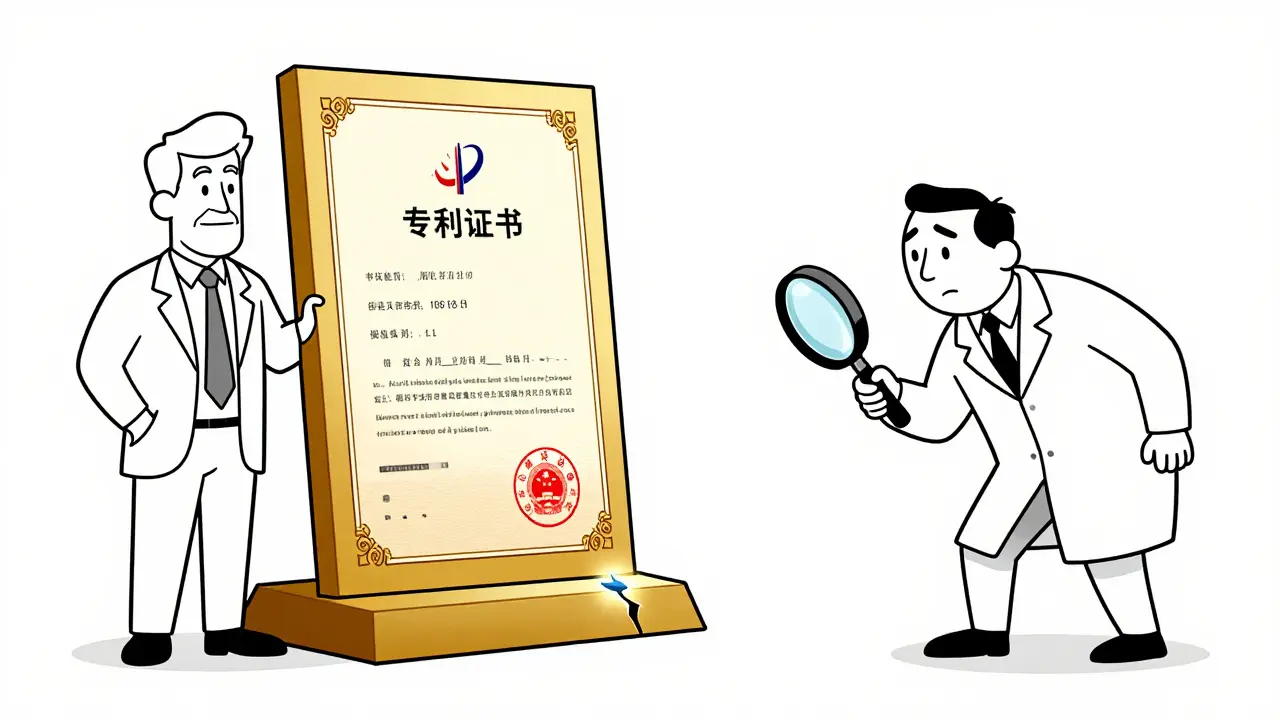
Imagine a scenario where a pharmaceutical company spends a decade and billions of dollars developing a blockbuster drug, only for a competitor to launch a nearly identical version just as the patent is about to expire. Now, imagine that competitor finding a legal loophole to launch that generic version years earlier. That is exactly what happens through Paragraph IV certifications. It is a high-stakes legal gamble where generic drug makers bet that a brand-name patent is weak, invalid, or simply doesn't apply to their product.
For most people, this sounds like corporate bureaucracy, but it is the primary reason why some medications suddenly drop in price while others stay expensive for years. This mechanism doesn't just affect company profits; it has saved the healthcare system over $1.7 trillion since the mid-80s by forcing competition into the market sooner.
What Exactly is a Paragraph IV Certification?
At its core, a Paragraph IV certification is a formal declaration made by a generic drug manufacturer within an Abbreviated New Drug Application (ANDA) stating that a brand-name drug's patent is invalid, unenforceable, or will not be infringed by the generic version.
This process was created by the Hatch-Waxman Act is the 1984 law that balanced the need for pharmaceutical innovation with the need for affordable generic drugs. Before this law, generic companies often had to wait until a patent completely expired before even applying for approval, or they had to launch "at-risk," hoping the brand company wouldn't sue them. The Hatch-Waxman framework created a structured way to fight these battles in court before the drug ever hits the pharmacy shelf.
When a generic company files a Paragraph IV, they are essentially committing an "artificial act of infringement." They aren't selling the drug yet, but by claiming the patent is invalid, they trigger a legal right for the brand company to sue them immediately. This allows the courts to decide if a patent is actually valid before the market is flooded with generics, providing a level of certainty for both the FDA and the manufacturers.
The Four Paths to Market: Comparing Patent Certifications
Generic companies don't always choose the aggressive route. Depending on the patent status of the reference drug, they have four different certification options. While Paragraphs I, II, and III are relatively straightforward, Paragraph IV is the "nuclear option" of pharmaceutical law.
| Certification Type | What it Means | Risk Level | Market Entry Timing | Prevalence (Approx.) |
|---|---|---|---|---|
| Paragraph I | No patent listed in Orange Book | Low | Immediate upon FDA approval | 5% of ANDAs |
| Paragraph II | Patent has already expired | Low | Immediate upon FDA approval | 15% of ANDAs |
| Paragraph III | Patent exists; will enter after it expires | Low | Wait until patent expiry date | 20% of ANDAs |
| Paragraph IV | Patent is invalid or won't be infringed | High | Potential for early entry (years sooner) | 60-70% of ANDAs |
How the Paragraph IV Process Actually Works
Filing a Paragraph IV isn't as simple as checking a box. It is a multi-step legal dance that requires precision. If a company misses a detail in their filing, the FDA can reject the entire application, regardless of whether their legal argument was correct.
- The Analysis: Generic firms conduct "patent landscaping" usually 3-4 years before a patent expires. They look for flaws in the brand's patent-perhaps the brand claimed a specific chemical formula that the generic company has found a way to bypass.
- The Filing: The generic company submits an ANDA is an Abbreviated New Drug Application that allows generics to rely on the brand drug's safety data rather than repeating clinical trials. This application must include a detailed statement explaining exactly why the patent is invalid or not infringed.
- The Notice Letter: Within 20 days of filing, the generic company must send a notice letter to the brand owner. This letter is the official "shot across the bow," informing the brand that they intend to enter the market.
- The Lawsuit: The brand company typically has 45 days to file a patent infringement lawsuit. In reality, about 92% of brand companies sue immediately to protect their monopoly.
- The 30-Month Stay: Once the brand company sues, the FDA automatically pauses the approval of the generic drug for 30 months. This "stay" gives the court time to decide the case without the generic drug hitting the market prematurely.
The Big Reward: 180-Day Marketing Exclusivity
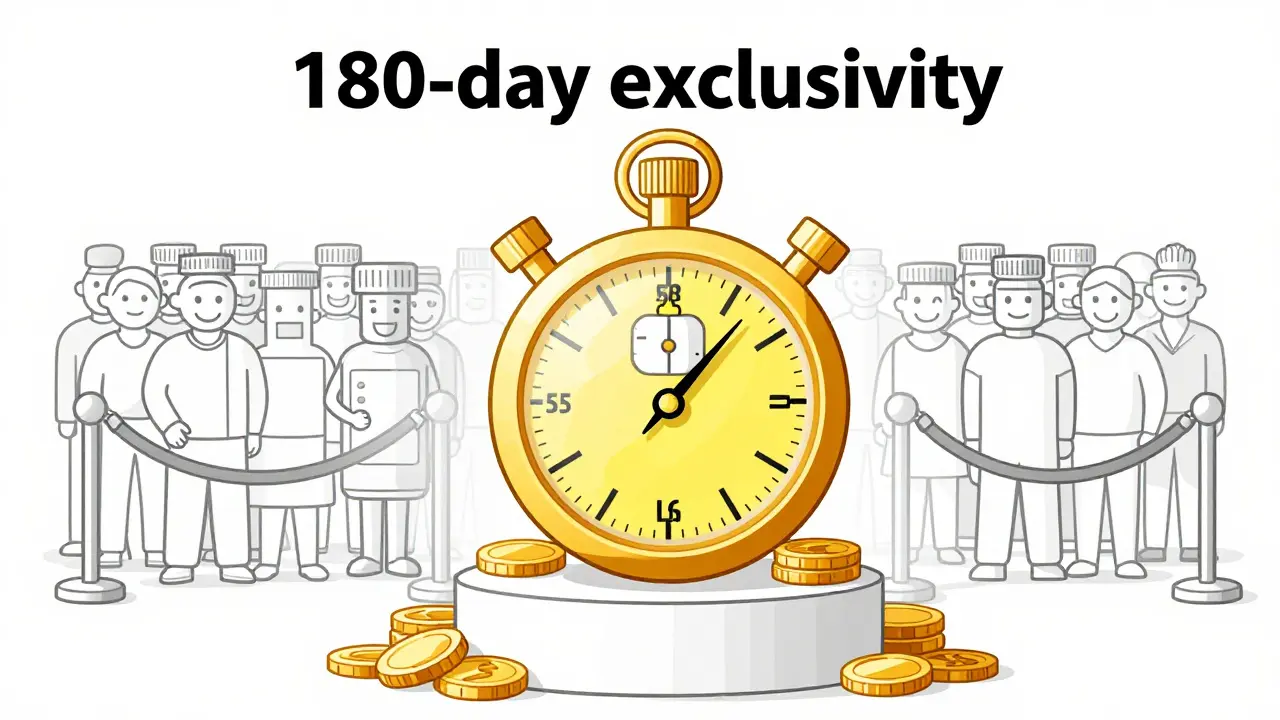
Why would a company risk a lawsuit that can cost over $12 million in legal fees? The answer is the "180-day exclusivity" period. The first generic company to successfully file a Paragraph IV certification and win (or settle) is granted six months where they are the only generic version allowed on the market.
This sounds short, but in the world of blockbuster drugs, six months of near-monopoly pricing is incredibly lucrative. For example, Apotex once generated over $1.2 billion in revenue during a single 180-day exclusivity period after challenging a patent for Paxil. It turns a risky legal battle into a massive profit center.
However, this reward is fragile. Under the Medicare Modernization Act is a 2003 law that updated the rules for generic drug exclusivity and forfeiture., a company can lose this exclusivity if they fail to market the drug or withdraw their application. Teva famously lost exclusivity for its version of Copaxone because they didn't hit a specific regulatory deadline, allowing other generics to flood the market immediately.
The Dark Side: Patent Thickets and Pay-for-Delay
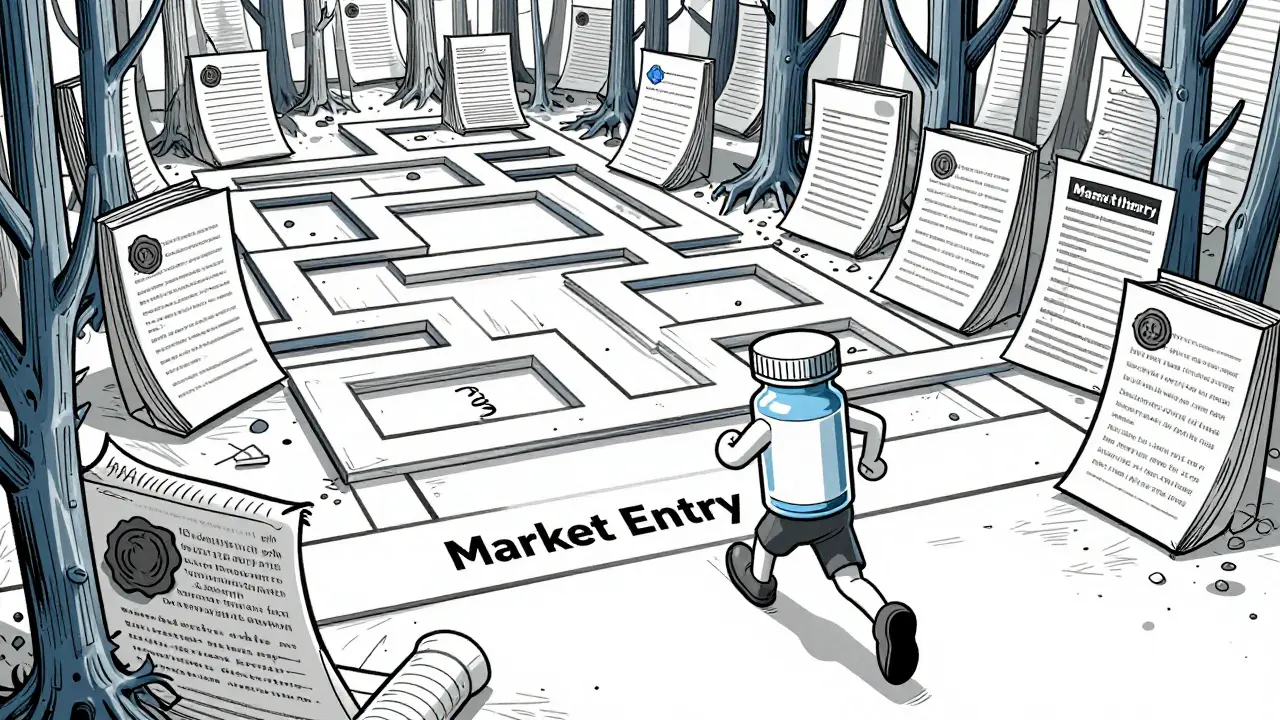
Because Paragraph IV is so powerful, brand-name companies have developed counter-strategies. One common tactic is "evergreening" or creating "patent thickets." Instead of one strong patent, a company might file dozens of secondary patents on the drug's coating, its dosage, or the way it's manufactured. For a generic company, this means they can't just challenge one patent; they have to fight through a whole forest of them.
Then there is the controversial "pay-for-delay" settlement. This happens when a brand company pays the generic company millions of dollars to essentially "go away" and delay their market entry. The Federal Trade Commission is the U.S. agency tasked with preventing unfair methods of competition and protecting consumers. has spent years fighting these deals, arguing that they are anticompetitive and keep drug prices artificially high for patients.
Modern Trends: Biologics and Complex Generics
The landscape is shifting. We are seeing a move away from simple chemical pills toward complex generics-like inhalers and injectables-and biologics. The 2023 Supreme Court ruling in Amgen v. Sanofi has made it harder for generics to invalidate patents by requiring a higher standard of "enablement." Basically, the patent must be clear enough that a skilled scientist could actually make the drug without too much guesswork.
Additionally, many companies are now using Inter Partes Review (IPR) is a trial-like proceeding at the Patent Trial and Appeal Board to challenge the validity of a patent outside of traditional district courts. as a side-attack. By challenging a patent at the USPTO is the United States Patent and Trademark Office, the federal agency for granting U.S. patents. while simultaneously fighting a Paragraph IV case in court, generics can put double the pressure on the brand company.
What happens if the generic company wins the Paragraph IV case?
If the court rules the patent is invalid or not infringed, the FDA can approve the generic drug immediately. If the generic company was the first to file the Paragraph IV, they typically get 180 days of market exclusivity, meaning no other generic versions can enter until that period ends.
What is the 'Orange Book'?
The Orange Book is the FDA's official list of approved drug products with therapeutic equivalence. Most importantly, it lists all the patents that the brand-name manufacturer claims cover the drug, which generic companies must analyze before filing a Paragraph IV certification.
Why is the 30-month stay important?
The 30-month stay prevents the FDA from approving a generic drug while a patent lawsuit is ongoing. This protects the brand company from losing market share to a generic that might later be found to be infringing the patent, and it protects the generic company from launching a product that could lead to massive damages if they lose in court.
Can a brand company stop a Paragraph IV challenge?
They can't stop the filing, but they can fight it by suing for infringement within 45 days of the notice letter. They may also try to settle the case through a payment or agreement that delays the generic's entry, though these "pay-for-delay" deals are often scrutinized by the FTC.
How much does a Paragraph IV legal battle cost?
It is incredibly expensive. Median litigation costs can reach $12.7 million per case. Because of this, only larger generic firms or those with significant backing typically pursue these challenges for high-value "blockbuster" drugs.
Next Steps and Troubleshooting
If you are tracking a specific drug's price, check the Orange Book to see if there are active Paragraph IV challenges. For generic manufacturers, the most critical failure point is the notice letter; if the legal basis isn't "detailed" enough, the FDA will reject the application before a judge even sees it.
For those in the legal field, keep an eye on the Patent Trial and Appeal Board (PTAB). Parallel proceedings are becoming the norm, and a win at the PTAB can often render a district court patent case moot, speeding up the process for generic entry.

Write a comment