

Dealing with a health issue while breastfeeding often feels like a balancing act. You want to get better, but you also worry about what might be passing into your milk. The good news is that about 98% of medications can be used safely while breastfeeding if you use the right strategies. The secret isn't always about which medicine you take, but breastfeeding medication timing-the art of scheduling your doses to ensure the lowest possible amount of the drug is present when your baby feeds.
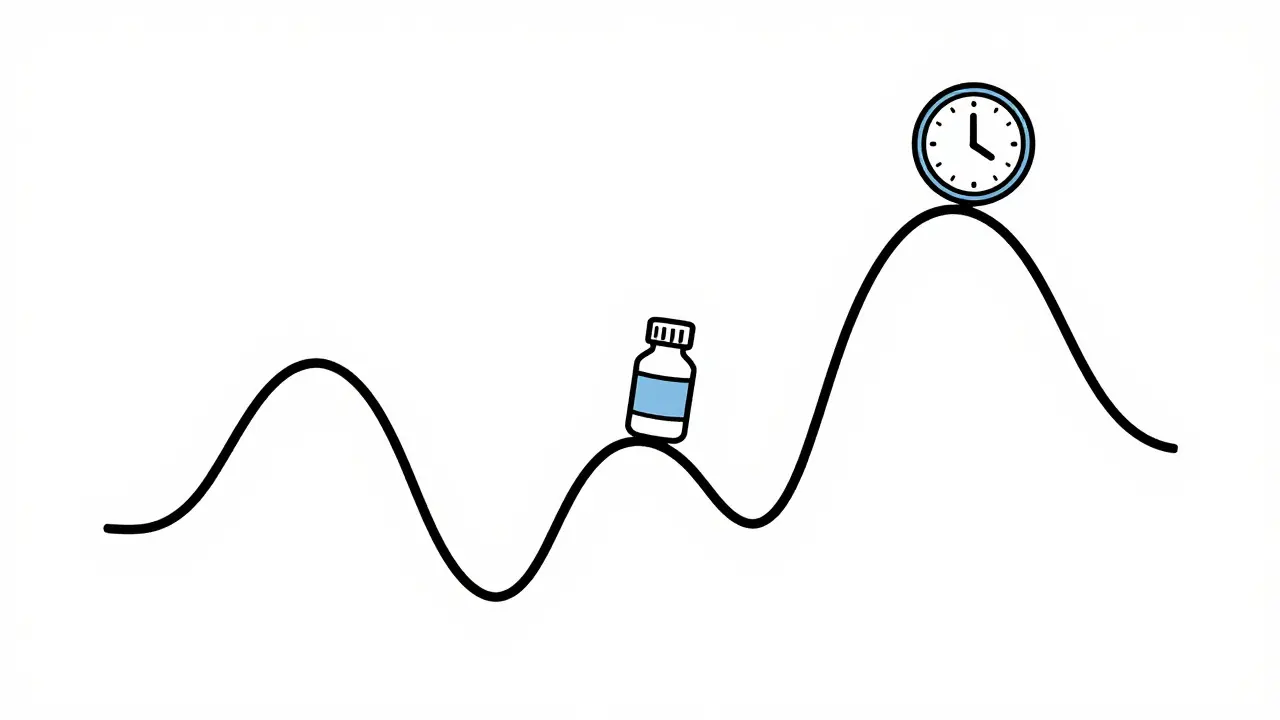
Most medications follow a predictable pattern in your body. They hit a "peak" concentration in your bloodstream and then slowly fade away. Since medication enters your breast milk based on the levels in your blood, you can use this cycle to your advantage. By understanding a few basic concepts, you can keep your health on track without compromising your baby's wellness.
The Basics of How Drugs Enter Breast Milk
To time your doses, you first need to understand two main terms: peak plasma concentration and half-life. Peak Plasma Concentration is the time it takes for a drug to reach its highest level in your bloodstream after you take it. This is usually when the most medication will transfer into your milk. If a drug peaks at 2 hours, that's the "danger zone" where exposure is highest.
Half-life is the time it takes for the concentration of the drug in your body to reduce by half. This determines how long the drug sticks around. A drug with a short half-life (like some painkillers) disappears quickly, making timing very effective. A drug with a long half-life (like some antidepressants) stays at a steady level in your blood for days, meaning the exact time you take the pill matters much less because the level in your milk stays relatively constant.
Doctors also look at the Relative Infant Dose (RID), which is a calculation of the percentage of the mother's dose that the infant receives relative to their body weight. Generally, if the RID is under 10%, the medication is considered acceptable for most healthy infants.
Timing Strategies for Different Dose Frequencies
Depending on how often you need to take your medication, your strategy will change. Here is how to handle the most common scenarios:
Once-Daily Medications
If you only need one dose a day, the goal is to align the "peak" of the medication with your baby's longest stretch of sleep. For most parents, this means taking the medication immediately after the bedtime feeding. Since babies often sleep for 6 to 8 hours at night, the drug will hit its peak and begin to clear your system while the baby isn't feeding. By the time the first morning feed arrives, the levels in your milk are significantly lower.
Multiple-Daily Doses
When you have to take a pill every few hours, you can't wait for a long sleep window. In this case, the rule of thumb is to breastfeed immediately before taking your dose. This ensures your baby gets a full feed while the drug levels from your previous dose are at their lowest and before the new dose kicks in.
Short-Term or "As Needed" Meds
For things like dental surgery or a sudden infection, some mothers prefer a "pump and dump" approach. This involves pumping milk just before taking the medication and then feeding the baby that stored milk for a few hours after the dose. This completely removes the infant's exposure during the drug's peak window.
| Drug Type | Half-Life Example | Timing Strategy Importance | Recommended Action |
|---|---|---|---|
| Short-Acting | 3-4 hours (e.g., Hydrocodone) | Very High | Feed immediately before dosing |
| Medium-Acting | 26 hours (e.g., Sertraline) | Moderate | Consistent dosing; monitor baby |
| Long-Acting | 44+ hours (e.g., Diazepam) | Low | Focus on total daily dose rather than timing |
Which Medications Require Precise Timing?
Not all drugs are created equal. Some are very "spiky," while others are "flat." Knowing the difference helps you prioritize your efforts.
- Opioids: Drugs like hydrocodone and oxycodone have short half-lives. Because they peak quickly (often within 0.5 to 2 hours), timing is critical. Feed your baby, then take the dose.
- Benzodiazepines: There is a huge range here. Lorazepam has a shorter peak and lower RID, making it easier to time. Diazepam, however, has a massive half-life (up to 48 hours), meaning it builds up in the system. Timing a single dose of diazepam doesn't do much; the focus here is on using the lowest effective dose.
- Steroids: For standard doses of Prednisone, the amount in milk is usually tiny. However, if you are on a very high dose, experts suggest waiting about four hours after dosing before breastfeeding to let the initial surge pass.
- Psychiatric Meds: Immediate-release versions are generally preferred over extended-release because they allow for better timing control. For example, extended-release alprazolam peaks much later (around 9 hours) than the immediate-release version (1-2 hours).
Practical Challenges and How to Overcome Them
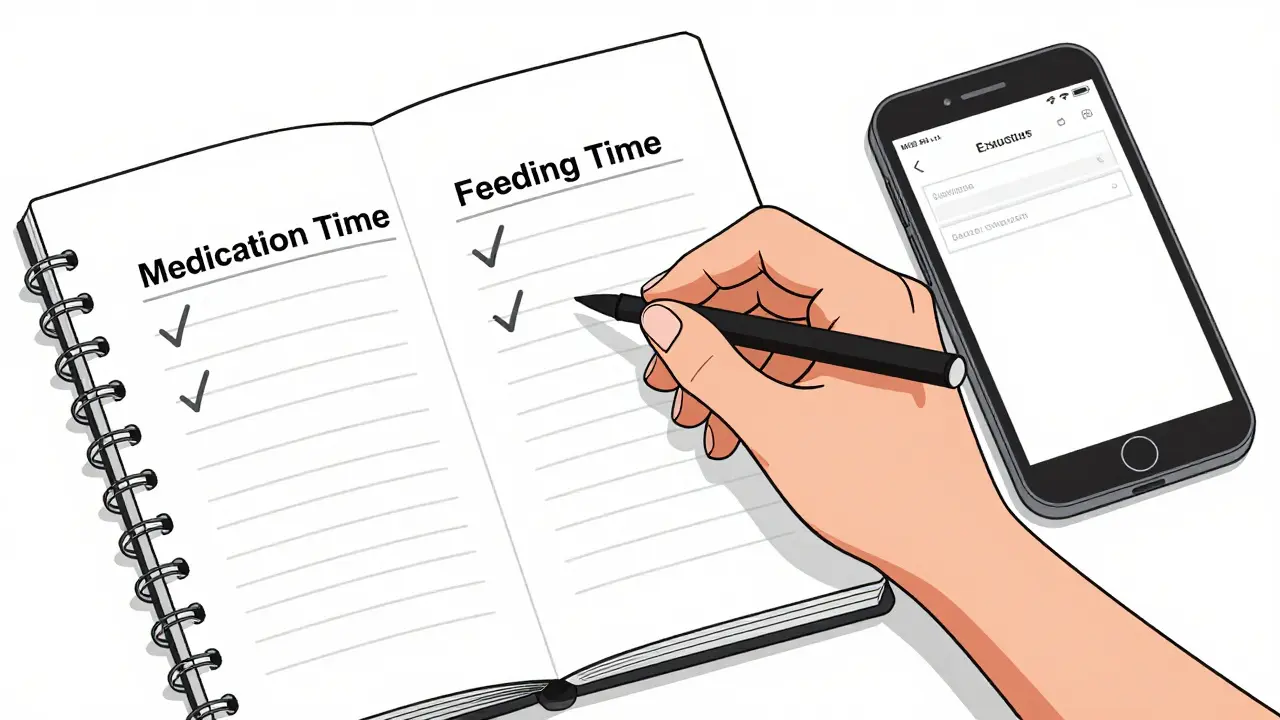
In a perfect world, babies sleep on a schedule. In reality, newborns are unpredictable. If your baby's feeding schedule is chaotic, don't panic. The most important thing is to keep a simple log of when you took your meds and when the baby fed. This helps you and your doctor see the actual gaps in exposure.
Remember that your baby's ability to handle medications changes as they grow. During the first few weeks postpartum, infants have a harder time clearing drugs from their systems. By the time a baby is 6 weeks old, their metabolism improves significantly, and the risks associated with small amounts of medication transfer typically decrease.
If you are worried, keep an eye out for these "red flags" in your baby:
- Excessive sleepiness or difficulty waking for feeds.
- Irritability or unusual fussiness.
- Poor feeding or a sudden drop in weight gain.
- Changes in bowel movements or respiratory patterns.
Tools for Safe Medication Management
You don't have to memorize half-lives and RID percentages. There are professional tools available that provide specific data for thousands of drugs. LactMed is a free database from the National Library of Medicine that provides evidence-based information on drugs and lactation. It's updated monthly and is a gold standard for both parents and clinicians.
Another excellent resource is Hale's Medication and Mothers' Milk. This is the textbook most pharmacists and doctors use to categorize drugs by safety levels. When talking to your doctor, you can ask, "What is the RID for this medication?" or "When does this drug reach its peak plasma concentration?" These specific questions push the conversation toward a concrete timing plan rather than a vague "it should be fine."
Does the timing really make a difference if the drug is "safe"?
Yes. Even for medications labeled as safe, timing reduces the peak exposure. By avoiding the window where the drug is at its highest concentration in your blood, you minimize the amount the baby ingests, which is an extra layer of safety, especially for newborns or premature babies.
Should I pump and discard milk if I take a medication?
This is often recommended for medications with very short half-lives and high peaks. If you pump and discard the milk during the window when the drug is at its peak, you effectively remove that dose from the baby's exposure. This is a common strategy for short-term medications like those used after a dental procedure.
What if I miss my timing window?
Don't stress. Occasional timing misses are unlikely to cause long-term harm, especially with medications that have a low RID. Just get back on your schedule for the next dose. If you've accidentally fed during a peak and notice any unusual sedation in your baby, call your pediatrician.
Are extended-release medications better for breastfeeding?
Actually, immediate-release formulations are often preferred for timing strategies. Because they peak and clear more quickly, you can more accurately schedule your feeds around the drug's presence. Extended-release versions create a long, steady plateau, which makes "timing around the peak" nearly impossible.
How do I know if a drug has a long or short half-life?
The easiest way is to check the LactMed database or ask your pharmacist. Generally, if a drug is taken once a day, it may have a longer half-life; if it must be taken 3-4 times a day, it typically has a shorter half-life and is more sensitive to timing strategies.
Next Steps for Parents
If you are prescribed a new medication, start by asking for the generic name and checking it on LactMed. Discuss a specific dosing schedule with your doctor-don't just settle for "take it twice a day." Instead, agree on "take it immediately after the 8 PM feed." If you have a baby with kidney issues or a premature infant, be even more strict with your timing, as these babies clear drugs more slowly.
For those struggling with irregular newborn schedules, focus on the relative timing (feed, then dose) rather than the clock timing (dose at 8 PM). This flexibility reduces stress while still achieving the goal of lowering infant exposure.

Write a comment