
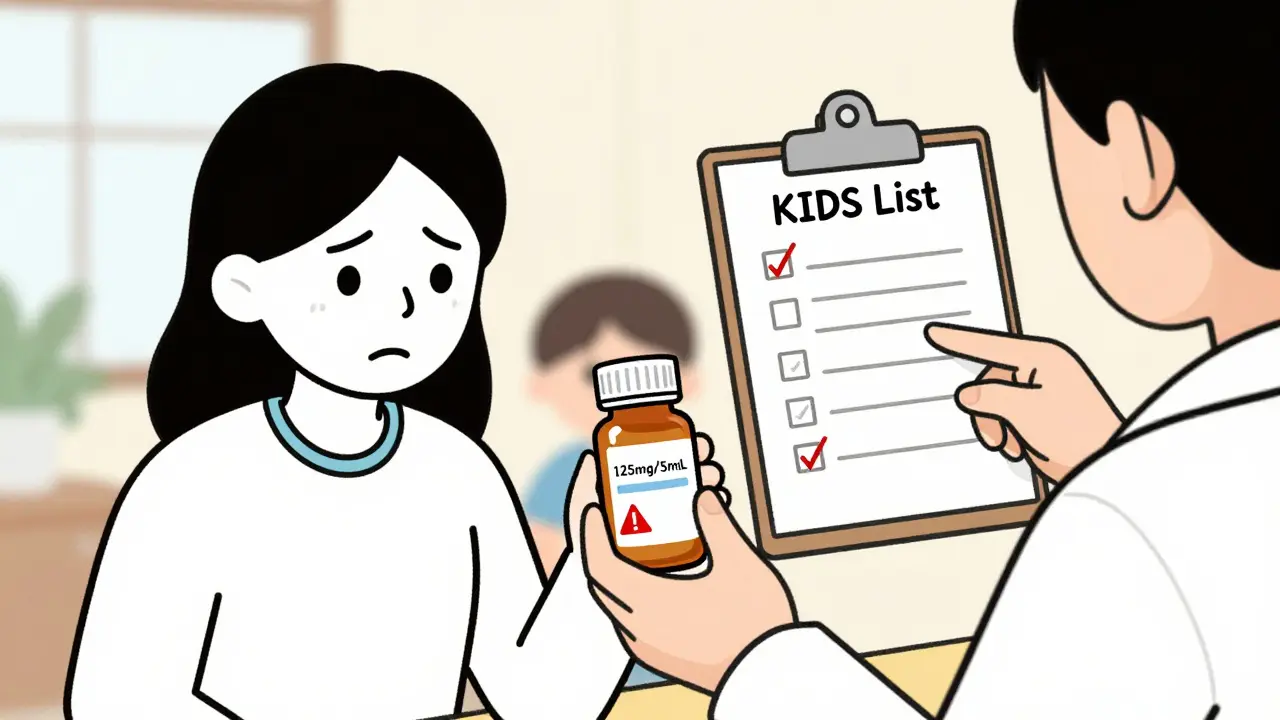
When your child gets sick, you want the best care-fast, effective, and safe. Most of the time, that means a generic drug. After all, they’re cheaper, widely available, and approved by the FDA. But here’s the hard truth: generic drugs for children aren’t always interchangeable with their brand-name versions, especially when it comes to safety. What works for an adult doesn’t always work for a 6-month-old. And in pediatrics, even small mistakes can lead to serious harm.
Why Kids Aren’t Just Small Adults
Children’s bodies process medicine differently. Their livers and kidneys aren’t fully developed until around age 2. Their stomachs absorb drugs at different rates. Their brain chemistry responds uniquely to certain ingredients. These aren’t minor differences-they change how drugs behave in the body. Take acetaminophen. In adults, too much can cause liver damage. But in babies under 2, their bodies make more glutathione, a natural protector that helps break down the drug safely. That doesn’t mean they can take more-it means dosing must be calculated precisely for their age and weight. A generic version with the same active ingredient might still be dangerous if the liquid concentration is wrong or if it contains a preservative the child is allergic to. The same goes for drugs like lamotrigine, used for seizures. Children have a much higher risk of developing Stevens-Johnson syndrome-a life-threatening skin reaction-than adults. Generic versions carry the same active ingredient, but if the inactive ingredients differ, the reaction risk can change. And since many generics aren’t tested specifically in kids, doctors are often guessing.The Hidden Risks in Inactive Ingredients
The FDA requires generic drugs to match brand-name drugs in active ingredients, strength, and how they work in the body. But they don’t require the same fillers, dyes, flavorings, or preservatives. That’s where things get risky for kids. Benzocaine, a common numbing agent in teething gels and sore throat sprays, can cause methemoglobinemia-a condition that stops blood from carrying oxygen. It’s rare, but in children under 2, it’s deadly. The FDA warns against using any product with benzocaine in babies under 2, whether brand or generic. Yet many parents don’t know the difference. They see “benzocaine” on the label and assume it’s safe because it’s been around forever. Same with promethazine, a generic antihistamine. It’s fine for adults with allergies. But in kids under 2, it can cause fatal breathing problems. The KIDs List-a safety guide used by pediatric pharmacists-flags it as “avoid” for this age group. Yet it’s still prescribed because many doctors don’t check the list regularly. Even something as simple as a color change can cause confusion. Parents report kids refusing medication because the new generic pill is blue instead of yellow. Or worse, they mix up doses because the shape changed. One parent on Reddit shared that her 3-year-old had severe diarrhea after switching from brand-name loperamide to a generic version. The active ingredient was the same, but the flavoring and filler triggered a reaction.Off-Label Use and the Lack of Pediatric Data
About 60% of generic drugs used in children don’t have official FDA-approved dosing for kids. That doesn’t mean they’re unsafe-it means they weren’t tested in children. So doctors use adult dosing rules and adjust them by weight. That’s where errors creep in. A child weighing 12 kg needs a different dose than one weighing 20 kg. But if the generic bottle says “10 mg per 5 mL” and the doctor prescribes “5 mg,” the pharmacist might pull a bottle labeled “5 mg per 5 mL” by mistake. That’s a 10-fold overdose. That’s not theoretical. It’s happened. The Institute for Safe Medication Practices says 37% of pediatric medication errors involve liquid formulations. And then there’s the issue of concentration. Some generic versions of amoxicillin come in 125 mg/5 mL, others in 250 mg/5 mL. If you use the wrong one, you’re giving your child double the dose. Parents aren’t trained to spot this. Pharmacists are stretched thin. And many pediatricians don’t have time to double-check every prescription.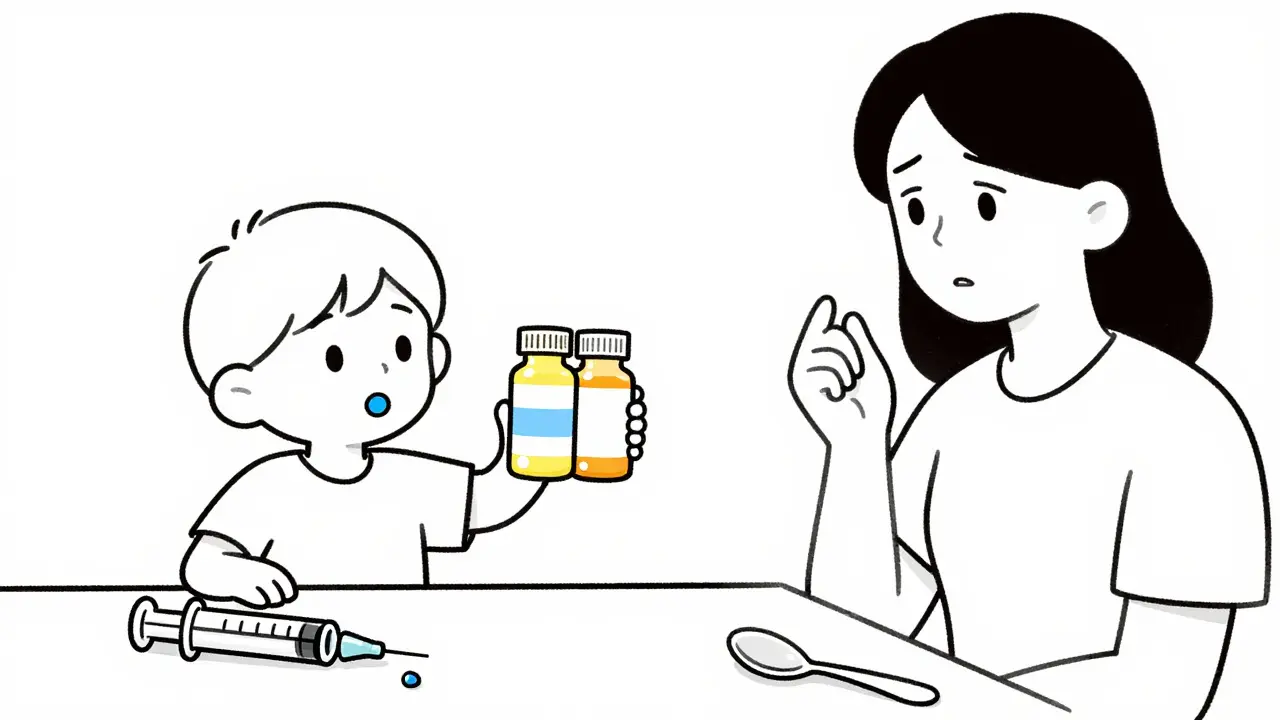
The KIDs List: A Lifesaving Tool You’re Probably Not Using
The Pediatric Pharmacy Association created the KIDs List-a curated database of drugs that pose serious risks to children. It’s updated quarterly. The 2025 version includes over 4,100 drugs, with clear labels: “avoid,” “caution,” or “safe.” Some highlights:- Promethazine - Avoid under age 2; use caution up to age 18.
- Trimethobenzamide - Avoid in all patients under 18. Causes severe muscle spasms.
- Lidocaine viscous - Avoid in children under 2. Can cause seizures.
- Linaclotide - Caution under age 2. Risk of fatal dehydration.
- Guaifenesin - Avoid under age 4. No proven benefit, high risk of side effects.
What Parents Can Do Right Now
You don’t need to be a pharmacist to protect your child. Here’s what actually works:- Ask if the generic is the same as the brand. Not just in active ingredient, but in concentration and flavor. Ask for the exact name on the label.
- Use an oral syringe. Never use a kitchen spoon. Household spoons vary wildly in size. Oral syringes are accurate to within 0.1 mL. They cost less than $2 at any pharmacy.
- Never use adult medicine for a child. Even if you cut it in half. The inactive ingredients can be toxic. A single adult ibuprofen tablet can kill a toddler.
- Read the label twice. Turn on the light. Check the concentration. Check the expiration date. Check the age restriction.
- Keep a current list. Write down every medicine your child takes-prescription, OTC, herbal. Bring it to every appointment. 78% of adverse events are preventable with good medication reconciliation.
- Speak up if something changes. If your child gets a rash, vomits, or acts strangely after a new prescription, call your doctor. Don’t wait. Don’t assume it’s “just a coincidence.”
When to Ask for the Brand Name
Some kids need the brand-name version. Always. Not because it’s “better,” but because the generic version has been linked to problems. Examples:- Levothyroxine (for hypothyroidism). Even tiny differences in absorption can throw off hormone levels. Generic versions vary in potency. The American Thyroid Association recommends sticking to one brand.
- Phenytoin (for seizures). Generic versions can cause breakthrough seizures. The difference in inactive ingredients affects how the drug is absorbed.
- Betamethasone (topical steroid). Generic versions vary in strength. Using the wrong one on a baby’s diaper area can cause Cushing syndrome or adrenal suppression.

The Bigger Picture: Why This Isn’t Getting Fixed
The FDA has made progress. The Best Pharmaceuticals for Children Act and the Pediatric Research Equity Act pushed for more pediatric testing. But compliance is still low. Only 42% of generic manufacturers respond to FDA requests for pediatric studies. In Europe, it’s 78%. The market doesn’t reward safety. Generic drug companies make money by producing cheap, high-volume products. Testing in children is expensive. It takes years. There’s little financial incentive. But the cost of not testing? It’s measured in ICU stays, brain damage, and deaths. The Agency for Healthcare Research and Quality found that hospitals with pediatric-specific safety protocols reduced medication errors by 47% over five years. That’s not just a statistic-it’s families kept whole.What’s Changing in 2025
The FDA just mandated that by December 2025, all new generic drugs must include pediatric dosing information if it exists. That’s huge. It means future generics will come with clearer labels. Also, AI tools are being tested to predict safe dosing based on age, weight, and drug history. Early versions are 89% accurate. That could soon help pharmacists catch errors before they happen. But until then, the burden is on you-the parent, the caregiver, the doctor. Don’t assume. Don’t guess. Don’t trust the label without asking questions.Final Thought: Safety Isn’t Cheap
Generic drugs save billions of dollars every year. That’s good. But when it comes to children, the cheapest option isn’t always the safest. A $2 difference in price isn’t worth a child’s life. The real cost isn’t in the bottle. It’s in the hospital bills, the sleepless nights, the guilt. And that’s something no discount can fix.Are generic drugs safe for children?
Generic drugs can be safe for children, but they’re not always interchangeable with brand-name versions. Many lack pediatric-specific testing, and differences in inactive ingredients can cause allergic reactions, dosing errors, or toxicity. Always check the KIDs List and confirm the concentration and formulation with your pharmacist.
What is the KIDs List and why does it matter?
The KIDs List (Key Potentially Inappropriate Drugs List) is a safety guide created by the Pediatric Pharmacy Association. It identifies over 4,100 drugs with known risks for children, categorized as “avoid,” “caution,” or “safe.” It’s updated quarterly and includes drugs like promethazine, benzocaine, and linaclotide. If your child’s medication is on this list, ask your doctor if there’s a safer alternative.
Why can’t I just use a regular spoon to give my child liquid medicine?
Household spoons vary widely in size-one teaspoon can be anywhere from 3 mL to 7 mL. That’s a 100% error range. Oral syringes, available for under $2 at any pharmacy, are accurate to 0.1 mL. Using one reduces dosing errors by 50%. Always use the syringe that comes with the medicine or buy one separately.
Can I switch from a brand-name drug to a generic for my child?
Sometimes yes, sometimes no. For drugs like levothyroxine, phenytoin, or certain steroids, switching can cause serious problems. Always ask your doctor if the generic is appropriate for your child’s condition. If the doctor writes “Dispense as Written,” the pharmacy must give you the brand name.
What should I do if my child has a reaction after switching to a generic?
Stop the medication immediately and contact your pediatrician or go to the ER if symptoms are severe (rash, vomiting, trouble breathing, seizures). Report the reaction to the FDA’s MedWatch program. Keep the medicine bottle and the new prescription label. This helps track patterns and prevent future errors.

Write a comment