

It’s not rare to hear someone say, “I take this for sleep, that for anxiety, and a little wine to help me unwind.” But when sedating medications pile up-prescription, over-the-counter, or even alcohol-the result isn’t just drowsiness. It’s a silent, dangerous cascade that can shut down your breathing, send you into a coma, or worse. This isn’t theoretical. In 2020, nearly one in six opioid-related overdose deaths in the U.S. also involved a benzodiazepine. And it’s happening right now, in living rooms, nursing homes, and ERs across the country.
What Happens When Sedatives Combine?
Sedating medications-like opioids, benzodiazepines, sleep pills, muscle relaxants, and even some antihistamines-all work by slowing down your central nervous system. They boost the effect of a brain chemical called GABA, which tells your brain to chill out. When you take just one, your body can usually handle it. But when you take two or more? The effect doesn’t just add up. It multiplies.Think of it like stacking weights on a scale. One weight pushes down. Two weights? Maybe twice as much. But with sedatives, it’s like adding a third weight that somehow makes the first two heavier. This is called synergistic depression. The brain’s respiratory centers, which control your breathing, start to shut down. Your heart rate drops. Your oxygen levels fall. And you may not even realize it’s happening.
One of the most deadly combinations is opioids with benzodiazepines. Opioids like oxycodone or hydrocodone dull pain but also suppress breathing. Benzodiazepines like Xanax or Valium calm nerves but also quiet the brain’s alarm systems. Together, they create a perfect storm. A 2017 study in JAMA Internal Medicine found people taking both had more than double the risk of overdose compared to those taking opioids alone. The odds ratio? 2.54. That’s not a small risk. That’s a red flag.
The Deadliest Combinations
Not all sedating combos are equal. Some are far more dangerous than others.- Opioids + Benzodiazepines: This is the top killer. UCLA Health estimates these combinations cause about 30% of all prescription drug-related deaths. The risk of fatal overdose jumps nearly fourfold when both are prescribed together.
- Alcohol + Any Sedative: Alcohol isn’t just a party drink-it’s a powerful CNS depressant. Mixing it with sleep pills like Ambien or anti-anxiety meds like Ativan can reduce reaction time by 70%, compared to 40% with either alone. Many people don’t realize that even one drink with a prescribed sleep aid can cause a blackout or fall.
- SSRIs + MAOIs: These are antidepressants, but when combined, they can trigger serotonin syndrome. Your body floods with too much serotonin. Symptoms? High fever, rapid heartbeat, muscle rigidity, confusion. It’s a medical emergency. About 14-16% of cases become severe enough to require hospitalization.
- Benzodiazepines + Antihistamines: Over-the-counter sleep aids like diphenhydramine (Benadryl) or doxylamine (Unisom) are often seen as harmless. But when paired with prescription sedatives, they add another layer of brain suppression. In older adults, this combo is a leading cause of falls and hip fractures.
Even combinations you might not think of-like gabapentin with opioids-carry serious risk. Gabapentin isn’t an opioid, but it enhances GABA too. The CDC now classifies it as a CNS depressant in its prescribing guidelines.
Warning Signs You Can’t Afford to Miss
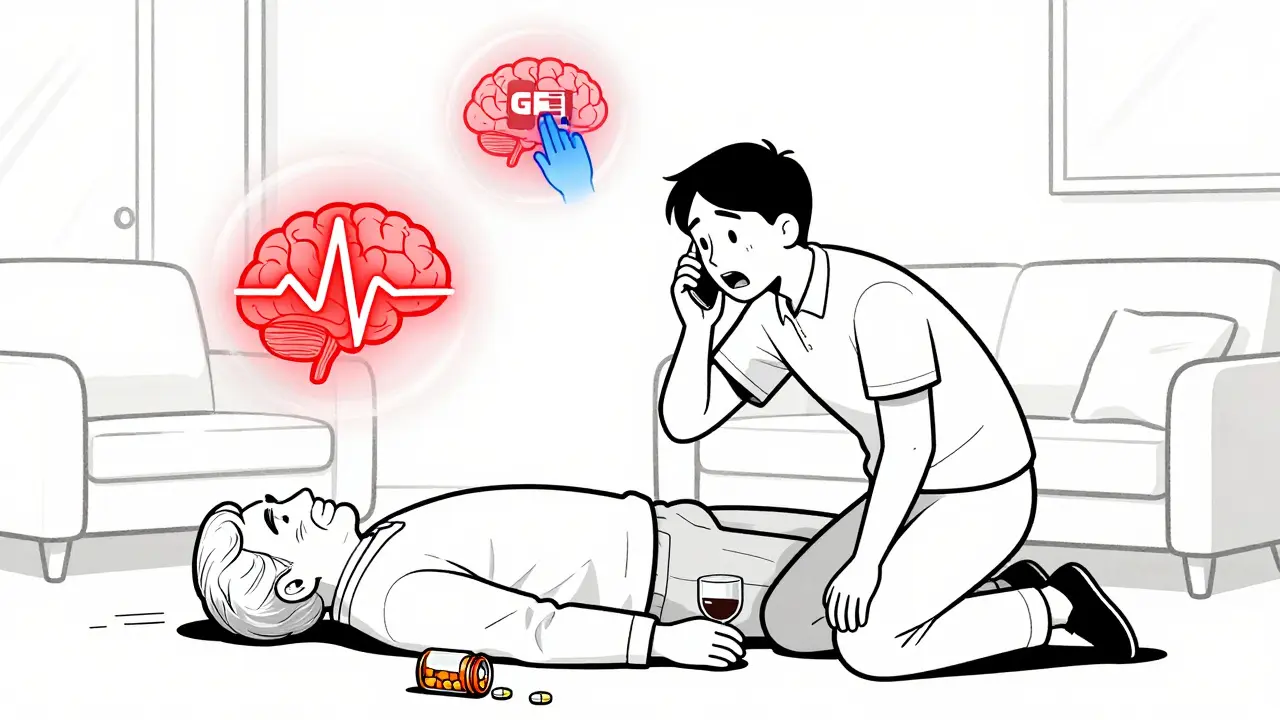
Most people don’t realize they’re in danger until it’s too late. But there are clear, early signs that something’s wrong:- Slowed or shallow breathing (fewer than 12 breaths per minute)
- Blue or gray lips or fingertips
- Unresponsiveness-even if you shake them or call their name
- Gurgling or snoring sounds while sleeping
- Extreme confusion or inability to stay awake
- Sudden dizziness, loss of balance, or unexplained falls
If you see any of these in yourself or someone else, call emergency services immediately. Don’t wait. Don’t assume they’ll “sleep it off.” Respiratory depression doesn’t reverse itself. And it doesn’t care if you meant well.
Dr. Janet Woodcock, former head of the FDA’s drug safety division, put it bluntly: “The combined use of opioid medications with benzodiazepines substantially increases the risk of serious adverse outcomes, including death.” That’s not a warning label. That’s a fact backed by data.
Why Doctors Miss These Risks
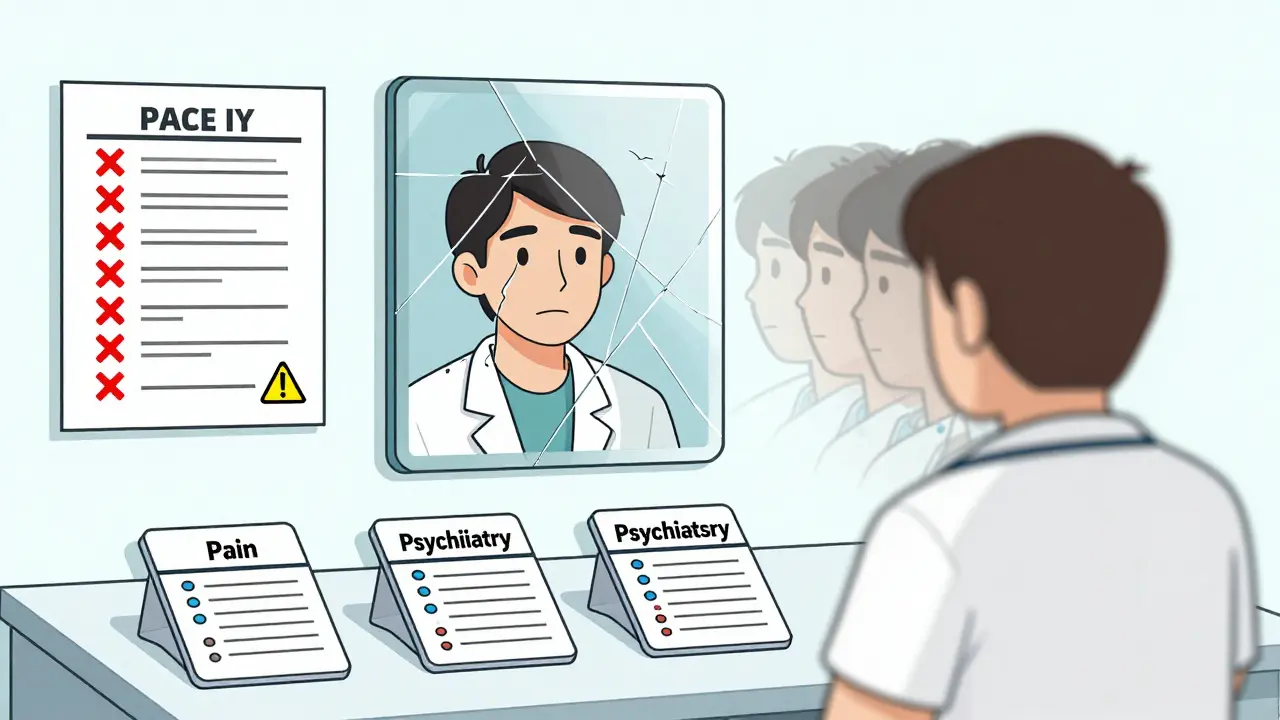
You might think your doctor checks for dangerous combos. But they often don’t. A 2020 study in JAMA Network Open found that only 17.3% of electronic health record systems flagged dangerous sedative combinations. That means most doctors are flying blind.Many patients see multiple specialists-pain doctor, psychiatrist, neurologist, sleep specialist-each prescribing their own meds. No one talks to the others. And if you’re taking a mix of prescription, OTC, and herbal supplements, chances are your doctor doesn’t know the full picture.
Recovery Village data shows 42% of people who overdosed on combined sedatives had gotten prescriptions from three or more doctors in just six months. That’s not accidental. That’s systemic. The system is broken.
Even the Beers Criteria-used by doctors to avoid risky meds in older adults-lists 19 dangerous sedative combinations. Yet, 35% of seniors still take at least one of them. Women are more likely to be affected: 41% vs. 27% of men.
What You Can Do Right Now
You don’t need to wait for a system fix. Here’s what you can do today:- Make a complete list of everything you take: prescriptions, OTC meds, sleep aids, supplements, even CBD or melatonin. Write down the dose and how often you take it.
- Bring it to every appointment. Don’t assume your doctor knows what’s in your medicine cabinet. Show them the list. Ask: “Could any of these interact dangerously?”
- Know your morphine milligram equivalents (MME). If you’re on opioids, ask your pharmacist: “What’s my daily MME?” Anything over 50 MME/day increases overdose risk. Over 90 MME? That’s a red zone.
- Avoid alcohol completely if you’re on any sedative, even if it’s “just a glass of wine.” The risk isn’t worth it.
- Ask about alternatives. Is there a non-sedating option for anxiety? For insomnia? For muscle spasms? Many exist-like CBT for sleep, or non-opioid pain relievers. Cost shouldn’t be the only factor. A $30 pill that kills you isn’t cheap.
For older adults, the START criteria recommend a full medication review within 30 days if you’re taking three or more sedating drugs. The Beers Criteria says no more than 5mg daily of diazepam equivalent for people over 65. If your doctor prescribes more, ask why.
When It’s Time to Taper
Stopping sedatives cold turkey can be deadly-especially benzodiazepines. Withdrawal can trigger seizures. But you don’t have to stay stuck.Safe tapering means cutting back slowly. Reduce one medication by 10-25% every 1-2 weeks. Only one at a time. And always under medical supervision. Don’t try to quit on your own.
Some people do benefit from carefully managed combinations-like low-dose opioids with a tiny benzodiazepine for severe chronic pain and anxiety. But these cases are rare. They require close monitoring, frequent check-ins, and clear goals. This isn’t a DIY project. It’s a clinical decision.
What’s Changing for the Better
There’s hope. Since 2012, opioid-benzodiazepine prescribing has dropped 27% thanks to better awareness and regulations. The FDA now requires boxed warnings on all opioid and benzodiazepine labels. All 50 states now require electronic prescribing for controlled substances, which includes safety checks.And new tools are emerging. The FDA-approved DETERMINE platform uses AI to predict your personal risk of dangerous interactions-with 87.4% accuracy. In the next few years, genetic testing may tell you if you’re more likely to over-sedate from certain drugs. That’s personalized medicine.
But progress is slow. Only 28% of primary care doctors consistently screen for dangerous combinations. And many people still can’t afford safer alternatives. A non-sedating antidepressant might cost $500 a month. A benzodiazepine? $15.
That’s not just a pricing issue. It’s a health justice issue.
Final Thought: Your Life Is Worth More Than a Quick Fix
Sedating medications can help. But they’re not harmless. When stacked together, they turn into a silent killer. The warning signs are there. The data is clear. The tools exist.You don’t need to suffer alone. You don’t need to take five pills to feel okay. There are safer paths. They might take longer. They might require hard conversations. But they’re worth it.
Ask the questions. Bring the list. Say no to alcohol with your meds. And if you’re worried about someone you love-don’t wait. Act now.
Can I just cut back on one sedative if I’m taking several?
No-not without medical guidance. Stopping certain sedatives suddenly, especially benzodiazepines or barbiturates, can cause seizures, hallucinations, or life-threatening withdrawal. Always work with a doctor to create a safe, gradual tapering plan. Reduce one medication at a time, and never skip check-ins.
Is it safe to take sleep meds with a little wine to help me relax?
No. Even one drink can multiply the sedative effect of sleep pills like Ambien or Lunesta. This combination can cause deep unconsciousness, memory blackouts, falls, or breathing that stops entirely. The risk isn’t theoretical-it’s documented in emergency room data. If you’re taking sleep meds, avoid alcohol completely.
How do I know if my doctor is aware of all my medications?
You can’t assume they are. Most doctors only see your prescriptions from their own system. Bring a printed list of everything you take-including OTC drugs, supplements, and herbal remedies-to every appointment. Ask: “Does this list look safe together?” If they don’t review it, find a provider who will.
Are over-the-counter sleep aids like Benadryl safe to combine with prescription sedatives?
No. Diphenhydramine (Benadryl) and doxylamine (Unisom) are antihistamines that act as CNS depressants. When combined with prescription sedatives like benzodiazepines or opioids, they increase drowsiness, confusion, and fall risk-especially in older adults. Many people don’t realize these OTC meds are part of the problem.
What should I do if I suspect someone is overdosing on sedatives?
Call emergency services immediately. Do not wait. Look for signs: slow or shallow breathing, blue lips, unresponsiveness, gurgling sounds. If you have naloxone (Narcan), administer it-especially if opioids are involved. Naloxone won’t reverse benzodiazepine effects, but it can save a life if opioids are part of the mix. Stay with the person until help arrives.
Are there non-sedating alternatives for anxiety or insomnia?
Yes. For anxiety, cognitive behavioral therapy (CBT) is as effective as benzodiazepines-with no risk of dependence. For insomnia, CBT-I (Cognitive Behavioral Therapy for Insomnia) has strong evidence and no side effects. Other options include melatonin (for circadian rhythm issues), magnesium, or non-sedating antidepressants like sertraline. Talk to your doctor about these before reaching for a sedative.

Comments
benchidelle rivera
This isn't just about individual choices-it's about a healthcare system that prioritizes prescriptions over prevention. Doctors hand out sedatives like candy and never ask what else you're taking. I've seen patients on six different CNS depressants, all prescribed by different specialists, no coordination, no warnings. It's criminal negligence wrapped in white coats.
And don't get me started on the pharmaceutical companies funding studies that downplay interactions. They profit from polypharmacy. The FDA's warnings are too little, too late. We need mandatory pharmacist-led med reviews before any new sedative is prescribed. No exceptions.
It's not about being paranoid. It's about survival. If your doctor doesn't ask for your full list, find a new one. Your life isn't a data point in their quota.
Stop normalizing this. Stop accepting it. Demand better.
And if you're reading this and you're on even two sedatives? Don't wait for a crisis. Start the conversation today.
Because no one else will do it for you.
Ashley Bliss
They say knowledge is power-but what if the system deliberately withholds it? We're told to trust our doctors, yet they’re drowning in paperwork, incentivized to prescribe, not to pause. Is this capitalism? Or is it just the quiet genocide of the vulnerable? The elderly, the anxious, the exhausted-they’re not being treated. They’re being numbed into compliance.
And alcohol? Oh, the tragedy of the glass of wine. A cultural ritual turned poison. We’ve been sold the lie that self-medication is self-care. But when your brain forgets how to breathe, is that peace-or surrender?
There’s no moral high ground here. Only bodies. And the silence that follows.
Mahammad Muradov
India has stricter guidelines for benzodiazepine prescriptions than the U.S. We require psychiatric evaluation before refill. No over-the-counter antihistamines sold as sleep aids. The system is not perfect, but it prevents exactly what this article describes. Why does America treat sedatives like snacks? Because profit > prevention. Simple.
Also, gabapentin is not a painkiller. It’s a GABA modulator. Calling it 'non-opioid' is misleading. It should be classified as a controlled substance. It’s already causing more overdoses than oxycodone in some states. But no one talks about it because it’s cheap and generic.
Monte Pareek
I've been a pharmacist for 22 years and let me tell you this is the #1 thing we see in ERs that we could have stopped
People think Benadryl is harmless because it's on the shelf next to aspirin but it's a potent CNS depressant especially when you're 70 and already on a sleep med and a muscle relaxer
My advice? Make a list. Every single thing. Even the gummies you take for stress. Even the CBD oil. Even the chamomile tea if you're drinking three cups a night
Take it to your doctor. Don't say 'I think this is fine' say 'I'm scared. Are these safe together?'
And if your doctor brushes you off? Walk out. Find someone who listens. Your life is not negotiable
I've seen people wake up from overdoses and say 'I didn't think it would kill me'-they never do until it's too late
There's no shame in asking. There's only shame in staying silent
Kathryn Featherstone
I used to take Xanax and Ambien together because I thought the insomnia was worse than the drowsiness. I didn't realize I was walking around in a fog until I fell down the stairs and broke my wrist. My doctor didn't even ask about my sleep aids. I had to bring up the list myself.
Now I do CBT-I. It took three months. I still have bad nights. But I haven't taken a sedative in over a year. And I can remember my dreams again.
It’s not easy. But it’s worth it.
Nicole Rutherford
Of course you’re taking five sedatives-you’re a mess. You think you’re managing anxiety but you’re just medicating your inability to sit with discomfort. Therapy costs money. Pills are cheap. That’s the real problem.
And don’t even get me started on the wine. You’re not ‘unwinding.’ You’re self-sabotaging. Wake up.
Mark Able
Hey I just had to comment because my mom is on 7 different meds including Klonopin and oxycodone and she says she’s fine but I’m terrified
She sees 4 different doctors and no one talks to each other
What do I do? Should I just show up to her next appointment with the list? I don’t want to seem like I’m accusing her of being irresponsible
Also she says the wine helps her sleep so she has a glass every night with her pills
I’m so scared she’s gonna die in her sleep
Dorine Anthony
My dad died from a sedative combo. He was 72. Took gabapentin, hydrocodone, and diphenhydramine. No one knew he was taking the Benadryl. He said it was just for allergies.
He never meant to overdose. He just didn’t know.
That’s the tragedy. Not malice. Just ignorance.
So if you’re reading this and you take more than two sedatives? Talk to someone. Even if it’s just a stranger on Reddit.
Don’t wait for the gurgling.
Marsha Jentzsch
OMG I CANNOT BELIEVE THIS IS STILL HAPPENING!!! I’M SO ANGRY!!! MY AUNT TOOK 3 SLEEP PILLS AND A GLASS OF WINE AND DIED IN HER SLEEP AND THE DOCTOR SAID IT WAS ‘ACCIDENTAL’ LIKE THAT’S OKAY???!!!
THEY’RE ALL GUILTY!!! THE PHARMA COMPANIES!!! THE DOCTORS!!! THE FDA!!! THE GOVERNMENT!!!
WHY ISN’T THIS ON THE NEWS EVERY NIGHT???
AND WHY DO PEOPLE STILL THINK BENADRYL IS SAFE??? IT’S A DRUG!!! IT’S NOT A TEA!!!
STOP BEING LAZY AND START TAKING RESPONSIBILITY!!!
Henry Marcus
They’re not just hiding the risks-they’re engineering them. The whole system is designed to keep you dependent. Think about it: who profits from lifelong sedation? The drug companies. The clinics. The insurance middlemen. They don’t want you cured. They want you dosed.
And the ‘FDA-approved AI tool’? That’s just a shiny distraction. The same people who approved opioids are now selling you ‘predictive algorithms.’
They’re not protecting you. They’re monetizing your fear.
They’ve been doing this since the 1950s with tranquilizers. History repeats. Always.
Carolyn Benson
There’s a philosophical irony here: we seek sedation to escape suffering, yet the very substances we use to numb ourselves become the source of deeper suffering. We trade agency for ease. We mistake chemical calm for inner peace. But peace cannot be manufactured. It must be cultivated.
And when we outsource our healing to pills, we abandon the hard, beautiful work of becoming whole.
This isn’t just a medical crisis. It’s a spiritual one.
Aadil Munshi
Interesting how everyone blames doctors, but no one asks why patients don’t take responsibility. You’re not a passive victim. You’re the one swallowing the pills. You’re the one pouring the wine.
And let’s be real-most people don’t read the labels. They don’t check interactions. They just want it to stop hurting.
But here’s the twist: the system enables this because we let it. We don’t demand better. We just ask for another script.
So yes, the system is broken. But so are we.
Maybe the real danger isn’t the drugs. It’s our resignation.
Danielle Stewart
My therapist recommended CBT-I for my insomnia. It was hard. I cried. I felt like a failure. But after 8 weeks, I slept better than I had in 10 years-without a single pill.
It’s not a quick fix. But it’s the only fix that lasts.
If you’re on sedatives and you’re tired of feeling foggy? Try it. You have nothing to lose but the fog.
mary lizardo
The article contains multiple grammatical inconsistencies, including the improper use of the em dash, inconsistent capitalization in headings, and a lack of parallel structure in the list items under 'What You Can Do Right Now.' Additionally, the phrase 'morphine milligram equivalents' is correctly abbreviated as 'MME,' yet the text inconsistently capitalizes it. Such carelessness undermines the credibility of the data presented. A publication of this gravity requires editorial rigor. Otherwise, it risks being dismissed as alarmist rhetoric rather than evidence-based guidance.