
Asthma During Pregnancy: What You Need to Know About Management and Medication Safety
When you're pregnant and have asthma, a chronic condition where airways become inflamed and narrow, making breathing difficult. Also known as reactive airway disease, it doesn't go away just because you're expecting—but it can be managed safely with the right approach. Many women worry that their asthma meds might harm the baby, but uncontrolled asthma is far riskier. Low oxygen levels in the mother mean low oxygen for the fetus, which can lead to preterm birth, low birth weight, or even preeclampsia. The goal isn't to stop medication—it's to pick the right ones and keep your lungs working well.
Asthma medication during pregnancy, including inhaled corticosteroids like budesonide and short-acting bronchodilators like albuterol, are among the most studied and safest options for expectant mothers. These drugs work locally in the lungs, so very little enters the bloodstream. In fact, studies show that women who use these medications as prescribed have healthier pregnancies than those who avoid them out of fear. The key is consistency: skipping doses because you feel fine can lead to sudden flare-ups, especially during the second trimester when asthma often worsens. Don’t wait for symptoms to get bad before acting.
Another critical piece is prenatal monitoring, the regular check-ins with your doctor to track lung function and fetal growth. This isn’t just about listening to your lungs—it’s about using tools like peak flow meters at home and scheduling lung function tests every 4–6 weeks. If your asthma is well-controlled, your baby’s development stays on track. If it’s not, your provider can adjust your plan quickly. You’re not alone in this: nearly 8% of pregnant women in the U.S. have asthma, and most manage it successfully with guidance.
Some triggers are obvious—dust, smoke, pet dander—but others are less expected. Hormonal changes during pregnancy can make your airways more sensitive. Stress, sleep deprivation, and even heartburn can worsen symptoms. That’s why a personalized plan matters. Avoiding triggers, using your inhaler correctly, and knowing when to call your doctor are just as important as the meds themselves. And yes, you can still exercise, travel, and sleep well with asthma—it just takes a little planning.
What you won’t find in most brochures is the real-life stuff: how to handle an attack at 3 a.m., how to talk to your partner about your fears, or why your doctor says it’s okay to keep using your rescue inhaler even in the third trimester. That’s why the posts below cover everything from how to read your inhaler label correctly to what happens if you skip your steroid inhaler for a week. You’ll also find clear comparisons between asthma drugs that are safe during pregnancy and those you should avoid. No jargon. No scare tactics. Just facts you can use.
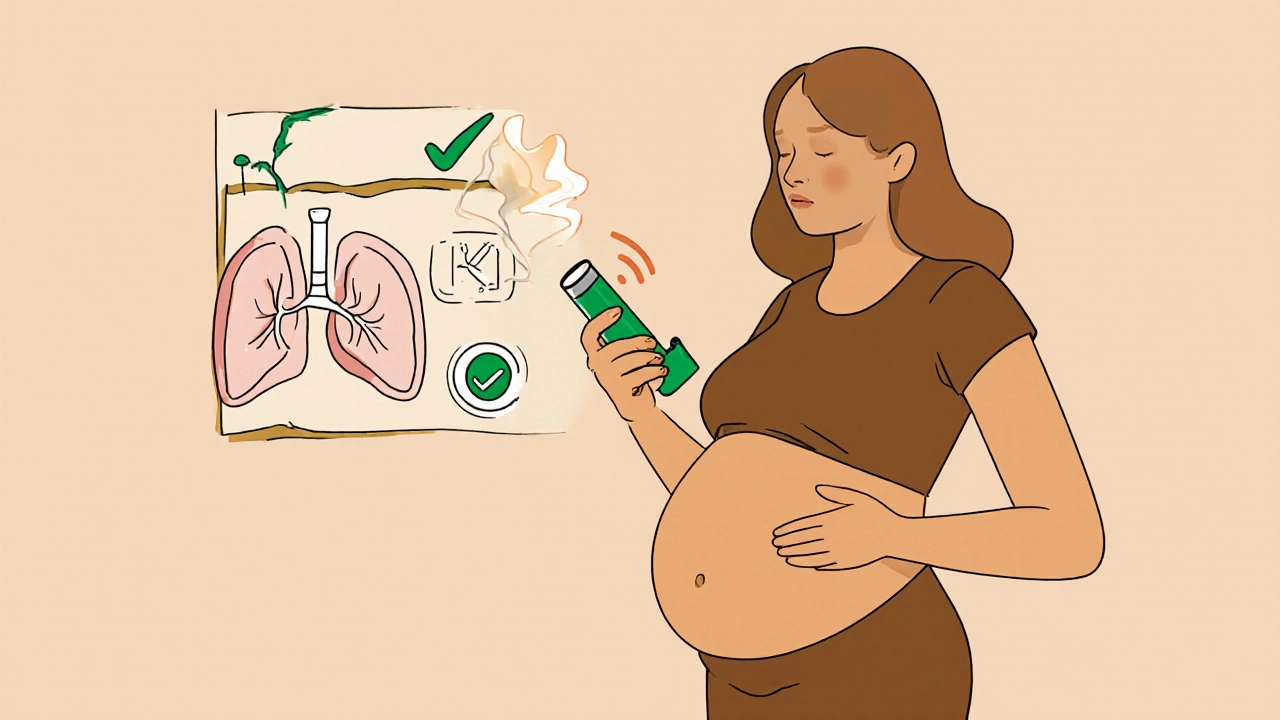
Asthma During Pregnancy: Safe Medications and How They Protect Your Baby
Learn which asthma medications are safe during pregnancy and how uncontrolled asthma poses greater risks to your baby than the drugs used to treat it. Evidence-based guidance for moms-to-be.
read more