
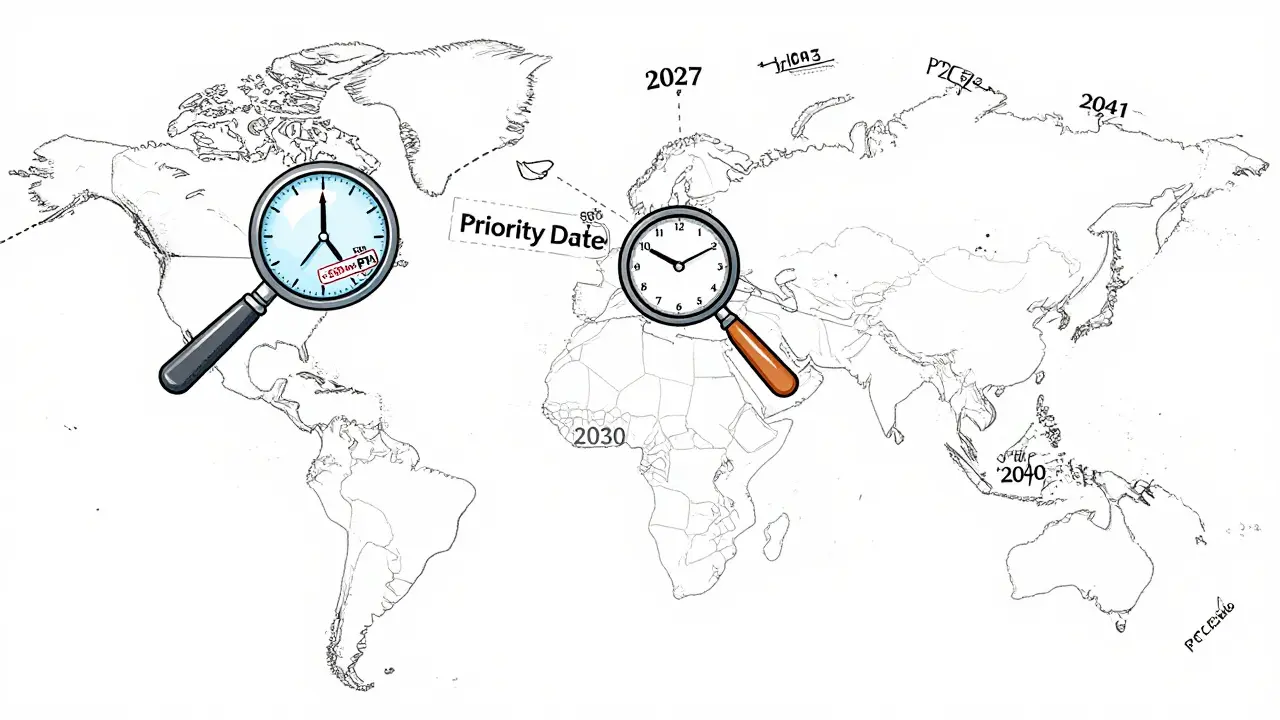
Patents don’t expire the same way everywhere
You might think a patent lasts 20 years everywhere-after all, that’s what most people hear. But if you’re managing a global product, especially in pharma, tech, or manufacturing, that simple idea can cost you millions. A patent that expires in 2027 in Germany might still be active until 2030 in the U.S. because of delays, extensions, or even different rules for how the clock starts. This isn’t a glitch-it’s the system. And if you don’t understand it, you’re flying blind.
The 20-year rule isn’t the whole story
Yes, the patent expiration standard is 20 years from the filing date. That’s thanks to the TRIPS Agreement, which kicked in on January 1, 1995, and forced nearly every country to align. Before that, the U.S. gave patents 17 years from the grant date. Japan, Canada, and Australia had their own versions. Today, almost every major economy follows the 20-year rule from the earliest filing date. But that’s where the similarity ends.
Here’s the catch: the filing date isn’t always the date you think it is. If you file in Australia on January 5, 2020, and then file in the U.S. 11 months later, the U.S. patent still gets that January 5, 2020 date as its starting point-thanks to the Paris Convention. That’s called the priority date. It’s what keeps your global portfolio connected. But if you miss that 12-month window, you lose it. And that changes everything.
What happens after the 20 years? Extensions kick in
Patents don’t just expire on day 7,300. Many countries give extra time to make up for delays-especially for drugs. In the U.S., if the Patent Office takes too long to examine your application, you get Patent Term Adjustment (PTA). In 2022, the average U.S. patent gained 558 extra days because of these delays. That’s almost 1.5 years. For a blockbuster drug, that’s billions in extra revenue.
In Europe, it’s different. They don’t give PTA for office delays. Instead, they offer Supplementary Protection Certificates (SPCs). If your drug took five years to get regulatory approval, you can get up to five extra years of protection. Add a six-month pediatric extension if you tested it on kids, and you’re looking at 25.5 years total. That’s why companies like Pfizer and Johnson & Johnson have teams whose only job is tracking these extensions across 50+ countries.
China and Japan also offer patent term compensation for examination delays. Brazil doesn’t-so even though the law says 20 years, the backlog means many patents expire before they even get granted. That’s not a loophole. It’s a reality.
Utility models: the short-term alternative
Not every invention needs 20 years. In countries like Germany, China, Japan, and South Korea, you can file for a utility model instead. These are cheaper, faster, and usually last only 6 to 10 years. They’re perfect for mechanical gadgets, simple electronics, or packaging designs that don’t need long-term protection. But here’s the catch: you can’t file a utility model in the U.S., Canada, or the U.K. So if you’re protecting a product globally, you might need two separate filings-one for the full patent, one for the utility model in countries that allow it.
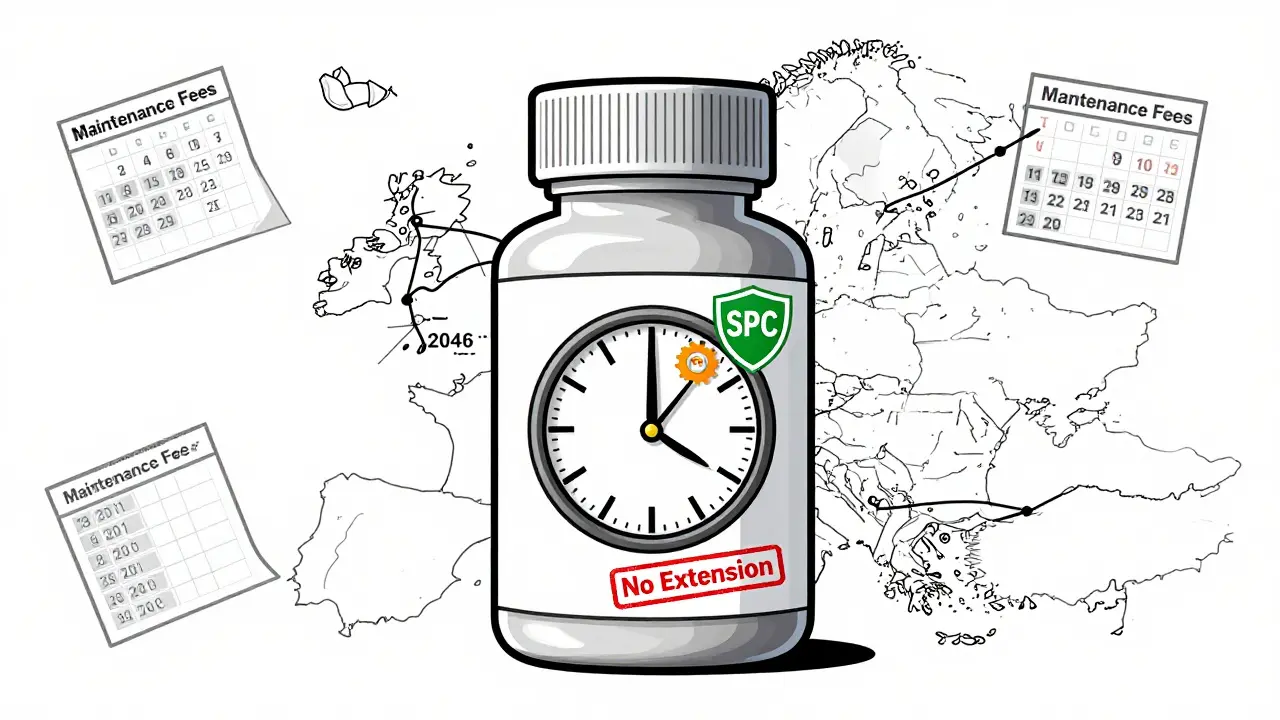
Missing a payment? Your patent dies
Even if you’ve got 15 years left, one missed fee kills your patent. In the U.S., you pay maintenance fees at 3.5, 7.5, and 11.5 years. If you’re late, you’ve got a six-month grace period-but you pay a penalty. Miss that, and the patent is dead. No appeal. No do-over.
In Mexico, you pay four times: at 5, 10, 15, and 20 years. In Switzerland, you pay once-at grant. In Australia, you pay annually from year 3. If you’re managing a portfolio of 200 patents across 30 countries, you’re juggling hundreds of payment deadlines. One mistake, and you lose rights in a key market. That’s why big companies use automated systems. Small businesses? They often get burned.
The PCT trick: buy yourself time
Applying for patents in 10 countries sounds expensive-and it is. But the Patent Cooperation Treaty (PCT) lets you file one application that holds your place in 157 countries. You don’t have to pay national fees until 30 or 31 months after your first filing. That’s a huge advantage. It gives you time to test the market, raise funding, or decide which countries matter.
But here’s what trips people up: the deadline isn’t the same everywhere. The U.S. gives you 30 months. Canada, China, and most of Europe give you 31. Japan lets you stretch to 32 months if you ask. Miss the deadline, and you lose rights in that country-no exceptions. And if you’re relying on a PCT application filed in 2021, you’ve got until late 2023 or early 2024 to enter national phases. If you’re reading this in 2026, those deadlines are already behind you.
What about new systems like the Unitary Patent?
In June 2023, the European Union launched the Unitary Patent. It’s a single patent covering 17 EU countries, with one renewal fee and one expiration date. No more validating in Germany, France, and Italy separately. It simplifies things-but only for those 17 countries. The U.K., Switzerland, Norway, and Turkey aren’t part of it. So if you want full European coverage, you still need to file nationally in non-participating countries. The 20-year term is unchanged. But the administrative burden? Cut in half.
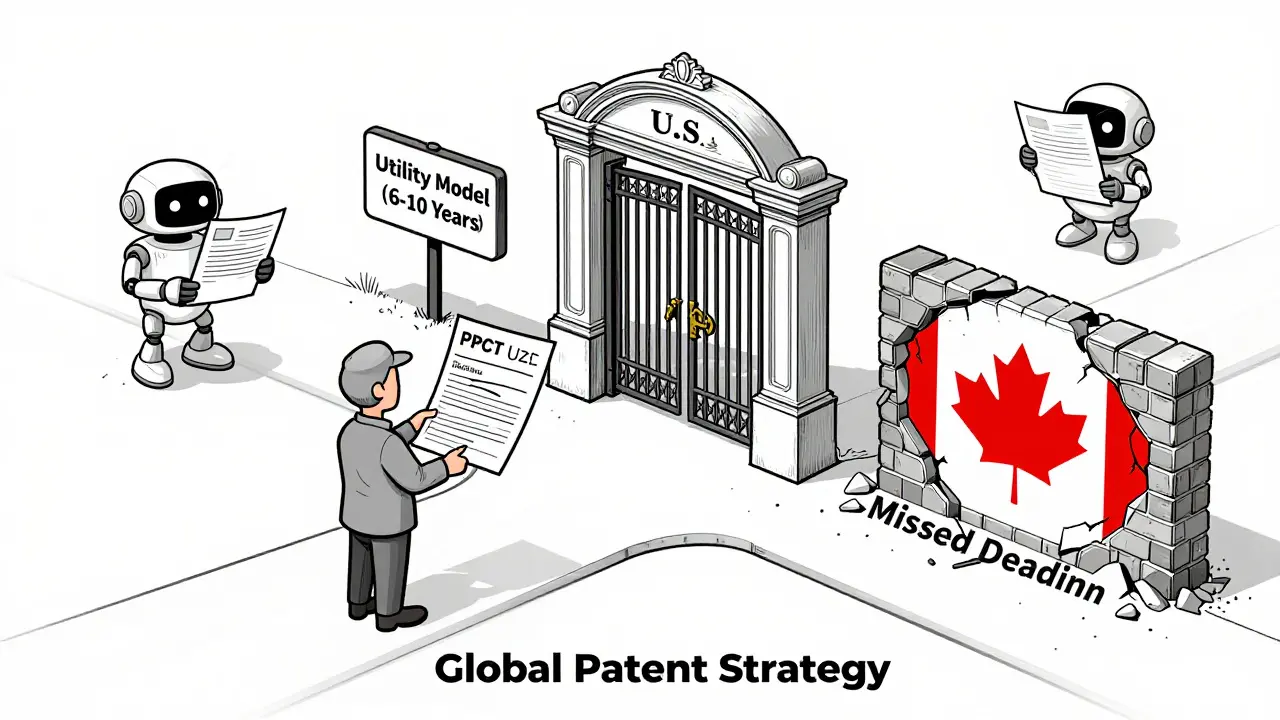
Why this matters for real businesses
Imagine you’re launching a new diabetes drug. You file in the U.S. in March 2021. Your patent expires in March 2041-unless you get a 5-year SPC in Europe, pushing it to 2046. But in India, no extensions are allowed. It expires in 2041. In Brazil, if the patent office takes seven years to examine it, you might only get 13 years of actual protection. Meanwhile, in China, you get a term extension for the delay, but only if you request it within three months of grant. Miss that window? You lose it.
Companies that track this stuff don’t just guess. They use software that pulls data from patent offices, recalculates terms based on local laws, and flags upcoming deadlines. They know that a patent expiring in 2030 in Germany might be invalid in 2028 in Canada because of a missed maintenance fee. They don’t assume. They verify.
What’s changing in 2026?
More countries are catching up. Indonesia raised its patent term from 15 to 20 years in 2016. Vietnam did the same in 2022. Even emerging markets are now aligning with the global standard. But the exceptions remain. India still refuses term extensions. Australia only grants them for office delays, not regulatory ones. Russia has its own rules, and enforcement is inconsistent.
There’s also pressure to fix the imbalance. Pharmaceutical companies in the U.S. and Europe want developing nations to grant longer terms for drugs. Developing nations argue that longer patents mean higher drug prices. No agreement has been reached. So for now, the patchwork stays.
How to protect your innovation globally
- File your first application as early as possible-it sets your priority date.
- Use the PCT to delay national filings by up to 31 months.
- Track maintenance fees in every country where you have a patent. Set calendar alerts. Use software.
- Know which countries offer extensions (SPCs, PTAs, term compensation) and apply for them.
- Don’t assume all countries treat utility models the same. Check local laws.
- For pharmaceuticals, plan for different expiration dates in each market. Your global strategy depends on it.
If you’re managing even a handful of international patents, you’re not just an inventor-you’re a global operations manager. The patent system isn’t broken. It’s complex. And complexity doesn’t care how smart you are. It only cares if you’ve done your homework.
Do all countries have the same patent expiration date?
No. While most countries use a 20-year term from the filing date, actual expiration dates vary due to patent term adjustments, extensions for regulatory delays, missed maintenance fees, and differences in how priority dates are applied. For example, a U.S. patent might expire in 2040 due to a 5-year extension, while the same invention expires in 2035 in India because no extensions are allowed.
Can a patent expire before 20 years?
Yes. If maintenance fees aren’t paid on time, the patent lapses regardless of the remaining term. In countries with long patent office backlogs-like Brazil or Nigeria-patents may be granted so late that the effective protection period is less than 10 years, even if the law allows 20.
What’s the difference between a PCT application and a global patent?
There’s no such thing as a global patent. The PCT is a filing system that lets you apply in 157 countries with one application, but it doesn’t grant patents. You must still enter the national phase in each country and go through their examination process. Each country decides whether to grant the patent and when it expires.
How do pharmaceutical patents get extra protection?
In the U.S., you can get a Patent Term Extension (PTE) under the Hatch-Waxman Act if regulatory approval took more than three years. In Europe, you get a Supplementary Protection Certificate (SPC), which can add up to five years, plus six months if you tested the drug on children. Japan and China offer similar compensation for examination delays. India and Australia don’t offer extensions for regulatory delays.
What happens if I miss the PCT national phase deadline?
You lose patent rights in that country permanently. The deadline is 30 or 31 months from your priority date, depending on the country. Some countries allow late entry with a fee and justification, but it’s rare and not guaranteed. Missing the deadline is one of the most expensive mistakes in international patent law.
Are utility models worth it?
Yes-if your invention is simple, fast-moving, or doesn’t need long-term protection. Utility models are cheaper, faster to grant (often within 6-12 months), and last 6-10 years. They’re ideal for mechanical parts, consumer products, or software hardware interfaces. But they’re not available everywhere. You can’t file one in the U.S., Canada, or the U.K., so you’ll need a regular patent there.
How do I track patent expirations across multiple countries?
Use specialized patent management software like Anaqua, PatSnap, or LexisNexis PatentSight. These tools pull data directly from patent offices, calculate expiration dates based on local rules, and send alerts for fees and deadlines. Spreadsheets won’t cut it anymore-too many variables, too many countries. Automated tracking is the only way to avoid costly surprises.

Comments
Doreen Pachificus
Honestly, I had no idea patent expiration varied this much. I always thought it was just 20 years and done. This is wild.
Ashley Viñas
People still act like patents are some kind of universal right? Lol. It’s a legal instrument, not a gift from the universe. If you can’t track deadlines across 30 countries, maybe you shouldn’t be commercializing anything.
And yes, I’ve seen startups lose $20M because they thought ‘global’ meant ‘same everywhere.’
Brendan F. Cochran
USA rules. We give you 558 extra days for the patent office being slow? That’s called fairness. Europe’s like ‘lol here’s your 5-year SPC if you jump through 12 hoops.’ Meanwhile, India just says ‘nah’ and lets generics roll in. Who’s the innovation leader again?
jigisha Patel
The assertion that Brazil’s backlog results in effective patent terms under 10 years is statistically inaccurate. While examination delays exist, the term is still calculated from the filing date-regardless of grant timing. The patent doesn’t expire early; it simply remains unenforceable until granted. This is a common misconception among non-practitioners.
Ethan Purser
So we’re telling pharma companies they can lock down life-saving drugs for 25 years... while people in India can’t afford insulin?
Let me get this straight: innovation is sacred, but human life is just a ‘market condition’?
I’m not mad... I’m just disappointed. 😔
Cassie Tynan
Patents are the original gated community. You pay your dues, you get your 20-year VIP pass… unless you’re from a country that doesn’t believe in capitalism, then you’re just… out here.
Meanwhile, the real innovation? The software that tracks all these absurd deadlines. Someone’s making bank selling spreadsheets to lawyers. 🤑
Rory Corrigan
PCT = ‘I’ll file now, decide later’ 🤷♂️ But then you miss the 31-month window and suddenly your invention is public domain in Japan.
Don’t be that guy. Set a reminder. Use Google Calendar. Put it on your fridge. 😅
Connor Hale
It’s fascinating how the system evolved not from logic, but from political compromise. The TRIPS agreement was a win for Western pharma, but it didn’t fix the asymmetry in enforcement or capacity. Countries with underfunded patent offices are stuck in a catch-22: they can’t grant patents fast enough to protect innovation, but they also can’t afford to delay generics indefinitely.
Maybe the real problem isn’t the law-it’s the infrastructure.
Charlotte N
I just read this and immediately thought of my cousin who started a small medical device company… she missed one maintenance fee in Germany and lost the whole patent. She cried for a week.
And now she’s using a free tool from the USPTO to track everything… but it doesn’t even cover SPCs.
Why is this so hard??
Catherine HARDY
You know who benefits from all this complexity? Big law firms. And patent trolls. And the people who sell those $10k/year software subscriptions.
Meanwhile, the inventor who just wants to make something that helps people? They’re drowning in paperwork.
Someone’s making a fortune off confusion. And it’s not us.
melissa cucic
The Unitary Patent is a step forward, but it’s still incomplete. The exclusion of non-EU European states like Switzerland and Norway creates a patchwork that’s almost worse than before. And the fact that the UK, having left the EU, still maintains alignment on term length but not on procedure, reveals the fragility of international harmonization.
Legal fragmentation is not innovation-it’s inefficiency dressed up as sovereignty.
saurabh singh
In India, we get it-patents shouldn’t block access to medicine. We’re not against innovation, we’re against monopoly pricing.
But I get it too: if you’re a startup in Silicon Valley, you need those 25 years to recoup R&D.
Maybe the answer isn’t ‘more patent’ or ‘less patent’… but ‘smart patent’? Like, tiered terms based on drug type or country income level?
Just saying.
Dee Humprey
If you’re managing even 10 patents globally, get a tool. Seriously.
Spreadsheets will lie to you.
LexisNexis PatentSight saved my sanity last year-I had a client with patents in 22 countries and we caught a missed fee in South Korea 3 days before expiration.
You’re not being paranoid. You’re being smart. 💪