
Metformin & Alcohol Risk Calculator
This calculator estimates your risk of lactic acidosis when combining metformin with alcohol based on medical guidelines. It is not a substitute for professional medical advice.
Your Risk Level
Critical Actions
Lactic acidosis risk is critical. Symptoms include severe muscle pain, difficulty breathing, or confusion.
Combining metformin with alcohol significantly increases your lactic acidosis risk.
Limit alcohol and monitor for symptoms like unusual muscle pain or dizziness.
Continue monitoring and maintain safe alcohol limits.
When you're taking metformin for type 2 diabetes, you’ve probably heard to watch your sugar intake. But there’s another hidden risk you might not know about: alcohol. Mixing metformin and alcohol doesn’t just raise your chances of a hangover-it can trigger a rare, life-threatening condition called lactic acidosis. This isn’t a myth. It’s a real, documented danger backed by decades of clinical data and FDA warnings.
What Is Lactic Acidosis?
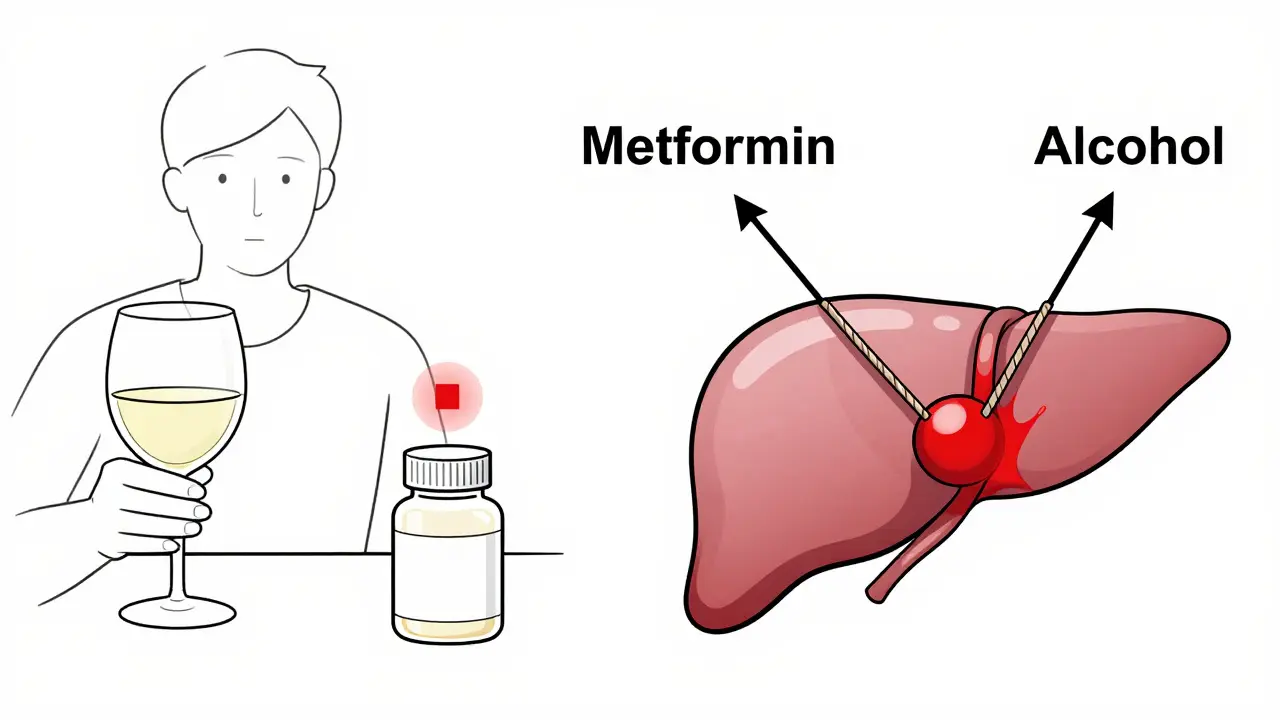
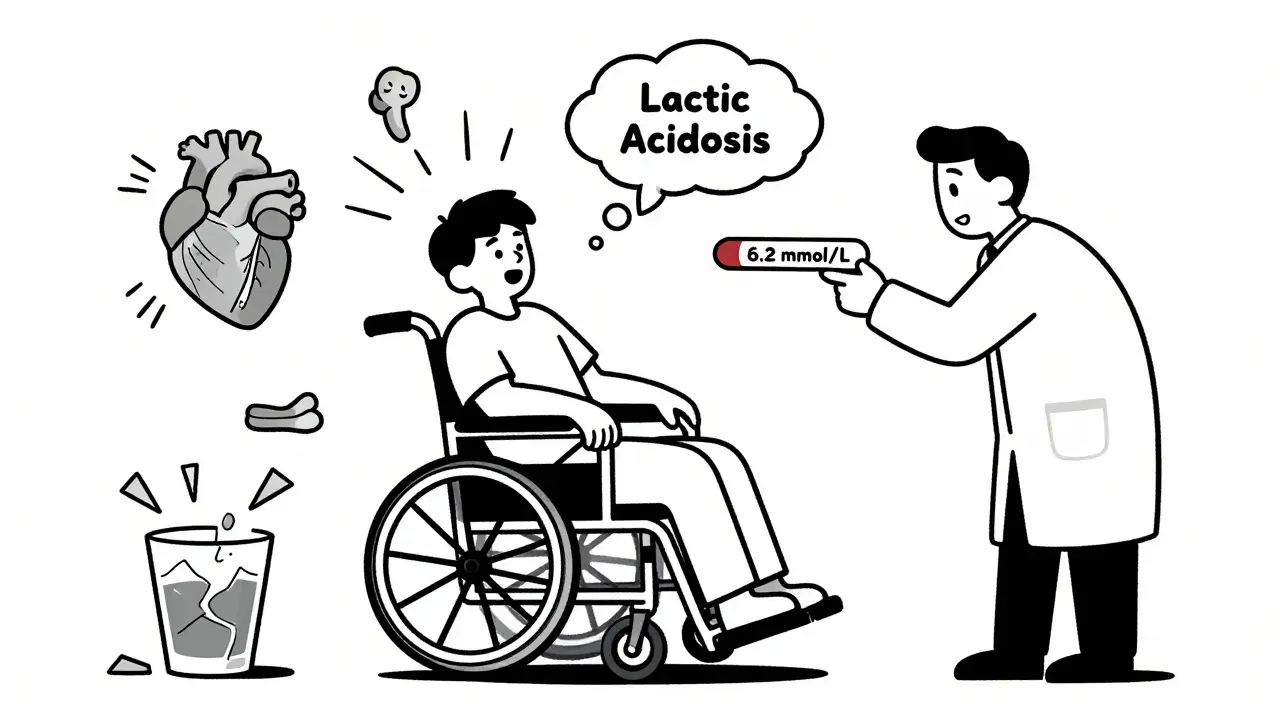
Lactic acidosis happens when your body makes too much lactic acid and can’t clear it fast enough. Your blood becomes too acidic, which throws off your electrolytes, messes with your breathing, and can shut down your organs. Normal blood lactate levels are under 2 mmol/L. When they hit 5 mmol/L or higher, you’re in danger. In cases linked to metformin and alcohol, levels often jump to 6-10 mmol/L. The mortality rate? Between 30% and 50%. That’s not a small risk-it’s critical.Metformin itself slows down how your liver processes lactic acid. Alcohol makes it worse. When you drink, your liver uses up NAD+ to break down ethanol. That same molecule is needed to clear lactate. So both substances are working against your body’s natural cleanup system. It’s like two people pulling the same rope in opposite directions-your body can’t keep up.
Why Metformin and Alcohol Are a Dangerous Mix
Metformin is the most common diabetes pill in the world. Over 150 million prescriptions are filled for it every year in the U.S. alone. It’s cheap, effective, and has been used safely by millions since the 1950s. But it’s not risk-free. The FDA gives it a black box warning-the strongest kind-for lactic acidosis. And alcohol is specifically named as a trigger.Most people think lactic acidosis only happens if you have kidney problems. That’s true-but not the whole story. A 2024 case report in PMC documented a 65-year-old man with perfectly normal kidney function who developed lactic acidosis after drinking 10 shots of vodka over a few hours. His metformin was still in his system. His liver couldn’t process the lactate. He ended up in the ICU.
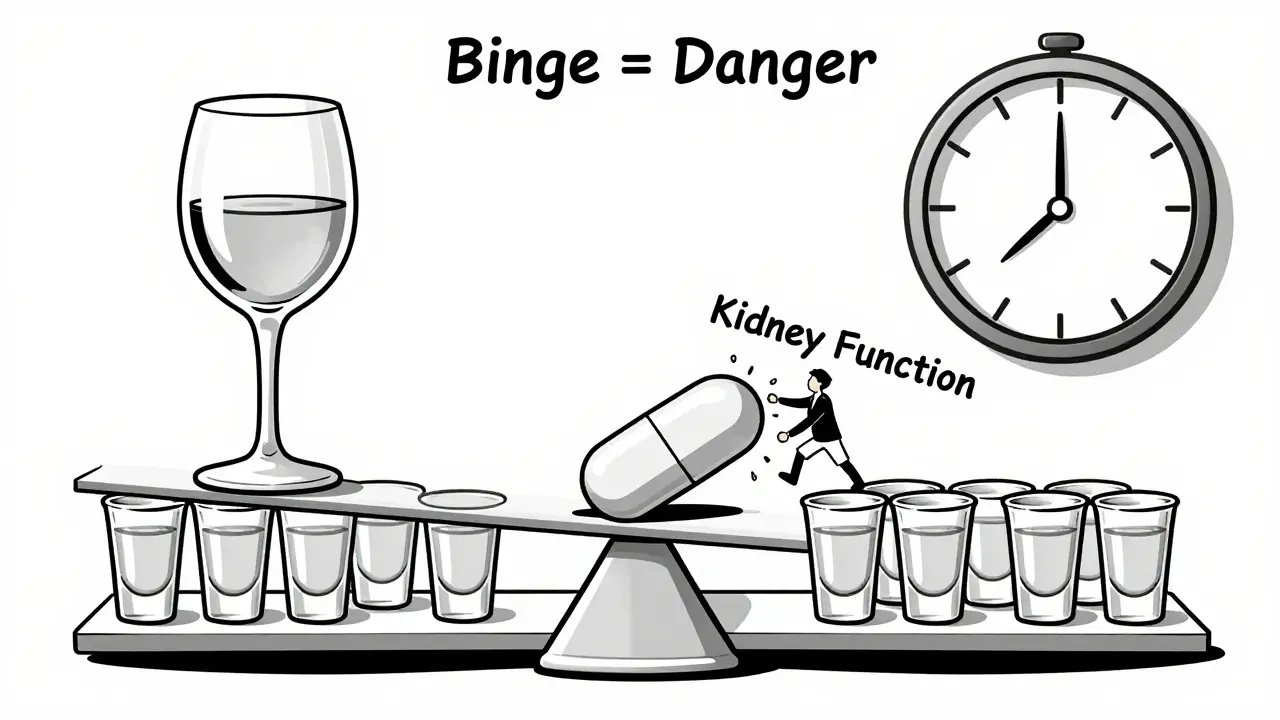
Alcohol doesn’t just add to the problem-it can be the main cause. Even if your kidneys are healthy, binge drinking can overwhelm your body’s ability to handle lactate. And metformin? It’s already slowing things down. Together, they create a perfect storm.
What the Experts Say
The American Diabetes Association (ADA) doesn’t say “never drink.” But they do say: “Excessive alcohol consumption should be avoided.” That’s vague. What does “excessive” mean? The FDA doesn’t define it either. That leaves patients guessing.Dr. Robert A. Rizza from Mayo Clinic says moderate drinking-one drink a day for women, two for men-might be okay for some people with healthy kidneys. But he adds: “Binge drinking or chronic heavy use? That’s dangerous.”
The European Medicines Agency is even clearer. They list “acute alcohol intoxication” as a direct risk factor for metformin-associated lactic acidosis (MALA). That means if you’re drunk, your risk spikes-even if you’ve been on metformin for years without issues.
Dr. John B. Buse from UNC School of Medicine puts it bluntly: “The symptoms are often mistaken for a hangover. By the time people seek help, it’s too late.”
Real Stories, Real Consequences
Online forums are full of warnings from people who’ve been there.One user on Healthline, ‘DiabetesWarrior42,’ described muscle cramps, a racing heart, and vomiting after six beers with metformin. Blood tests showed lactate at 6.2 mmol/L. He spent two days in the hospital.
On Reddit, ‘SugarFreeLife’ shared how a bachelor party with 10 shots left him unable to breathe. His muscles locked up. He thought it was just a bad night. He didn’t realize he was dying until his bloodwork came back.
According to GoodRx’s 2023 survey, 78% of metformin users cut back on alcohol because of lactic acidosis fears. Nearly half said that’s their top concern-more than weight gain or stomach upset.
And here’s the scary part: 68% of patients who ended up in the ER with MALA didn’t recognize the symptoms early. They thought their nausea and muscle pain were just from drinking too much. They waited too long.
What Counts as “Excessive” Alcohol?
There’s no official number. But here’s what doctors use as a practical guide:- Binge drinking: 4 or more drinks in 2 hours for women; 5 or more for men.
- Heavy drinking: More than 3 drinks a day on average.
- One drink: 12 oz beer, 5 oz wine, or 1.5 oz hard liquor.
Even one drink can be risky if you’re fasting, dehydrated, or have kidney issues. The safest advice? Avoid alcohol entirely during the first 4-8 weeks of starting metformin. Your body is adjusting. Don’t add stress.
After that? If you choose to drink, stick to one drink max, never on an empty stomach, and never binge. And never, ever drink if you’re sick, dehydrated, or have an infection. Your body is already under strain.
Symptoms You Can’t Ignore
Lactic acidosis doesn’t come with a warning siren. It creeps in slowly. These are the red flags:- Unusual muscle pain or weakness
- Trouble breathing, even when resting
- Stomach pain, nausea, vomiting
- Feeling cold, especially in your arms and legs
- Dizziness, confusion, or extreme fatigue
- Rapid or irregular heartbeat
If you’re on metformin and you feel any of these-especially after drinking-go to the ER. Don’t wait. Don’t think it’s “just a hangover.” Lactic acidosis can kill within hours if untreated.
Other Risks You Might Not Know
Metformin and alcohol both drain your body of vitamin B12. Long-term metformin users have a 7-10% chance per year of becoming deficient. Alcohol makes that worse. Low B12 can cause nerve damage, memory problems, and even depression. If you drink regularly while on metformin, get your B12 levels checked yearly.Also, both can lower your blood sugar. That’s not always bad-but when combined with lactic acidosis risk, it creates a double threat. Low blood sugar can mask early symptoms of acidosis. You might feel dizzy and think it’s just low sugar. It could be both.
What About Newer Diabetes Drugs?
You might be wondering: “Should I switch to something else?” Drugs like semaglutide (Ozempic) or empagliflozin (Jardiance) don’t carry lactic acidosis risk. But they have their own issues-nausea, diarrhea, UTIs, higher cost. Metformin is still the most effective, safest, and cheapest option for most people.The FDA hasn’t pulled it. The ADA still recommends it as first-line treatment. Why? Because the risk of lactic acidosis is extremely low-about 0.03 cases per 1,000 patient-years. That’s less than 1 in 30,000 people per year. But when it happens? It’s serious.
So switching isn’t always the answer. Managing your alcohol intake is.
What to Do Right Now
If you’re on metformin:- Ask your doctor if your kidneys are functioning well. Get a creatinine test if you haven’t had one in the last year.
- Be honest about how much you drink. Don’t downplay it.
- Never drink on an empty stomach.
- Avoid binge drinking at all costs.
- Know the symptoms. If you feel them, go to the ER immediately.
- Get your B12 checked annually.
If you’ve been drinking while on metformin and feel fine? That doesn’t mean you’re safe. Lactic acidosis can strike without warning. Prevention is your best tool.
The bottom line: You don’t have to give up alcohol forever. But you do need to treat it like a serious risk factor-not a casual habit. One drink might be okay. Ten? Not worth it.
Can I have one glass of wine with dinner while taking metformin?
For some people with healthy kidneys and no history of alcohol misuse, one glass of wine with dinner may be acceptable. But it’s not risk-free. Avoid it if you’re fasting, sick, dehydrated, or just starting metformin. Always talk to your doctor first.
Is lactic acidosis common with metformin?
No, it’s rare-about 0.03 cases per 1,000 patient-years. But it’s serious. About 30-50% of people who develop it don’t survive. That’s why even a small risk demands caution, especially with alcohol.
Does alcohol make metformin less effective?
Not directly. But alcohol can lower your blood sugar, which might make you feel like metformin isn’t working. It can also worsen side effects like nausea and diarrhea. The bigger danger is lactic acidosis, not reduced effectiveness.
What should I do if I drank too much and took metformin?
If you binge drank (4+ drinks for women, 5+ for men), monitor yourself for symptoms like muscle pain, trouble breathing, or vomiting. If any appear, go to the ER immediately. Even if you feel fine, skip your next dose and call your doctor. Don’t wait.
Are there safer alternatives to metformin if I drink regularly?
Yes-drugs like GLP-1 agonists (e.g., semaglutide) or SGLT2 inhibitors (e.g., empagliflozin) don’t cause lactic acidosis. But they’re more expensive and can cause other side effects. Talk to your doctor about your lifestyle and health goals. Sometimes, adjusting alcohol habits is safer than switching meds.

Comments
sagar patel
Metformin and alcohol is a silent killer. No warnings on bottles. No ads. Just a quiet death waiting for the binge drinker with type 2. I’ve seen it in ER. One guy thought he was just hungover. Lactate was 8.7. He didn’t make it. This isn’t theory. It’s real. And nobody talks about it enough.
Katherine Blumhardt
ok so i just had 2 glasses of wine with dinner and took my metformin like always… is it too late?? 😬
Sophie Stallkind
While the clinical data presented is compelling, the lack of standardized thresholds for "excessive" alcohol consumption undermines clinical utility. The ADA’s vague guidance, paired with inconsistent FDA labeling, creates a dangerous ambiguity for patients. A quantitative definition-such as blood alcohol concentration thresholds or grams of ethanol per session-is urgently needed to prevent misinterpretation.
Lindsay Hensel
I’m a nurse. I’ve held the hands of three patients who thought they were just "feeling off" after a party. Two didn’t wake up. One is on dialysis now. This isn’t about being preachy. It’s about survival. If you’re on metformin, alcohol isn’t a choice-it’s a gamble with your organs.
Ben Harris
So let me get this straight-I can’t have a beer with my steak because some guy in a lab said lactic acid might build up? What’s next? No breathing because CO2 is acidic? This is fearmongering dressed as medicine. I’ve been on metformin for 12 years. I drink. I’m fine. Your fear is not my reality.
Terry Free
Oh wow, so now we’re treating alcohol like it’s heroin? Lactic acidosis is rare. Like, 0.03% rare. Meanwhile, 70% of diabetics are obese and sedentary. But no, let’s panic about wine. Classic medical overreach. Next up: banning carbs because they turn to sugar. Groundbreaking.
Mussin Machhour
Just got my first metformin script last week. I’m scared AF. I used to drink 4 beers on Friday nights. Now I’m sipping sparkling water with lime. Not because I’m a saint-but because I don’t wanna end up in a hospital with my muscles locked up like in that Reddit post. One drink? Maybe. But not anymore on an empty stomach. Learned my lesson the hard way.
Bailey Adkison
You all are missing the point. The real issue is that doctors don’t educate patients. They hand out scripts and say "don’t drink." No context. No numbers. No risk comparison. If I told you the chance of dying from a lightning strike is 1 in 15,000, you’d still go outside. But because this is medical, suddenly it’s life-or-death? Hypocritical.
Oluwatosin Ayodele
As a physician in Lagos, I see this daily. Patients take metformin, drink palm wine, and come in with acidosis. They say, "But my uncle drank for 30 years and never got sick." I say, "Your uncle is dead now. You are alive because you came here." Education is the only vaccine. No emoji. No sugarcoating. Just facts.
Rick Kimberly
Thank you for this comprehensive breakdown. I’m particularly interested in the interaction between NAD+ depletion and lactate clearance. Could you elaborate on whether NAD+ supplementation-like nicotinamide riboside-has been studied as a potential mitigating factor in patients who consume alcohol while on metformin? The mechanism is clear, but is there any translational research on intervention?