
Child-Resistant Caps: What They Are, Why They Matter, and How They Keep Kids Safe
When you pick up a bottle of pills, the cap you twist or push down to open isn’t just for show—it’s a child-resistant cap, a specially designed pharmaceutical closure that makes it hard for young children to open but still manageable for adults. Also known as childproof caps, these safety features are required by law for many prescription and over-the-counter medicines in the U.S. and other countries. They’re not foolproof, but they’ve helped cut accidental poisonings in children by more than 80% since the 1970s.
These caps aren’t magic. They rely on simple mechanics: a push-and-turn design, internal locks, or special ridges that require coordination most kids under five don’t have. But they’re only effective if used right. A cap that’s not fully closed after each use is just a door left open. And while they’re designed for safety, they can frustrate older adults or people with arthritis—making it a balance between protection and accessibility. That’s why some medications now come with easy-open versions for seniors, while still keeping child-resistant options available.
Child-resistant caps are part of a bigger system of medication safety, the practices and designs meant to prevent errors, misuse, and harm. They connect directly to how drugs are stored, labeled, and dispensed. You’ll find them on bottles of painkillers, antidepressants, blood pressure meds, and even common supplements like melatonin. The same principles that make these caps work also show up in pharmacy protocols—like barcode scanning, high-alert drug labels, and clear packaging—that all aim to reduce mistakes. And they’re not just for homes. Hospitals, clinics, and pharmacies use similar locking systems to control access to powerful drugs like opioids and sedatives.
But here’s the thing: no cap stops a determined kid forever. That’s why storage matters just as much as the cap. Keeping medicines out of reach, in locked cabinets, and away from sight reduces risk even more. It’s not enough to say, "I always close the cap." You need to make sure it’s closed all the way, and that the bottle isn’t sitting on a counter where a toddler can reach it. This is why posts on moisture damage pills, how to store meds safely to avoid degradation and pharmacy dispensing errors, mistakes that happen when packaging or labeling fails tie into this topic. A cap that’s sealed right, stored right, and used right is the first line of defense.
What you’ll find in the posts below are real-world examples of how these small details—like a cap’s design, how it’s labeled, or where it’s kept—can mean the difference between safety and tragedy. From how pharmacists flag risky generics to how parents can avoid accidental overdoses, every article here connects back to one simple truth: medicine safety isn’t just about the drug inside the bottle. It’s about everything around it. And child-resistant caps? They’re one of the most important pieces of that puzzle.
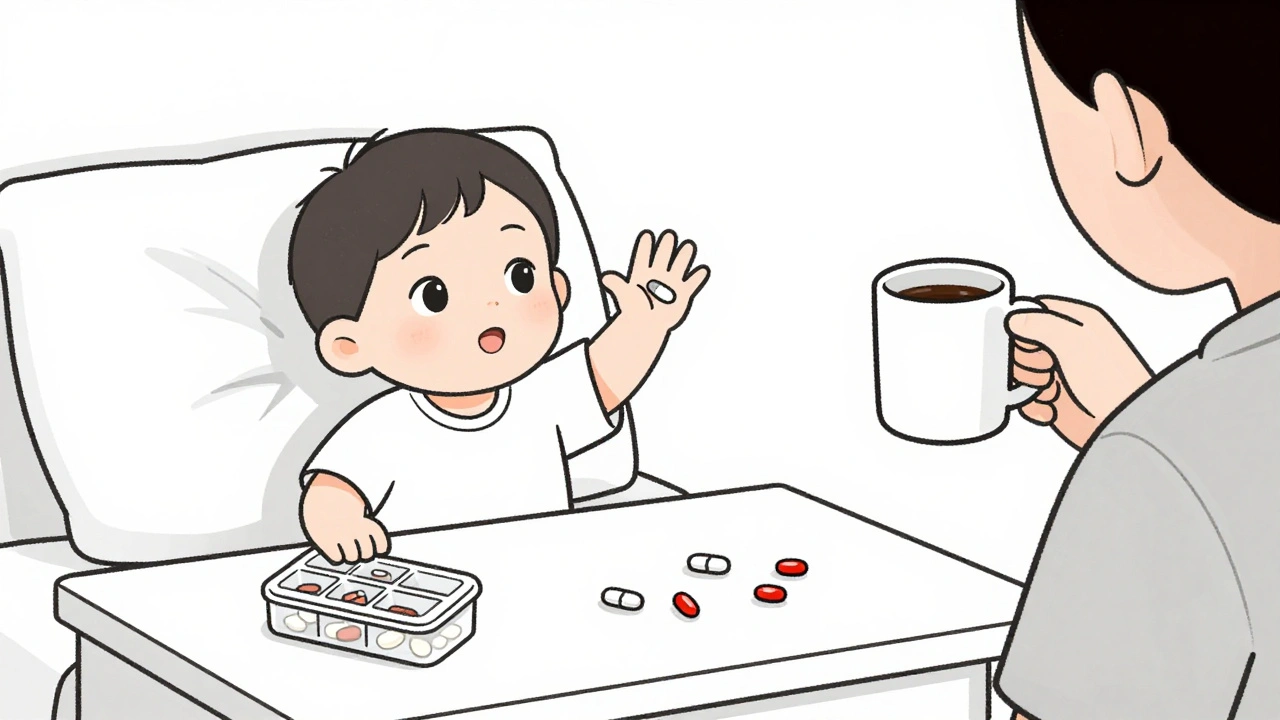
How to Childproof Your Home for Medication Safety
Accidental medicine poisoning is a leading cause of child injuries. Learn how to store medications safely, avoid dosing mistakes, and prevent kids from accessing pills with simple, proven steps backed by CDC and pediatric safety experts.
read more