
Corticosteroids: What They Are, How They Work, and What You Need to Know
When your body overreacts—swelling up, attacking itself, or refusing to calm down—corticosteroids, a class of synthetic drugs that mimic natural hormones produced by the adrenal glands. Also known as steroids, they’re one of the most powerful tools doctors have to stop inflammation before it damages tissues. Unlike the steroids athletes misuse, these are carefully dosed medicines that target immune overactivity, not muscle growth. They’re not a cure, but they buy time, reduce pain, and sometimes save lives.
Corticosteroids work by slipping into cells and turning down the volume on inflammation signals. That’s why they’re used for everything from asthma during pregnancy, a condition where uncontrolled airway swelling can harm both mother and baby to severe rheumatoid arthritis. But every benefit comes with trade-offs. Long-term use can lead to immunosuppression, a weakened immune response that makes infections harder to fight, weight gain, bone thinning, or even mood swings. That’s why doctors don’t prescribe them lightly—they’re like a fire extinguisher: essential in an emergency, dangerous if left on all the time.
You’ll find these drugs in inhalers for asthma, creams for eczema, pills for lupus, and even injections for joint pain. The key isn’t avoiding them entirely, but using them smartly. For example, inhaled corticosteroids target the lungs directly, so less enters the bloodstream. That’s why they’re safer than pills for long-term asthma control. But if you’re on oral steroids for months, your body starts to forget how to make its own cortisol. Stopping suddenly can be dangerous. That’s why tapering matters. And if you’re pregnant, have diabetes, or are over 65, your risks change—and so should your plan.
The posts below dig into exactly how corticosteroids fit into real-life treatment. You’ll see how they’re used safely in pregnancy, how they interact with other drugs like immunosuppressants, and why side effects like tremors or mood changes aren’t always obvious until it’s too late. No fluff. Just what you need to know to ask the right questions, spot hidden risks, and use these powerful drugs without letting them use you.
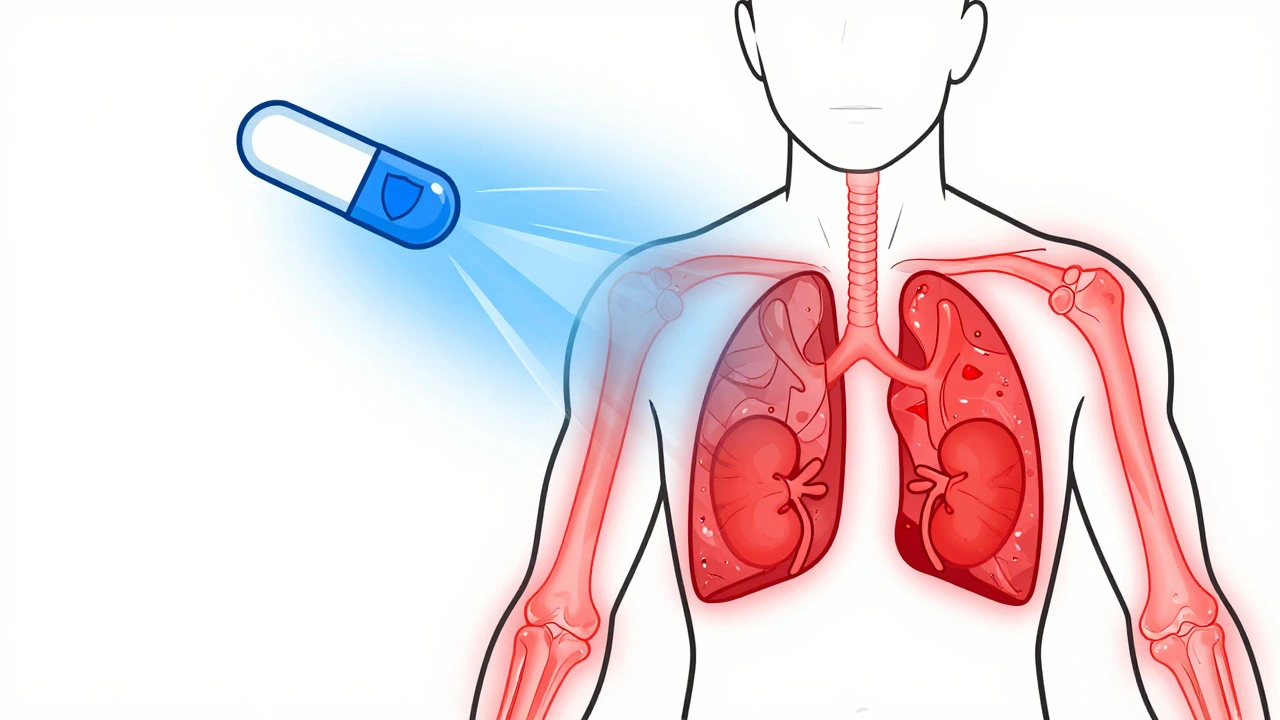
Corticosteroids for Autoimmune Disease: Benefits and Long-Term Risks
Corticosteroids quickly reduce inflammation in autoimmune diseases like lupus and rheumatoid arthritis, but long-term use carries serious risks including bone loss, cataracts, and adrenal suppression. Learn how to use them safely and what alternatives exist.
read more