
Do Not Crush Pills: Why Breaking Medication Can Be Dangerous
When you do not crush pills, you’re protecting your body from unintended drug release, overdose risks, and treatment failure. This simple rule applies to many common medications, especially those designed to work slowly over time. Crushing them doesn’t just change how they taste—it can destroy the science built into their design.
Extended-release drugs, like those for high blood pressure, ADHD, or chronic pain, are made with special coatings or matrices that control how the medicine enters your system. If you crush them, all the drug floods your body at once. That’s not faster relief—it’s a potential overdose. Same goes for enteric-coated pills, which are built to survive stomach acid and dissolve in the intestines. Crush those, and the drug gets destroyed by your stomach, or worse, irritates your lining. Even pills that seem harmless—like some vitamins or supplements—can lose effectiveness or cause side effects if broken.
Some people crush pills because swallowing is hard, or they think it makes the medicine work faster. But there are safer ways. Talk to your pharmacist about liquid versions, dissolvable tablets, or smaller pills. Never assume a pill can be crushed just because it looks easy to break. The label might not say it, but the formulation does. Your doctor or pharmacist can tell you which ones are safe and which aren’t. In fact, drug formulation, the science behind how pills are made, is why two pills with the same name can behave completely differently. One might be safe to crush; the other could be life-threatening. That’s why you need to check before you break.
What you’ll find below are real stories and science-backed guides about what happens when pills are crushed, which medications are most at risk, and how to handle swallowing problems without risking your health. These aren’t opinions—they’re facts from pharmacists, patients, and safety experts who’ve seen the fallout.
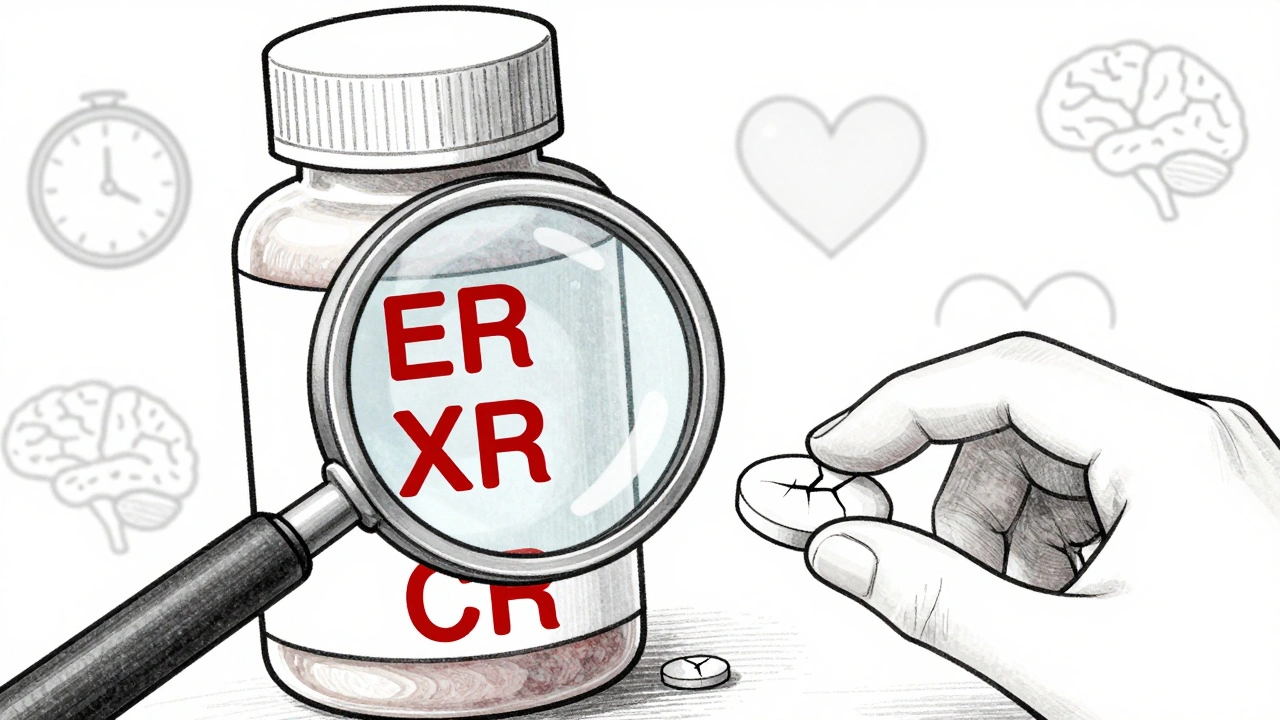
How to Read Directions for Extended-Release Medications on Labels
Learn how to read extended-release medication labels to avoid dangerous mistakes like crushing pills or taking them at the wrong time. Understand ER, XR, SR codes and why timing matters for your safety.
read more