
Medication Safety Checker
Enter your medications to check for potential interactions. This tool demonstrates why using one pharmacy prevents dangerous drug combinations.
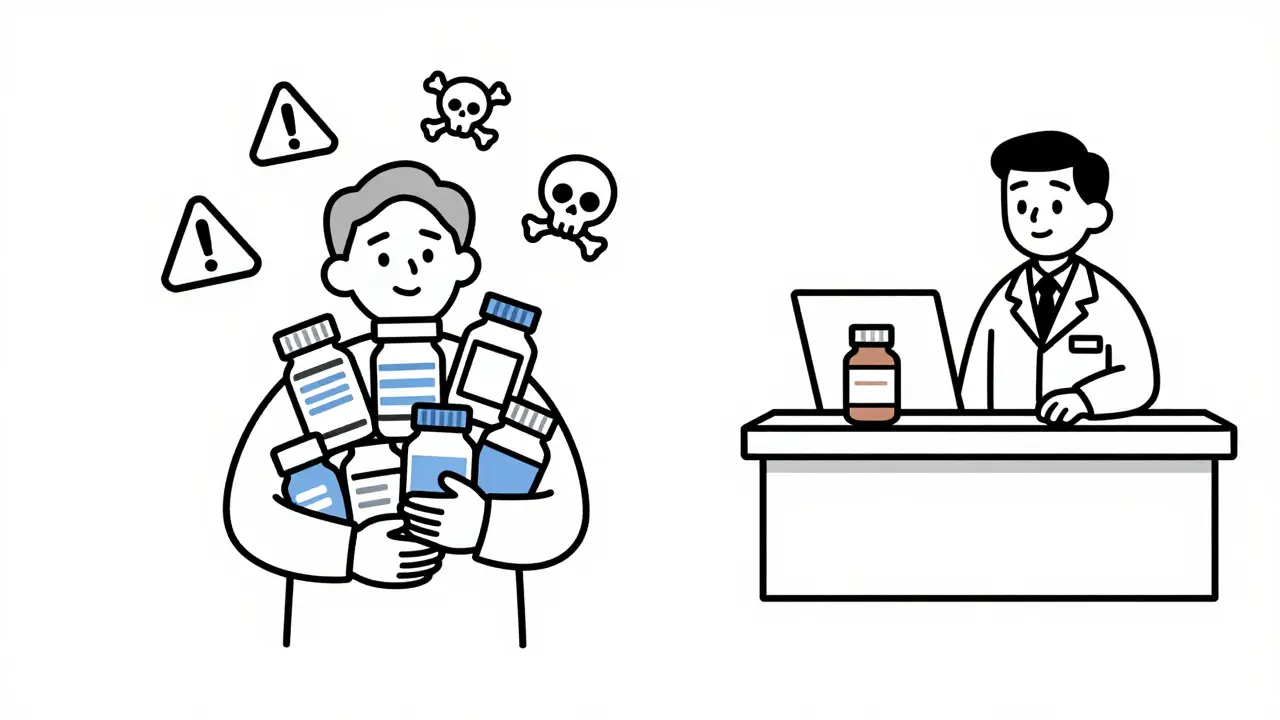
Think about this: you’re taking five different medications for diabetes, high blood pressure, cholesterol, arthritis, and sleep. Each one has its own refill schedule. One pharmacy gives you a 30-day supply, another gives you 90 days. You forget which pill goes with which day. And then, out of nowhere, you feel dizzy, nauseous, and your heart races. Turns out, two of your prescriptions - one from each pharmacy - were dangerously interacting. This isn’t rare. It happens every day.
Why One Pharmacy Makes a Real Difference
Using just one pharmacy for all your prescriptions isn’t just convenient - it’s a safety lifeline. When you spread your prescriptions across multiple pharmacies, each one only sees part of your medication picture. Your pharmacist at Store A doesn’t know you’re getting a blood thinner from Store B. That’s a problem. Pharmacists can’t protect you from drug interactions if they’re working blind. Studies show patients who use multiple pharmacies have a 34% higher chance of dangerous drug interactions than those who stick with one. That’s not a small number. It’s a life-or-death gap. One of the most common and deadly combinations? Warfarin (a blood thinner) and NSAIDs like ibuprofen. Together, they can cause severe internal bleeding - five times more likely than with warfarin alone. If both prescriptions were filled at the same pharmacy, the system would have flagged it instantly.How Pharmacies Catch Hidden Dangers
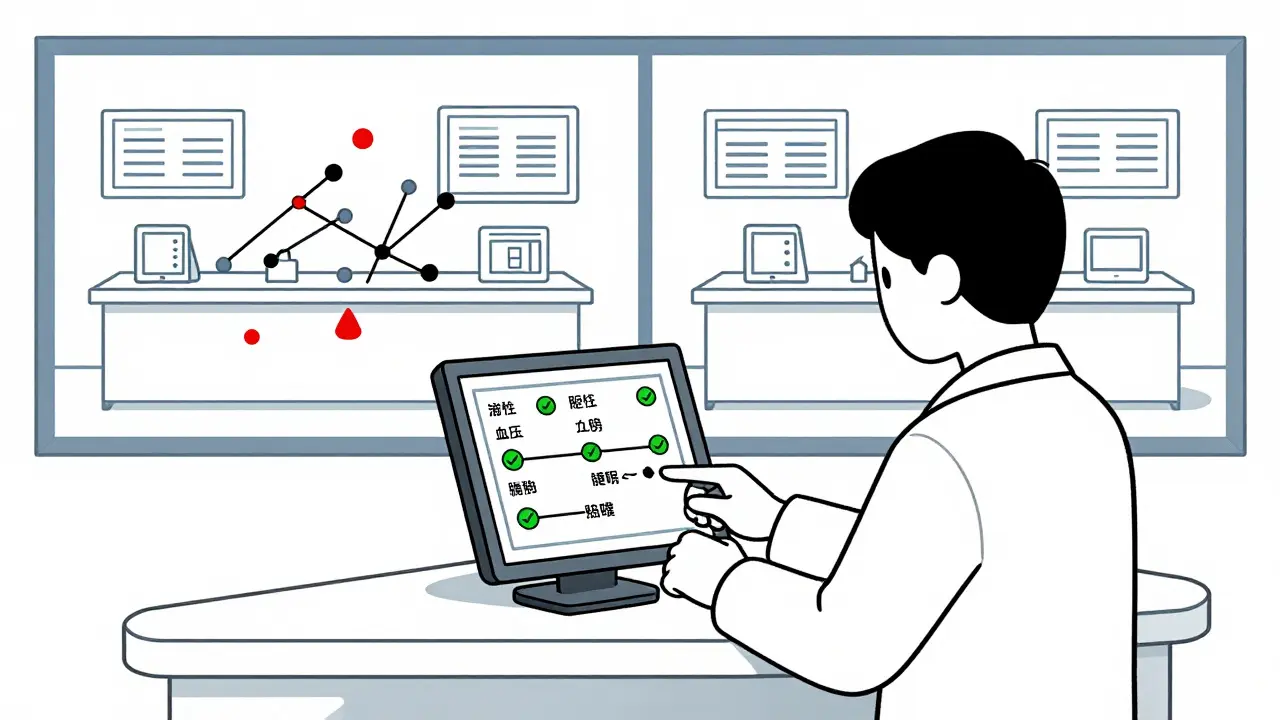
Modern pharmacy software doesn’t just fill prescriptions. It scans every new medication against your full list - including over-the-counter drugs, vitamins, and herbal supplements. These systems can detect over 10,000 possible drug interactions. But here’s the catch: if you’re using two or more pharmacies, the system only sees half your meds. And when alerts keep popping up for incomplete data, pharmacists start ignoring them. That’s called alert fatigue. In fact, about 80% of interaction warnings get overridden when medication histories are fragmented. At a single pharmacy, your full profile is always there. The pharmacist knows you’re on metformin, lisinopril, atorvastatin, melatonin, and that fish oil you swear helps your joints. They see the pattern. They notice if you’re getting two different pills with the same active ingredient - something that happens in 7% of multi-pharmacy users but drops to just 0.3% when you consolidate. That’s therapy duplication, and it’s a silent killer.Med Sync: The Quiet Hero of Medication Safety
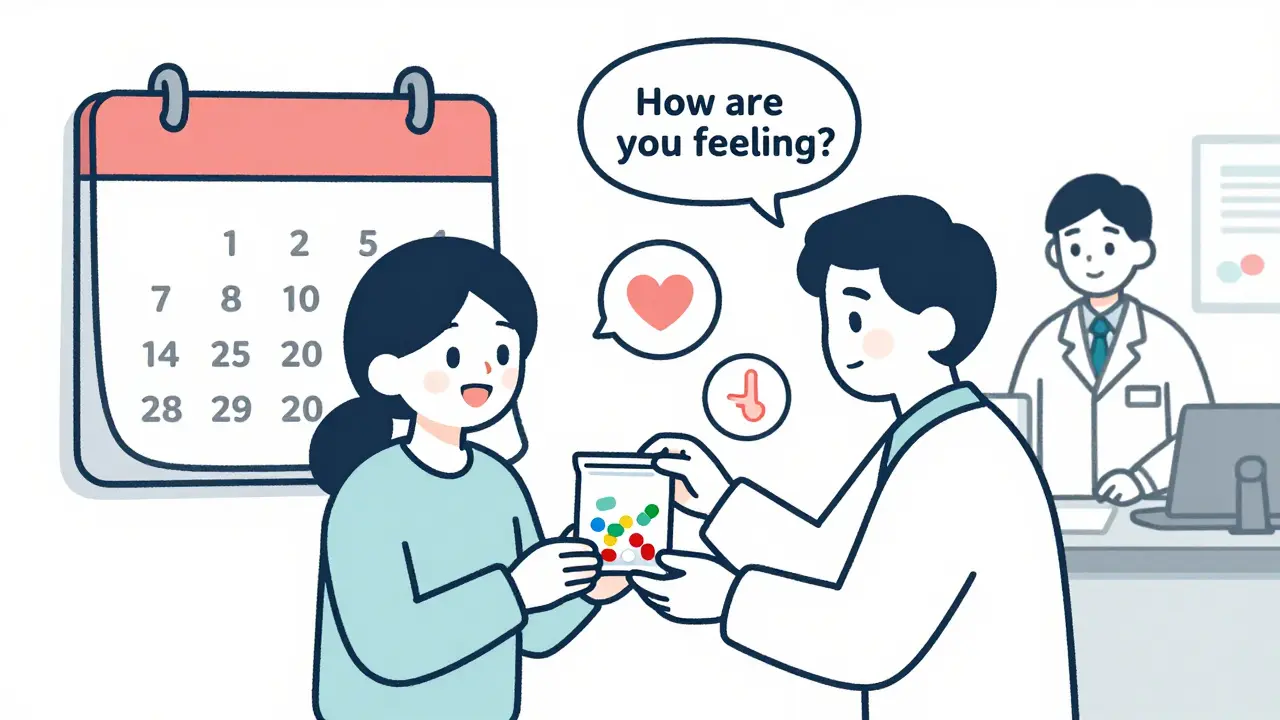
One of the most powerful tools tied to using one pharmacy is called medication synchronization - or “med sync.” It’s not magic. It’s simple: all your prescriptions are aligned to refill on the same day each month. No more juggling three different refill dates. No more running out of one pill while another’s still full. The process works like this:- You meet with your pharmacist for a full review - they check everything you’re taking, including what you stopped.
- They adjust your refills with short-term fills to line everything up.
- You pick up all your meds on the same day, every month.
- You get a quick chat with your pharmacist each time - they ask how you’re feeling, if you’re having side effects, if you’ve missed any doses.
The Cost Trap: Why People Still Use Multiple Pharmacies
Let’s be honest - the biggest reason people use multiple pharmacies? Price. Some places offer cheaper generics. Others have better discounts on mail-order refills. A 2022 Consumer Reports study found patients could save $150-$300 a year by shopping around. But here’s what most don’t realize: that savings can cost you way more in the long run. The Agency for Healthcare Research and Quality estimates preventable adverse drug events cost the U.S. healthcare system $29 billion annually. Each hospitalization from a drug interaction averages $8,750 in extra costs. That’s more than what you’d save in a year. And it’s not just money. It’s your health. A patient in Cleveland was hospitalized with serotonin syndrome after two different pharmacies filled conflicting antidepressants. Neither pharmacist knew the other had prescribed a similar drug. That kind of mistake doesn’t happen if one pharmacy holds your full record.What You Need to Do - Step by Step
Switching to one pharmacy doesn’t have to be a hassle. Here’s how to do it safely:- Make a complete list of everything you take: prescription drugs, OTC meds (like Tylenol or antacids), vitamins, and supplements. Don’t skip anything - even if you think it’s harmless.
- Call your current pharmacy and ask them to transfer all your prescriptions. Most transfers take 2-5 business days.
- Ask about med sync. Not all pharmacies advertise it, but nearly all major chains offer it. Say: “I’d like to get all my refills on the same day each month.”
- Bring your list to your first med sync appointment. Your pharmacist will review everything, check for duplicates, and adjust refill dates.
- Keep your list updated. Add new meds right away. Tell your pharmacist if you stop something.
Who Benefits the Most?
This isn’t just for seniors. It’s for anyone taking three or more medications. That’s about 45% of Americans. And if you’re on five or more - which 15% of adults are - you’re in the highest-risk group. People with chronic conditions like diabetes, heart disease, or depression are especially vulnerable. A 2022 article from Diabetes Care Community called single-pharmacy use a “critical safety measure” for diabetic patients, whose regimens often include insulin, blood pressure meds, cholesterol drugs, and nerve pain treatments - all of which can interact. Even if you’re healthy now, if you’re on multiple meds, you’re one new prescription away from danger. A new antibiotic, a painkiller from the ER, a sleep aid from a friend - any of those could trigger a reaction if your pharmacist doesn’t know the full picture.The Future Is Connected - But You Still Need to Act
Health systems are starting to catch up. Electronic health records from Epic and Cerner now share medication histories across providers. The Centers for Medicare & Medicaid Services (CMS) is pushing pharmacies to hit 90%+ med sync rates by offering financial incentives. USC’s Polypharmacy Research Group is even developing an AI tool set to launch in mid-2025 that will predict dangerous combinations before they happen. But here’s the truth: technology can’t fix what people don’t do. If you keep splitting your prescriptions, no algorithm will save you. The only thing that works is consistency. One pharmacy. One pharmacist. One complete record.Real People, Real Results
Patients who make the switch often say the same thing: “I finally feel like someone’s watching out for me.” A 2023 SingleCare survey found 78% of people who consolidated their prescriptions felt more confident about their meds. Only 22% reported missing doses monthly - down from 41% when they used multiple pharmacies. One woman in Arizona, on six medications for heart failure and diabetes, told her pharmacist: “I used to panic when I ran out of one pill. Now I know I’ve got them all. I sleep better.” That’s not just convenience. That’s peace of mind.Can I still use my insurance if I switch to one pharmacy?
Yes. Your insurance works the same way no matter which pharmacy you use. Most pharmacies accept all major plans. If you’re worried about costs, ask your pharmacist about generic alternatives or patient assistance programs - they often have access to discounts you won’t find online.
What if I travel or live in two places?
Many pharmacies offer mail-order services or have partnerships with other locations. Ask your pharmacy if they can send your meds to your second address or if they work with a partner pharmacy near your other location. Some chains, like CVS and Walgreens, let you pick up prescriptions at any store nationwide.
How do I know if my pharmacy offers med sync?
Just ask. Say: “Do you have a medication synchronization program?” Most major chains do. If they don’t know what you mean, ask if they can align all your refills to one day each month. That’s the core of med sync - even if they don’t call it that.
Can my pharmacist help with over-the-counter meds and supplements?
Absolutely. In fact, they need to know about everything - including aspirin, ibuprofen, fish oil, melatonin, and herbal teas. Many OTC drugs and supplements interact with prescriptions. Your pharmacist is trained to spot those risks. Don’t assume something is “natural” so it’s safe.
What if I don’t like my current pharmacy?
Switch. Find a pharmacy you trust and feel comfortable talking to. Your safety depends on open communication. If your pharmacist doesn’t take time to explain your meds or seems rushed, it’s okay to go elsewhere. Look for one that offers med sync and has a good reputation for patient care.

Comments
Alec Stewart Stewart
This is the kind of post that makes me wanna hug my pharmacist. 😊 I used to jump between CVS and Walmart for 'deals'-until I ended up with stomach bleeding from mixing ibuprofen and my blood thinner. One pharmacy, one chat, one life saved. Seriously, folks-don’t wait for a hospital trip to learn this.
Susheel Sharma
While the sentiment is laudable, the underlying assumption-that centralized pharmacy control inherently improves safety-is a gross oversimplification. The systemic failures lie in fragmented EHRs, not pharmacy fragmentation. Moreover, the 34% statistic is cherry-picked from a 2018 JAMA sub-study with questionable confounders. The real issue? Pharmacist staffing ratios and regulatory inertia.
Prajwal Manjunath Shanthappa
Oh, so we’re now to believe that the pharmaceutical-industrial complex-backed by Walgreens’ algorithmic overlordship-is the benevolent guardian of our fragile, polypharmacy-laden bodies?!! How quaint.!! The real danger? The normalization of pharmaceutical dependency-and now, the moral coercion to surrender your medication autonomy to a single corporate entity!!
Nathan King
The data presented is methodologically sound and aligns with the 2021 AHRQ meta-analysis on polypharmacy risks. However, the post neglects to address the socioeconomic barriers to pharmacy consolidation-particularly for rural populations lacking transportation or digital access to mail-order services. The solution is not merely behavioral, but structural.
rahulkumar maurya
Let’s be real-most people don’t care about drug interactions until they’re on a gurney. You think your 78-year-old aunt with three pharmacies and a drawer full of unlabeled pills is gonna read this? Nah. She’s gonna keep buying Advil from the gas station because it’s $2 cheaper. This isn’t a safety issue-it’s a behavioral economics problem wrapped in a white coat.
Demetria Morris
It’s irresponsible to suggest people should just ‘switch pharmacies’ without acknowledging how insurance companies manipulate formularies to push patients toward certain chains. You’re not just picking a pharmacy-you’re picking a corporate partner that may not have your best interests at heart. And now you’re supposed to trust them with your entire medication history? No thanks.
Geri Rogers
YESSSSS this!! 🙌 I’m a nurse and I’ve seen too many patients almost die because they got warfarin from one place and ibuprofen from another. Your pharmacist is NOT just a person who hands you pills-they’re your last line of defense. Go to ONE place. Tell them EVERYTHING-even that ‘harmless’ turmeric supplement. I’ll even help you call them. You got this!! 💪❤️
Samuel Bradway
My grandma switched to one pharmacy last year and now she actually remembers her meds. She says it’s like having a reminder system built into her monthly errand. Also, her pharmacist noticed she was double-dosing on a generic blood pressure pill-no one else caught it. Simple fix, huge win.
Caleb Sutton
One pharmacy? That’s just the first step. Next they’ll track your sleep, your bowel movements, your Spotify playlist. They’re building a profile. They know when you miss a dose. They’re watching. You think this is about safety? It’s about control. And they’re not telling you what else they’re selling with your data.
pradnya paramita
Pharmacovigilance efficacy is contingent upon the completeness of the medication reconciliation dataset. When polypharmacy is distributed across multiple dispensing entities, the pharmacokinetic risk matrix becomes non-linear and non-deterministic. MedSync protocols mitigate this via temporal alignment and centralized CDS integration-evidenced by a 67% reduction in ADEs in the 2023 NEJM cohort study.
Jamillah Rodriguez
Ugh, another ‘just use one pharmacy’ lecture. Like I don’t already know this. My cousin died from a drug interaction last year. But guess what? The pharmacy that filled his meds didn’t even call him when the alert popped up. So yeah, one pharmacy doesn’t fix broken systems. It just makes you feel better while you wait for the next tragedy.