
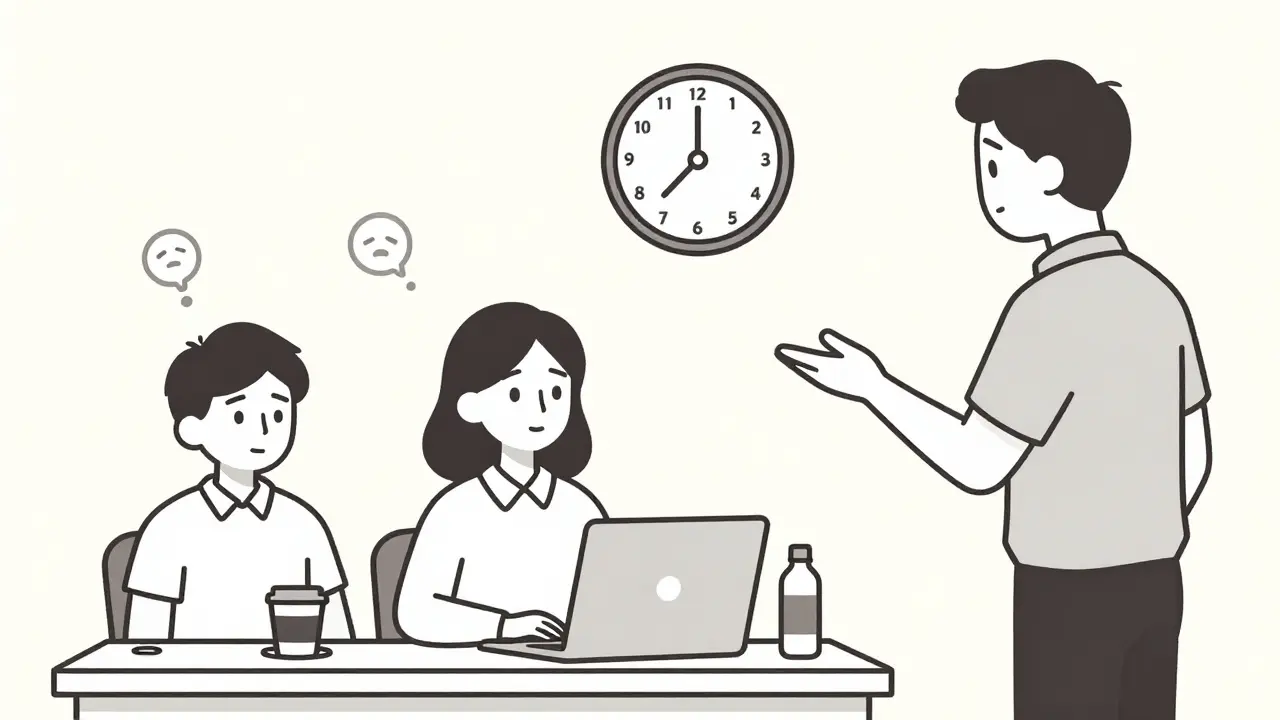
More than half of American workers take at least one prescription medication. Some of them experience side effects-drowsiness, nausea, dizziness, brain fog, or mood swings-that make it harder to do their jobs. These aren’t just inconveniences. For many, they’re real barriers to working safely and effectively. And under the law, employers are required to make changes to help.
Why This Matters Right Now
In 2022, nearly 1 in 8 workplace accommodation requests under the ADA were tied to medication side effects. That number has been rising every year. With more people managing chronic conditions, mental health, and long-term illnesses, it’s not unusual for someone to be on a new drug, adjusting to a dosage change, or dealing with side effects that didn’t show up until they started working. The key point? It’s not about the medication itself. It’s about how it affects that person doing their specific job. A nurse on blood pressure meds might need a 15-minute break to sit down if they feel lightheaded. An office worker on ADHD medication might need to start later to avoid mid-morning crashes. Neither is asking for less work. They’re asking for a small change so they can do their job well.What the Law Actually Says
The Americans with Disabilities Act (ADA) doesn’t require employers to accommodate every side effect. It only applies when those side effects substantially limit a major life activity-like concentrating, standing, or staying awake. And even then, the accommodation must be reasonable. The Equal Employment Opportunity Commission (EEOC) made this clear in its 2022 guidance: medication side effects can qualify as a disability if they interfere with work. But here’s what employers can’t do:- Require employees to reveal the name of their medication
- Assume all people on the same drug have the same side effects
- Deny accommodation just because the job is safety-sensitive
- Lower performance standards
- Fire someone because they’re on medication
Common Accommodations That Actually Work
The Job Accommodation Network (JAN) tracks what works. Here are the top five accommodations for medication side effects, based on real cases:- Flexible start and end times - For people who feel foggy in the morning or tired after lunch. Shifting hours by 30-60 minutes can make a huge difference. One warehouse worker on anti-seizure meds started at 9 a.m. instead of 7 a.m. and cut his error rate by 40%.
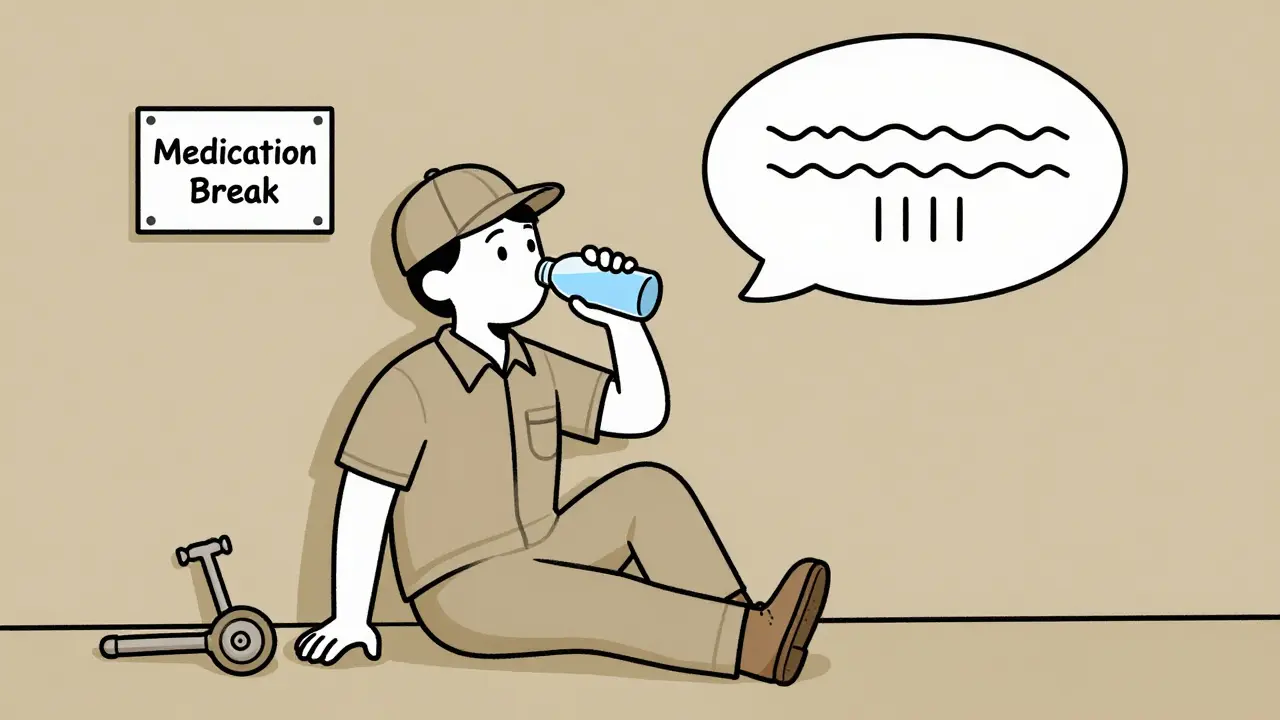
- Modified break schedules - Allowing extra 5-10 minute breaks to rest, drink water, or eat a snack. This helps with nausea, low blood sugar, or dizziness from medications.
- Temporary reassignment - If someone’s on a new medication and can’t operate heavy machinery for a few weeks, moving them to a desk job or inventory role temporarily is legal and common.
- Remote or hybrid work - Since the pandemic, 44% of accommodation requests for medication side effects involve working from home. This helps with fatigue, anxiety, or mobility issues.
- Allowing food or drinks at workstations - Some meds cause dry mouth, nausea, or low blood sugar. Permitting water, gum, or snacks at a desk isn’t a luxury-it’s a medical necessity.
What Happens in Safety-Sensitive Jobs?
This is where things get tricky. Jobs like truck driving, surgery, or operating heavy machinery have higher stakes. Employers are right to worry about safety. But here’s the catch: the law doesn’t let them say, “No one on this drug can do this job.” The EEOC says: individual assessment is required. If a truck driver is on a new blood pressure med, the employer can’t just say no because “all blood pressure meds cause dizziness.” They need to look at:- What specific side effects is this person having?
- How severe are they?
- Has this person shown they can do the job safely before?
- Is there medical proof the side effects will affect their performance?
What Employers Should Do (Step by Step)
If you’re an employer, here’s how to handle this right:- Don’t panic. An accommodation request isn’t a red flag. It’s a sign someone wants to keep working.
- Start the interactive process within 3 business days. Ask: “What’s the issue? How does it affect your work? What would help?”
- Ask for medical documentation - but only what’s necessary. The doctor doesn’t need to name the drug. They just need to describe: the condition, the side effects, and how they limit job functions.
- Consider temporary solutions. If someone just started a new med, give them 2-4 weeks to adjust. Many side effects fade.
- Document everything. Keep notes on what was requested, what was offered, and what happened after.
- Train managers. Companies that train managers on ADA accommodations see 42% fewer complaints.
What Employees Should Know
If you’re on medication and struggling at work:- You don’t have to tell your boss what drug you’re on. Just explain how the side effects are affecting your job.
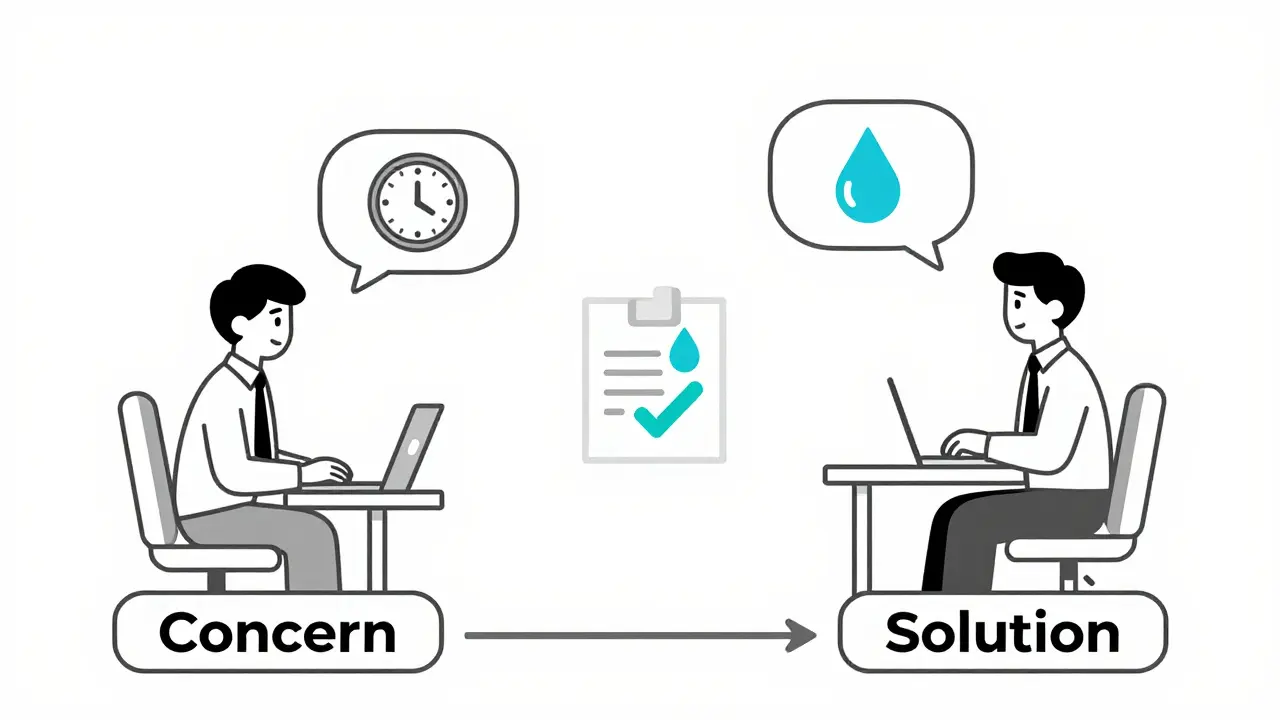
- Be specific. Instead of “I feel tired,” say “I get drowsy between 2-4 p.m. and can’t focus on data entry.”
- Propose a solution. “Could I start at 9 a.m. instead of 7 a.m.?” or “Can I have a 10-minute break after lunch?”
- Get documentation from your doctor. Even a short note helps.
- If you’re denied, you can file with the EEOC. In 2022, 79% of these cases were resolved successfully.
What Doesn’t Work
Too many workplaces fail because they do the wrong things:- Assuming all side effects are the same - Two people on the same antidepressant can have totally different reactions.
- Waiting for a problem to happen - Waiting until someone makes a mistake before acting is too late. Proactive accommodation prevents errors.
- Dismissing side effects as “excuses” - Over 24% of negative employee reviews mention this. It’s not just rude-it’s illegal.
- Asking for too much paperwork - Demanding full medical records or forcing employees to see company doctors? That’s a violation.
- Ignoring temporary needs - Many side effects last only a few weeks. A short adjustment can save a job.
Why This Benefits Everyone
Companies that handle this well see real results:- 19.3% lower turnover among employees with medication side effects
- 89% success rate when the interactive process is fully used
- Avoiding lawsuits that cost an average of $68,400 per case
- 87% of Fortune 500 companies say accommodations improve productivity and morale
What’s Coming Next
The EEOC is updating its guidance in early 2024 to address new challenges: ADHD stimulants, cannabis-based treatments, and long-term effects of mental health meds. Remote work is now a standard accommodation, not a temporary fix. And with mental health prescriptions rising 15% a year, this issue will only grow. The legal trend is clear: courts are rejecting blanket policies. They’re requiring individualized, evidence-based decisions. Employers who adapt will keep talent. Those who resist will pay more in lawsuits and lost productivity.Can my employer force me to stop taking my medication?
No. Employers cannot require you to change, stop, or adjust your medication. That’s a medical decision between you and your doctor. They can only ask how the side effects affect your work and what accommodations might help.
Do I have to tell my boss I’m on medication?
No. You only need to explain how the side effects are affecting your ability to do your job. You don’t have to say what drug you’re taking. The law protects your privacy.
What if my side effects are temporary?
Temporary accommodations are common and often approved. If you started a new med and are adjusting, you can ask for a 2-4 week adjustment period. Many side effects fade after a few weeks. Employers are required to consider these short-term needs.
Can I be fired if my medication affects my performance?
Only if, after trying reasonable accommodations, you still can’t perform the essential functions of your job. Employers must explore options like schedule changes, breaks, or reassignment before considering termination. Lowering performance standards is never allowed.
What if my employer says no to my request?
Ask for a written explanation. If it’s vague or based on assumptions (like “all meds cause drowsiness”), you can file a complaint with the EEOC. In 2022, nearly 80% of these cases were resolved in the employee’s favor when they had medical documentation.

Comments
Jerry Peterson
I’ve been on blood pressure meds for years and honestly, the 15-minute sit-down break after lunch saved my job. My boss didn’t even blink when I asked. Just said, ‘Make sure you’re safe.’ That’s all you need.
Stop acting like accommodations are a burden. They’re just common sense.
Michael Ochieng
Man, I wish my old manager had read this. I was on antidepressants and they kept asking why I was ‘so quiet’ in meetings. I didn’t say anything because I didn’t want to be labeled ‘the medicated guy.’
Turns out, the brain fog lasted 3 weeks. I just needed to shift my hours. Now I’m the one helping new hires navigate this stuff.
Stop making people suffer in silence.
Dan Adkins
It is imperative to note that the Americans with Disabilities Act, while well-intentioned, has been subject to judicial overreach in recent years. The notion that side effects of pharmacological intervention constitute a disability is a legal fiction predicated on an expansive interpretation of ‘major life activity.’
Employers are not medical boards. Requiring them to accommodate nebulous, subjective complaints undermines workplace discipline and operational integrity. This is not inclusion-it is medicalization of workplace management.
Erika Putri Aldana
so like… if i take adderall and get hungry at 3pm, is my boss supposed to let me snack at my desk??
lmao i’m just saying… next they’ll be letting people bring coffee into the server room 🤡
Meina Taiwo
Temporary reassignment works. My cousin was on chemo and couldn’t stand long. They moved her to scheduling for 6 weeks. She came back stronger. No drama. Just human.
Southern NH Pagan Pride
They’re not just talking about meds… they’re hiding the agenda. Big Pharma pushes these drugs, then the EEOC forces companies to bend over backward so people can keep taking them. It’s a cycle.
Why not fix the root cause? Why not stop prescribing 12 different pills to one person? This isn’t accommodation-it’s corporate surrender to pharmaceutical lobbying.
And don’t tell me it’s ‘medical privacy.’ They’re tracking everything. You think your doctor’s note isn’t going to a database?
Orlando Marquez Jr
The interactive process outlined in the EEOC’s 2022 guidance represents a legally sound and ethically responsible framework for addressing workplace accommodations. Employers who fail to engage in good-faith dialogue risk not only litigation, but also erosion of employee trust and organizational cohesion.
Documentation, individual assessment, and flexibility are not burdens-they are pillars of sustainable human resource management.
Jackie Be
I was on anxiety meds and my boss said ‘just push through’ so I had a panic attack in the breakroom and cried for 20 minutes while people pretended not to notice
then they gave me a coffee and told me to chill out
turns out i just needed to start at 10am not 7am
why is this so hard
why
why
why are we like this
John Hay
My sister works in a warehouse. She’s on seizure meds. They moved her from the floor to inventory. She’s been there 3 years. No one made a fuss. She’s one of the most reliable people they have.
It’s not about being easy on people. It’s about being smart.
Jon Paramore
From a compliance standpoint, the critical distinction lies in the difference between ‘reasonable accommodation’ and ‘undue hardship.’ The EEOC’s guidance correctly anchors the analysis in functional limitations, not diagnostic labels.
Employers often conflate ‘side effects’ with ‘symptoms of underlying condition.’ The law requires assessment of impact, not etiology.
Also: ‘No one on this drug’ policies are per se violations under 29 CFR §1630.2(o)(2)(ii).
Swapneel Mehta
My uncle in India takes diabetes meds and works as a delivery guy. He takes a 10-minute break every 2 hours to eat a banana. No one ever asked. He’s the most punctual guy on the route.
It’s not about the country. It’s about treating people like humans.
Cameron Hoover
I used to think this was just ‘PC stuff’… until my best friend lost her job because she asked for a 15-minute break after her new thyroid med made her shaky.
She’s a brilliant data analyst. They replaced her with someone who didn’t know Excel.
Now I tell everyone: if you’re struggling, speak up. Not because you’re weak. Because you’re valuable.
Teya Derksen Friesen
As a senior HR officer in a Fortune 500 firm, I can confirm that implementing structured accommodation protocols reduced ADA-related grievances by 61% over two years. Training managers in the interactive process is not optional-it is strategic risk mitigation.
Furthermore, employees who receive accommodations report higher organizational commitment, regardless of medical status. This is not charity. It is human capital optimization.