
How Patent Expiration Triggers Price Drops
The Hatch-Waxman Act of 1984 created the modern system for generic drug approvals in the U.S. This law balances innovation incentives for drugmakers with faster access to affordable generics. When a patent expires, the first generic company enters the market. This alone typically cuts prices by 15-20%. But the real price crash happens when more competitors join. By the time five or more generics are available, prices often drop 80-90%.
Take Humira (adalimumab), a top-selling arthritis drug. When its first patent expired in 2016, AbbVie filed over 130 secondary patents to delay competition. It wasn’t until 2023 that biosimilars finally entered the market, causing prices to fall-but not as dramatically as expected due to complex rebate deals. This shows how patent strategies can slow price reductions.
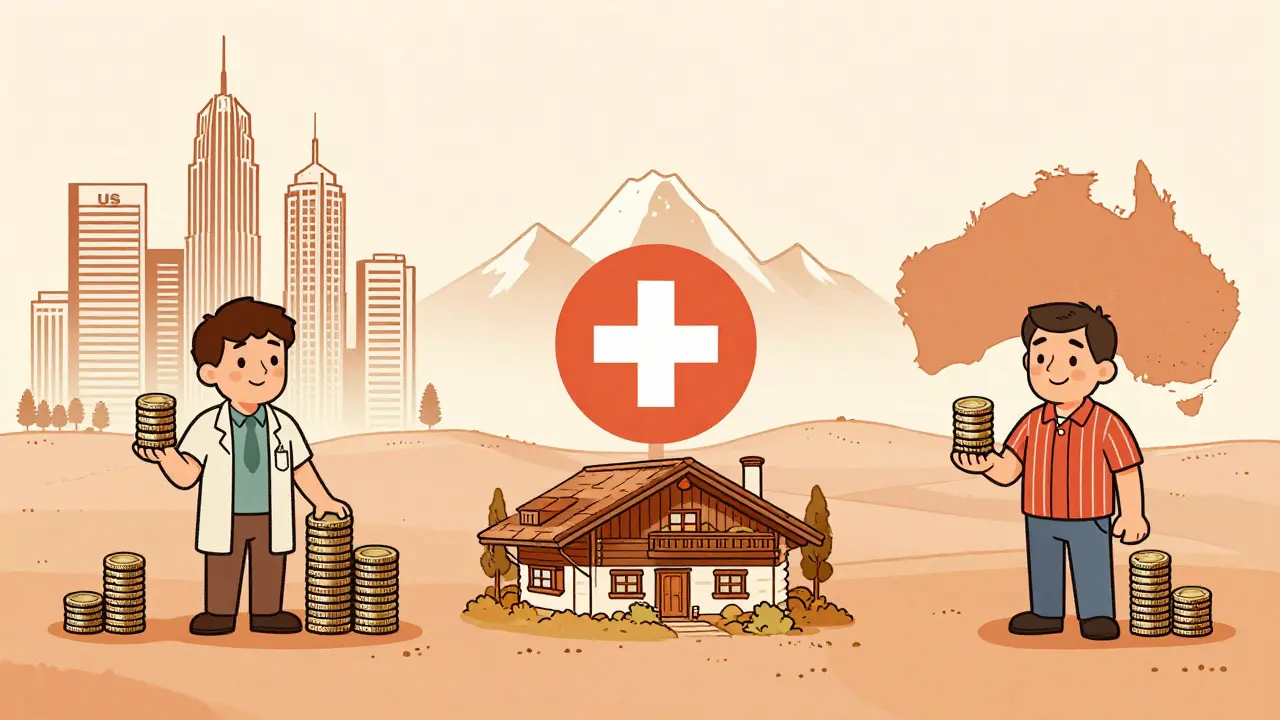
Global Differences in Price Reductions
| Country | Price Drop |
|---|---|
| United States | 82% |
| Australia | 64% |
| United Kingdom | 60% |
| Germany | 58% |
| France | 53% |
| Japan | 42% |
| Canada | 48% |
| Switzerland | 18% |
Why such big differences? The U.S. has no government price controls, so competition drives prices down faster. In Europe, reference pricing systems and centralized negotiations keep prices stable but still lower than brand names. Switzerland’s smaller market and strict reimbursement rules explain its modest 18% drop. Australia’s government negotiates bulk discounts, while Japan’s strict approval process slows generic entry.
Biologics vs. Small Molecule Drugs
Not all drugs behave the same after patent expiration. Small molecule drugs (like aspirin or statins) are chemically simple, so generics copy them easily. Prices for these typically fall 80-90% within 3-5 years. Biologics, however, are complex proteins made from living cells. Their patents are harder to challenge, and biosimilars (the generic version) take longer to develop.
Humira’s case shows this. Despite its base patent expiring in 2016, AbbVie used patent thickets to delay competition for seven years. Even after biosimilars launched in 2023, prices only dropped 25-30% due to payer rebates. In contrast, the biologic drug infliximab saw a 70% price drop within two years of biosimilar entry because fewer patents blocked competition.
Patent Thickets and Delayed Competition
Drugmakers often extend exclusivity by filing secondary patents on minor changes-like new dosages or delivery methods. The I-MAK 2025 report found that 78% of new patents for top-selling drugs aren’t for new medicines but existing ones. For example, semaglutide (Ozempic, Wegovy) has 142 patents, potentially blocking generics until 2036 despite the original patent expiring in 2026.
This “evergreening” strategy hurts patients. A 2023 Kaiser Family Foundation survey showed 22% of insured adults faced delays in accessing cheaper generics due to insurance formulary changes. Doctors in Chicago reported that while infliximab biosimilars quickly replaced the brand, Humira’s transition was slower because AbbVie’s contracts with insurers restricted cheaper alternatives.
Real-World Impact on Patients
For patients, patent expiration means life-changing cost savings. On Reddit’s r/Pharmacy, users shared stories of switching from $850/month Eliquis to $10 generics. But not all experiences are smooth. STAT News reported that when Humira biosimilars launched in 2023, some patients still paid full price because insurers prioritized rebates over cost savings. In Australia, government negotiations ensure most patients pay under $40 per month for generics, while in Switzerland, high out-of-pocket costs persist even after patent expiry.
The Food and Drug Administration (FDA) approved 870 generic drugs in 2023-a 12% increase from 2022. This speedup helps, but complex generics still take 24+ months to approve. Pharmacists in the U.S. face state-specific rules: 49 states allow automatic substitution of generics, but biologics require special approval.
Future Trends and Regulatory Changes
Global generic drug sales hit $407.5 billion in 2023 and will grow to $700 billion by 2030. Over the next decade, patents for $220 billion in drugs will expire. The Inflation Reduction Act lets Medicare negotiate prices, which pressures drugmakers to time generic entries carefully. The Congressional Budget Office projects these efforts will save $1.7 trillion in U.S. healthcare costs.
But challenges remain. The European Medicines Agency aims to boost biosimilar adoption to 70% within three years of patent expiry, up from 45% today. Meanwhile, the U.S. Patent Office is cracking down on patent thickets. As Dr. Joseph Ross of Yale noted, “Patent expiration drives price competition-but the system must adapt to ensure savings reach patients.”
How long does it take for drug prices to drop after patent expiration?
The first generic usually enters within 12-30 months, causing a 15-20% price drop. With multiple generics, prices fall 80-90% within 3-5 years. In the U.S., average generic entry happens at 30 months post-expiry; in Europe, it’s 12-18 months. Biologics face longer delays due to complex approval processes.
Why do drug prices drop more in some countries than others?
Countries with strong price controls and bulk negotiations see steeper drops. The U.S. has no government price limits, so competition drives prices down faster (82% over 8 years). Europe uses reference pricing, leading to 50-60% drops. Switzerland’s small market and strict reimbursement rules limit competition, resulting in just 18% reductions. Australia’s government negotiates bulk discounts, keeping prices low for patients.
What’s the difference between generics and biosimilars?
Generics copy small molecule drugs like aspirin, which are chemically identical to the brand. Biosimilars mimic complex biologic drugs like Humira, but they’re not exact copies due to manufacturing differences. Biosimilars take longer to approve (often 2-4 years) and face more regulatory hurdles, which delays price reductions.
How do patent thickets affect drug prices?
Patent thickets involve filing dozens of secondary patents on minor changes to block competition. For example, Humira’s manufacturer filed over 130 patents, delaying biosimilar entry for seven years. This strategy extends monopoly pricing, keeping costs high for patients. The I-MAK report found 78% of new patents for top drugs aren’t for new medicines but existing ones, artificially extending exclusivity.
Will drug prices keep dropping after patent expiration?
Yes, but the pace depends on competition. With 10+ generic competitors, prices often drop 80% within three years. However, if manufacturers use tactics like patent thickets or rebate deals with insurers, price reductions can be slower. New regulations, like the Inflation Reduction Act’s Medicare price negotiations, are pushing for faster savings, but real-world impact varies by drug and country.

Comments
Pamela Power
Let's cut through the fluff. This article's portrayal of patent expiration as a straightforward solution is dangerously simplistic. The reality is that pharmaceutical companies have spent decades engineering systems to maximize profits under the guise of innovation. Take Humira-its patent expiration was delayed by over a decade through strategic secondary patents, and even after biosimilars entered, prices only dropped 25% due to complex rebate deals. The U.S. system is designed to protect Big Pharma, not patients. When you see a "price drop" from $850 to $10 for Eliquis, that's only for the generic version; insurance formularies often steer patients toward more expensive alternatives through rebates. The FDA's approval process for generics is slow and biased toward established manufacturers. Meanwhile, countries like Switzerland and Japan have price controls that suppress competition, which is why their drops are so modest. This whole narrative ignores the fact that drug pricing is a political tool, not a market-driven process. Real change requires dismantling the patent thickets and forcing transparency in pricing. Until then, patients will continue to be exploited while shareholders get richer. The so-called "competitive market" is a myth perpetuated by corporate PR. It's time to stop pretending this is about healthcare and start addressing the systemic corruption. This isn't economics-it's exploitation dressed up as progress. The entire system is rigged, and until we address the root causes, nothing will change.
Sam Salameh
As an American, I'm proud of how our system fosters innovation while still allowing competition. The U.S. leads the world in drug development, and patent expiration is part of that balance. Sure, it's frustrating when prices drop, but it's also a sign that our market works-competition drives down costs without stifling innovation. Look at how quickly generics entered after Eliquis' patent expired; that's the power of American entrepreneurship. We don't have government price controls like Europe, which means companies compete fiercely, leading to better outcomes for everyone. The FDA's approval process for generics is efficient, and the Inflation Reduction Act is helping too. We should celebrate this system instead of complaining. America's way works-let's keep it that way! The truth is, countries that try to control prices end up with fewer new drugs. We need to protect our innovation engine while ensuring affordability. It's a delicate balance, but we're getting it right.
Dina Santorelli
Ugh, you're right about the system being rigged. It's so frustrating to see how patients get crushed by this. Every time I hear about someone struggling to afford meds, it just makes me so angry. The rebates and formularies are just a scam-they're not helping people at all. It's all about the corporations. I can't believe we're still letting this happen. It's so sad. Why do we keep supporting this broken system? It's just so unfair. I feel so helpless sometimes. This needs to change, but I don't know how. The whole thing is just a massive failure of our healthcare system. It's heartbreaking to think about people choosing between their medication and rent. I wish there was a way to fix it, but it feels impossible.
Cole Streeper
Patent expiration? More like patent manipulation by the government and Big Pharma to control the narrative. They're using these "expiration" dates to push cheaper generics that are actually dangerous. Did you know that the FDA is in cahoots with the pharmaceutical industry? They approve generics that are substandard to keep people dependent on expensive drugs. The real reason prices drop is because they're replacing safe drugs with inferior ones. It's all part of a larger scheme to make people sicker so they have to buy more meds. I've seen it happen in my own community-people get sick because of these "generic" drugs. The government doesn't care about us; they just want profits. This is a conspiracy, and they're hiding the truth from the public. We need to wake up and fight back before it's too late! The whole system is rigged to keep us controlled. They're poisoning us slowly with these inferior drugs. It's a massive cover-up, and nobody is talking about it. We need to expose them!
Danielle Vila
Oh my gosh, Cole, you're so right! It's all a conspiracy! The FDA is definitely in on it-why else would they let these dangerous generics through? I read somewhere that they're secretly testing new drugs on people using these generics. It's all part of a larger plan to make people sick so they can sell more expensive treatments. And don't even get me started on the "rebates"-those are just a front for the real profits. They're hiding the truth about how these drugs are made. I've seen studies that prove generics are full of toxins. It's all about controlling the population. We need to get the truth out there before it's too late!
Thorben Westerhuys
Oh my goodness!!! This is so important!!! We need to act now!!!
Katharine Meiler
The Hatch-Waxman framework establishes critical pathways for generic entry, but the current system's reliance on secondary patents creates significant market inefficiencies. For instance, the 78% of new patents for top-selling drugs being non-innovative extensions highlights systemic flaws. Biosimilar development timelines are disproportionately impacted by regulatory hurdles, particularly for complex biologics. A collaborative approach between regulators, manufacturers, and payers could streamline approvals while maintaining quality. The Inflation Reduction Act's price negotiation provisions may incentivize timely generic entry, but policy adjustments are needed to address rebate structures. Data shows that countries with transparent pricing mechanisms achieve faster market penetration of generics. Standardizing approval protocols across jurisdictions could reduce delays. Stakeholder engagement is essential to balance innovation incentives with patient access. Ultimately, a multi-faceted strategy is required to optimize the post-patent landscape. We need to focus on evidence-based reforms rather than political posturing. The current system is too fragmented to deliver consistent savings.
Laissa Peixoto
While the systemic issues you've outlined are valid, we must remember that drug pricing is not just an economic problem-it's a moral one. The balance between innovation and access is a delicate equilibrium that requires empathy alongside policy. Historically, pharmaceutical companies have justified high prices through R&D costs, but the reality is that most innovation comes from public funding. A true solution would involve restructuring incentives so that companies are rewarded for societal impact rather than profit margins. We need policies that prioritize patient outcomes over shareholder returns. It's not about eliminating patents but reimagining them as tools for public good. This requires a fundamental shift in how we value healthcare. As a society, we must decide: do we treat medicine as a commodity or a right? Until we address that question, no amount of regulatory tweaks will solve the core issue. The current system prioritizes profit over people, and until that changes, patients will continue to suffer. We need systemic change, not just tweaks.